This recipe contains affiliate links. If you buy through them, LiT may earn a commission at no extra cost to you. As an Amazon Associate, LiT earns from qualifying purchases. See our affiliate disclosure.
Updated November 2026 We have retested this joojeh kabab recipe, switched to metric measures and added a food-safety check for the chicken.
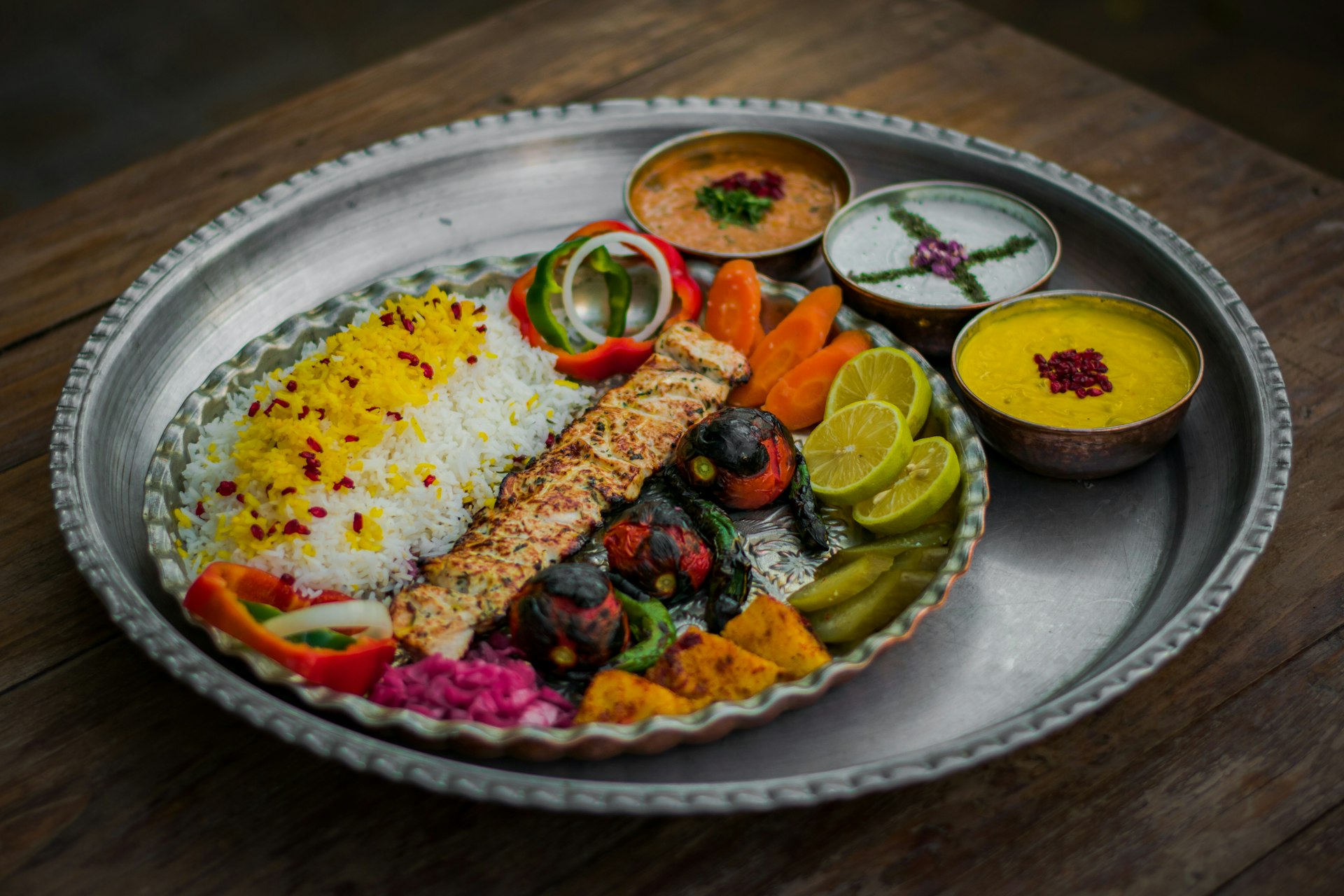
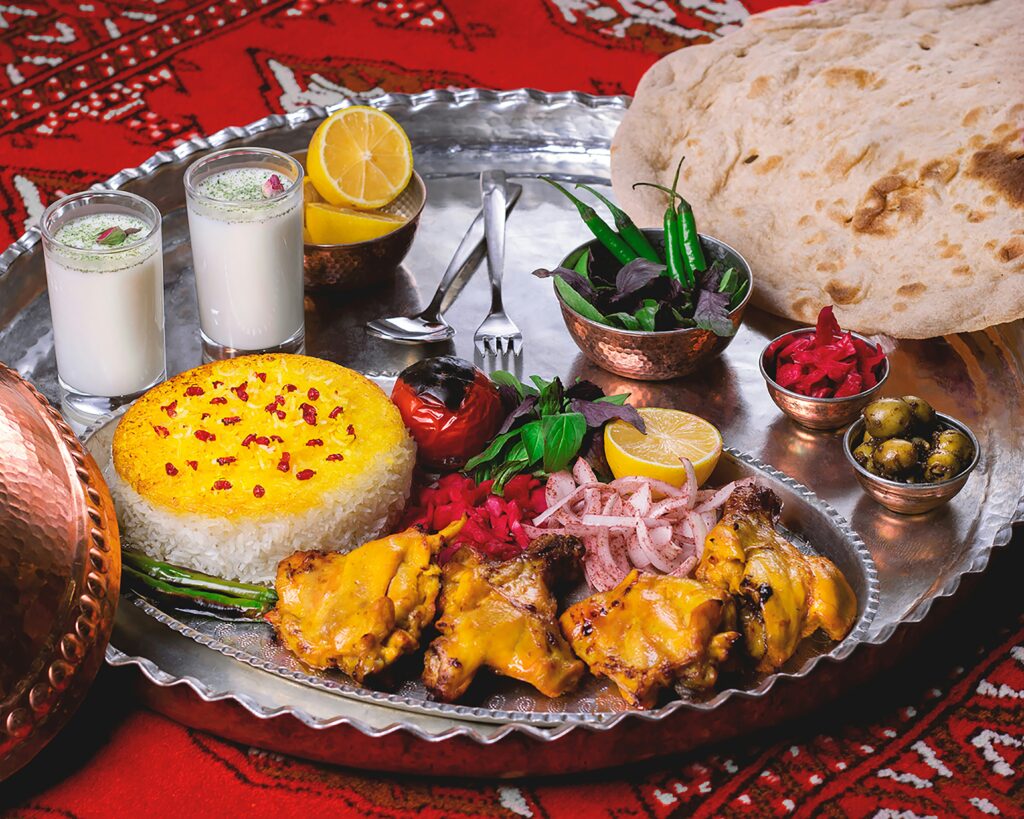
Joojeh kabab, Iranian chicken kebab, is saffron-golden chicken marinated in yoghurt, onion and lemon, then grilled over charcoal until lightly charred. It is on the menu of almost every kebab house in Tehran and at every summer barbecue, and it is one of the easiest Persian dishes to make well at home. The secret is a long marinade and properly bloomed saffron.
Recipe at a glance
- Serves: 4 to 6
- Preparation: 20 minutes, plus at least 6 hours marinating (overnight is best)
- Cooking: 15 to 20 minutes
- Difficulty: easy to moderate
Ingredients
- 900 g boneless chicken thighs or breast, cut into 5 cm chunks (thighs stay juicier)
- 250 g plain full-fat yoghurt
- 2 medium onions, grated, with their juice
- 4 tbsp lemon or lime juice
- 3 tbsp olive oil or another neutral oil
- A generous pinch of saffron threads (about ½ tsp), ground with a pinch of sugar
- 3 garlic cloves, crushed
- 1½ tsp salt
- 1 tsp freshly ground black pepper
For basting: 2 tbsp melted butter mixed with 1 tbsp lemon juice and a little of the saffron water.
Method
- Bloom the saffron. Grind the threads with a pinch of sugar using a pestle and mortar, then add 3 tbsp hot (not boiling) water. Leave for at least 10 minutes; the liquid should turn a deep orange. Set aside a spoonful for basting.
- Make the marinade. In a large bowl, mix the yoghurt, grated onion, lemon juice, oil, garlic, salt, pepper and saffron water.
- Marinate. Add the chicken, turn to coat every piece, cover and refrigerate for at least 6 hours and up to 24. The yoghurt and lemon tenderise the meat, so a longer soak gives a better result.
- Bring to room temperature. Take the chicken out of the fridge about 30 minutes before cooking.
- Thread the skewers. Shake off excess marinade and thread the pieces on to flat metal skewers, leaving a small gap between each so they cook evenly. If using wooden skewers, soak them in water for 30 minutes first.
- Grill. Cook over medium-hot charcoal, or on a gas grill at around 200°C, turning every few minutes, for 15 to 20 minutes in total, until lightly charred at the edges.
- Baste and check. In the last few minutes, brush with the saffron butter. The chicken is done when it is no longer pink inside and the juices run clear; a meat thermometer should read at least 75°C in the thickest piece.
No barbecue? Cook the skewers under a hot grill or on a rack in a 220°C oven, turning halfway, for about 20 minutes, then give them a minute or two under the grill to colour.
How to serve joojeh kabab
In Tehran, joojeh kabab comes on a bed of fluffy chelow (steamed Persian rice), usually with a pat of butter melting into it, a sprinkle of sumac and a few grilled tomatoes. Add any of these:
- Grilled whole tomatoes and green chillies, cooked on the same fire
- Lemon or lime wedges
- Sumac for sprinkling
- A plate of fresh herbs (sabzi khordan) such as mint, basil, tarragon and radishes
- Thin lavash bread, which is also how many Iranians eat it at a picnic
- Doogh, the salty yoghurt drink, and mast-o-khiar, yoghurt with cucumber and dried mint
Troubleshooting
- Dry chicken: use thighs, do not skip or shorten the marinade, and take the skewers off as soon as they are cooked through.
- Pieces falling off the skewer: cut them to a similar size and thread them firmly but not crammed together. Flat skewers hold better than round ones.
- Pale colour: the saffron was not bloomed for long enough or was too little. A tiny pinch of turmeric helps the colour, though not the flavour.
- Burnt outside, raw inside: the fire is too hot. Move the skewers to a cooler part of the grill.
Storage and making ahead
- The chicken can sit in its marinade for up to 24 hours in the fridge.
- Cooked leftovers keep for up to 3 days in an airtight container in the fridge. Reheat until piping hot, in the oven or a covered pan with a splash of water.
- Cold leftovers make an excellent wrap with lavash, herbs and a little yoghurt.
Saffron is the costliest ingredient here; for current prices in Iran, see our Iran price trackers. For more Persian cooking, browse our Persian recipes.
Learn the Persian: Ordering kebab in Tehran? Persia Learning’s lesson on food, cafés and restaurants covers the words you need. Try the first lesson free →
Where to buy the ingredients. Outside Iran, you will find the specialist ingredients for this recipe at Persian and Middle Eastern grocers, or you can order them online: saffron, sumac and turmeric. For more, see our guide to the Persian pantry.
A note on our affiliate links: LiT’s affiliate earnings are not earned from inside Iran. Our partners are international companies based outside the country, and no commission is paid to us by any business in Iran.