
Iran keeps two calendars running side by side. The official one is the Solar Hijri calendar, whose months still carry the names of Zoroastrian spirits. Underneath it sits a far older cycle of feasts tied to fire, water, harvest and light, most of them older than Islam and some older than Persepolis itself. Many Tehranis mark them quietly at home; a few, like Nowruz and Yalda, stop the whole city.
This page lists them in the order they fall over the coming year, with dates for 2026–27 and a link to our full guide to each one. Iranian festivals follow the solar calendar, so the Gregorian date usually shifts by no more than a day from year to year. Zoroastrian communities sometimes use a slightly different calendar, which we note where it matters.
Yalda Night – Monday 21 December 2026. The longest night of the year, spent awake with family, pomegranates, watermelon and readings from Hafez until the sun is reborn at dawn.
Sadeh – Saturday 30 January 2027. A midwinter bonfire held 50 days before Nowruz to celebrate the discovery of fire. Tehran’s Zoroastrian community lights a large one each year.
Esfandegan – Thursday 18 February 2027 (Zoroastrian date Wednesday 24 February). A day for honouring the earth and the women of the family, now promoted as an ancient Persian alternative to Valentine’s Day.
Chaharshanbe Suri – Tuesday evening, 16 March 2027. The festival of fire on the last Wednesday eve of the year, when people jump over bonfires to leave the year’s troubles behind.
Nowruz – Sunday 21 March 2027. The Persian New Year at the spring equinox, the biggest holiday of the year, with the haft-sin table at its heart.
Sizdah Bedar – Friday 2 April 2027. The thirteenth day of the new year, when Tehran empties into its parks and the countryside for a day out of doors.
Tirgan – Sunday 4 July 2027 (Zoroastrian date Thursday 1 July). A midsummer water festival linked to the archer Arash and the rain star Tishtrya, marked with water fights and coloured wristbands.
Mehregan – Saturday 2 October 2027 (traditional date Friday 8 October). The autumn feast of friendship, harvest and the yazata Mehr, once second only to Nowruz in importance.
Cyrus the Great Day – Friday 29 October 2027. A modern, unofficial day of remembrance for the founder of the Persian Empire, centred on his tomb at Pasargadae.
Cyrus Day is not an ancient festival in the strict sense, but it has become part of the same story of how Iranians celebrate a heritage older than the Islamic Republic, so we include it here.
If you want to see where these traditions are still kept alive in the city, start with our visit to the Adorian fire temple in Tehran, and before Nowruz read our guide to what you need for a haft-sin table. For what else is on in the city, see our events listings.
Dates are calculated from the Iranian solar calendar and can occasionally differ by a day depending on the timing of the equinox. Public holiday rules also change, so check locally before you make plans.
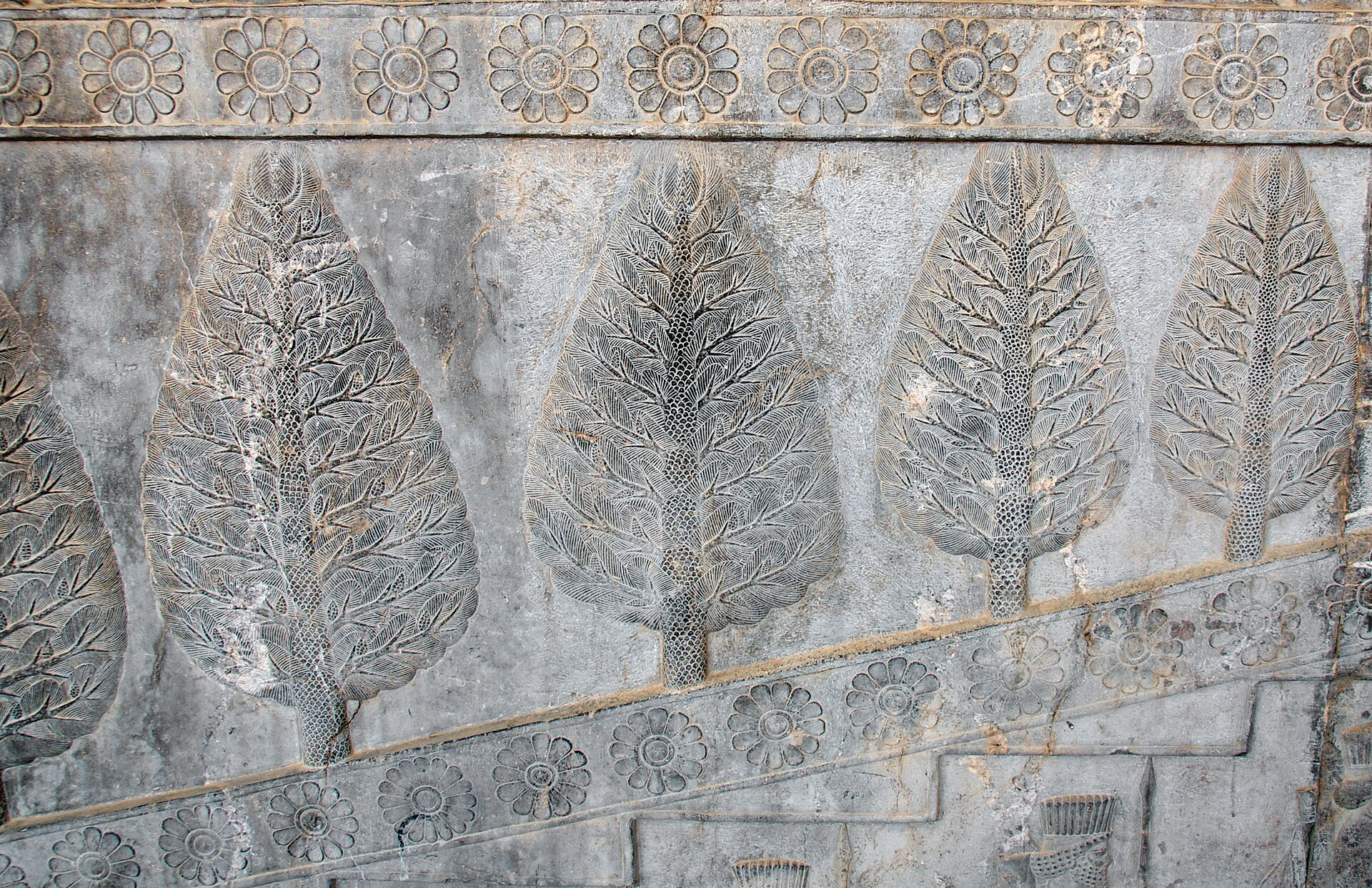
Header image: Cypress trees carved on the Apadana staircase at Persepolis. Photo: A.Davey, Wikimedia Commons, CC BY 2.0