
Updated November 2026 The Under-Glass Painting Museum is still open in its Qajar-era villa off Saadi Street; we have corrected the museum’s name and history and added visiting tips.
The Under-Glass Painting Museum, often searched for as Tehran’s stained glass painting museum, is one of the city’s most rewarding small museums and one that many Tehranis have never heard of. Tucked away in a restored villa off Saadi Street in old central Tehran, it is devoted entirely to naghashi posht-e shisheh, the Iranian art of painting on the reverse side of glass.

The art is not stained glass in the church-window sense. Artists paint in oils directly onto the back of a sheet of glass, working in reverse: the details and highlights go on first and the background last, so that the finished image is seen through the glass with a glossy, jewel-like finish. The technique became popular in Iran in the Safavid era and flourished under the Qajars, when painted glass panels decorated homes, coffee houses and shrines.
The collection runs to a few hundred works, from Safavid-era pieces to contemporary paintings. Subjects range widely. There are portraits of Qajar princes and ladies, religious scenes and figures, episodes from the Shahnameh and other Persian poetry, landscapes, and charming everyday scenes of people playing music, reading or exercising. Look out for decorated objects as well as framed panels, including a pair of painted chairs that visitors often single out. The displays are uncluttered, so you can take your time with each piece, and the colours are remarkably vivid.
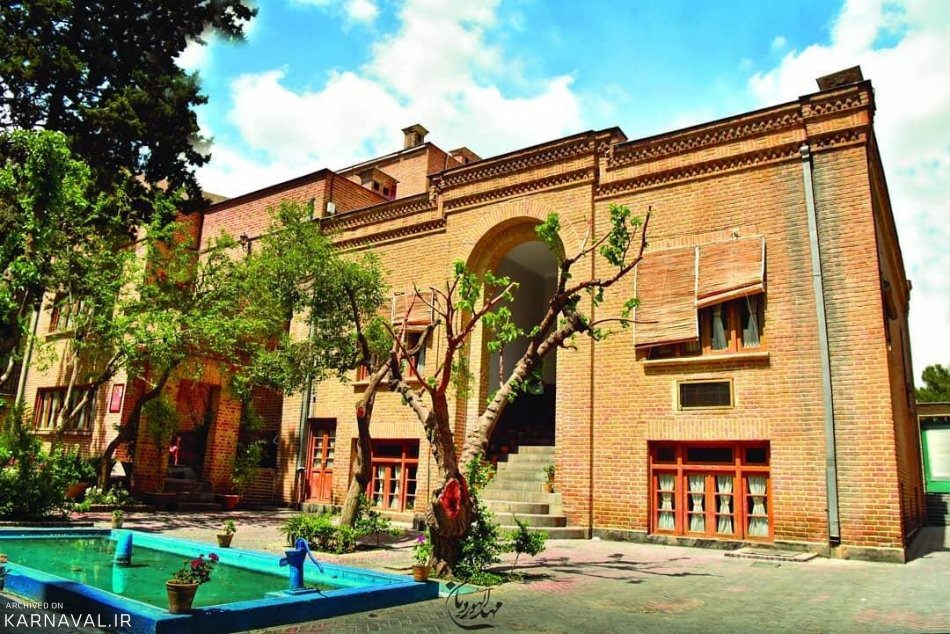
The building is part of the appeal. The villa dates from the late Qajar and early Pahlavi period, when this part of Tehran was on the edge of the city and wealthy families built garden houses here. It belonged to a physician, Dr Siavash Shaghaghi, before passing to Tehran Municipality. After restoration it was handed to Iran’s cultural heritage authorities and opened in 1998 as the country’s first museum dedicated to under-glass painting, according to the official Visit Iran portal. The rooms, garden and small café give a sense of how Tehran’s well-off lived a century ago, in an area where a few other old villas still survive between modern buildings.
The museum is easily overshadowed by the much better known Glass and Ceramics Museum (Abgineh Museum) on 30 Tir Street, which is why it stays quiet. If you enjoy one, you will enjoy the other, and they are close enough to visit on the same day.
A few practical tips:
- Finding it: the museum is on a side street off Hedayat Street, which runs off Saadi Street. Use a taxi app or a local map app such as Balad or Neshan and search for the Persian name, Muzeh-ye Naghashi Posht-e Shisheh.
- Opening times: it is generally open daily during the day, but like all Iranian museums it closes on religious mourning days and some public holidays. Check before you go.
- Driving: the museum is inside central Tehran’s traffic restriction zone, so park outside it or take a taxi or the metro.
- Accessibility: it is an old house, and access can be difficult for visitors with limited mobility.
- Time needed: allow about an hour, plus time for tea in the garden.
For more of the city’s museums and historic sites, browse our Tehran city guide.