This page contains affiliate links. If you buy through them, LiT may earn a small commission at no extra cost to you. Read our disclosure.
You hear Persian music everywhere in Tehran: classical singing drifting out of taxis, pop from the 1970s in juice bars, a daf drum at a wedding. It can sound unfamiliar at first, because Persian classical music is built on its own system of modes, the dastgah, and on long passages of improvisation rather than fixed compositions. The best way in is to listen to a few great recordings. Here is where to start, from the most loved singer of the last half-century to the pop star who defined an era. Every album and item below was checked on Amazon UK in November 2026.
In this guide
Start with Shajarian. Mohammad Reza Shajarian, who died in 2020, was the greatest singer of Persian classical music of his generation and is still revered across Iran; when he died, crowds gathered outside the Tehran hospital where he spent his last days. For a first album, try Night Silence Desert, recorded in 2000 with his son Homayoun and with music by Kayhan Kalhor. The CD is hard to find now, but the album is available to stream and download through Amazon Music.
Kayhan Kalhor and the kamancheh. Kalhor plays the kamancheh, a bowed fiddle held upright on the knee, and is the Iranian musician most likely to be heard in concert halls in Europe and America. The Wind, released by ECM in 2006, is a long, hypnotic duet with the Turkish saz player Erdal Erzincan. For something gentler, It’s Still Autumn pairs him with the Dutch jazz pianist Rembrandt Frerichs and his trio.
The classical masters. To hear the dastgah system played the traditional way, Persian Classical Music on Nonesuch features the santur master Faramarz Payvar and the singer Masoumeh Mehrali, with performances in Dastgah-e Shur and Homayoun, two of the most important modes. Then try The Art of Improvisation by Hossein Alizadeh, one of the finest living players of the tar and setar, the long-necked lutes at the heart of the tradition.
Googoosh and the golden age of pop. Before 1979 Tehran had one of the liveliest pop scenes in the region, and its biggest star was Googoosh. After the revolution she was silenced for two decades, until she left Iran in 2000 and began performing again for the diaspora. Her songs are still sung at every Iranian party. This Googoosh CD includes classics such as “Shekayat” and “Nimeyeh Gomshodeh-ye Man”.
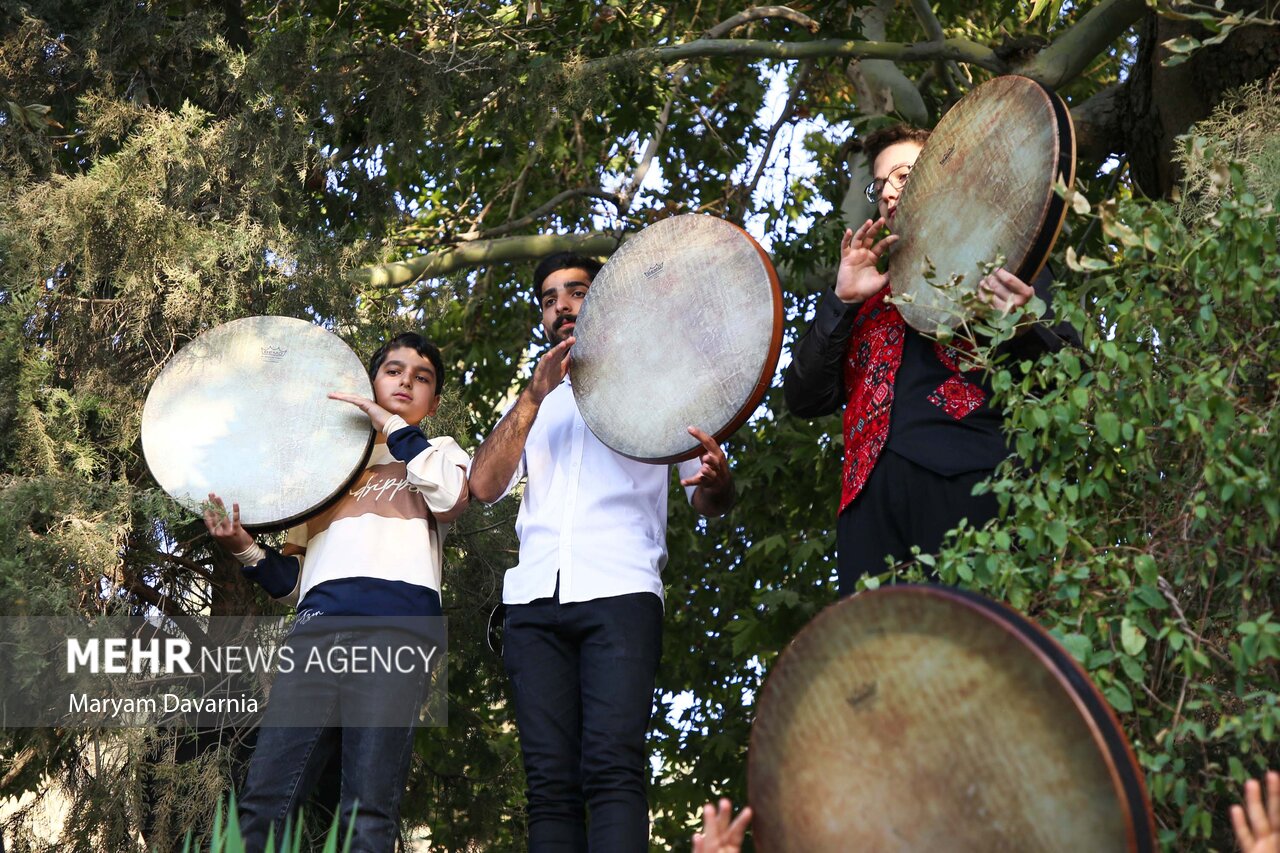
Play it yourself. The daf, a large frame drum with metal rings inside the rim, has become hugely popular in Iran over the last 30 years, and daf classes are a fixture of Tehran’s music schools. It is also the easiest Persian instrument to buy in Britain: this Persian daf with a soft case is about 54cm across. The tar, setar and santur are best bought from a specialist maker who can set them up properly, and Amazon UK does not sell them. If you play the piano, Persian Piano 1 by Amir Hossein Taei is a book of Persian melodies arranged for the instrument.
Read about it. For a proper introduction to how the music works, its instruments, modes and history, The Art of Persian Music by Jean During, Zia Mirabdolbaghi and Dariush Safvat is the standard English-language guide.
Make a night of it. Persian music sits naturally alongside its poetry: much of Shajarian’s repertoire sets the words of Hafez and Rumi. See our guide to Persian poetry in English, and for a film night, our list of Iranian films to watch.
Main image: Daf players in Bojnourd by Maryam Davernia/Mehr News Agency, Wikimedia Commons, CC BY 4.0.