This page contains affiliate links. If you buy through them, LiT may earn a small commission at no extra cost to you. Read our disclosure.
Persian cooking is slow, generous and built on a handful of techniques rather than a cupboard full of gadgets. Most Iranian kitchens have the same few things in them: a good pot for rice, something to grind saffron, a set of long flat skewers and a cloth to spread on the floor or table when guests arrive. If you have already stocked up on ingredients from our Persian pantry guide, this is the kit that turns them into a proper Iranian meal. Every item below was checked on Amazon UK in November 2026.
In this guide
The rice pot, and the secret of tahdig. Rice is the centre of almost every Iranian meal, and the prize is tahdig, the golden, crunchy crust that forms at the bottom of the pot. To get it to release in one piece you need a heavy pot with a good non-stick coating and a tight lid. The Tefal Titanium Excellence 24cm stewpot, 5.4 litres, is a sensible size for four to six people. Iranian cooks wrap the lid in a clean tea towel, called a damkoni, so the steam is absorbed rather than dripping back onto the rice; any thick cotton towel does the job. Many Iranian homes also use an electric Persian rice cooker, which we cover in the pantry guide.
Grinding saffron properly. Saffron is expensive, and the way to make a few threads go a long way is to grind them to a powder before you use them. Iranians do it in a small mortar with a pinch of sugar, which acts as an abrasive, then pour over a little hot water and leave it to bloom for ten minutes. A mini mortar and pestle only seven centimetres across is the right size, because saffron gets lost in a big one. Buy the saffron itself from our pantry guide.
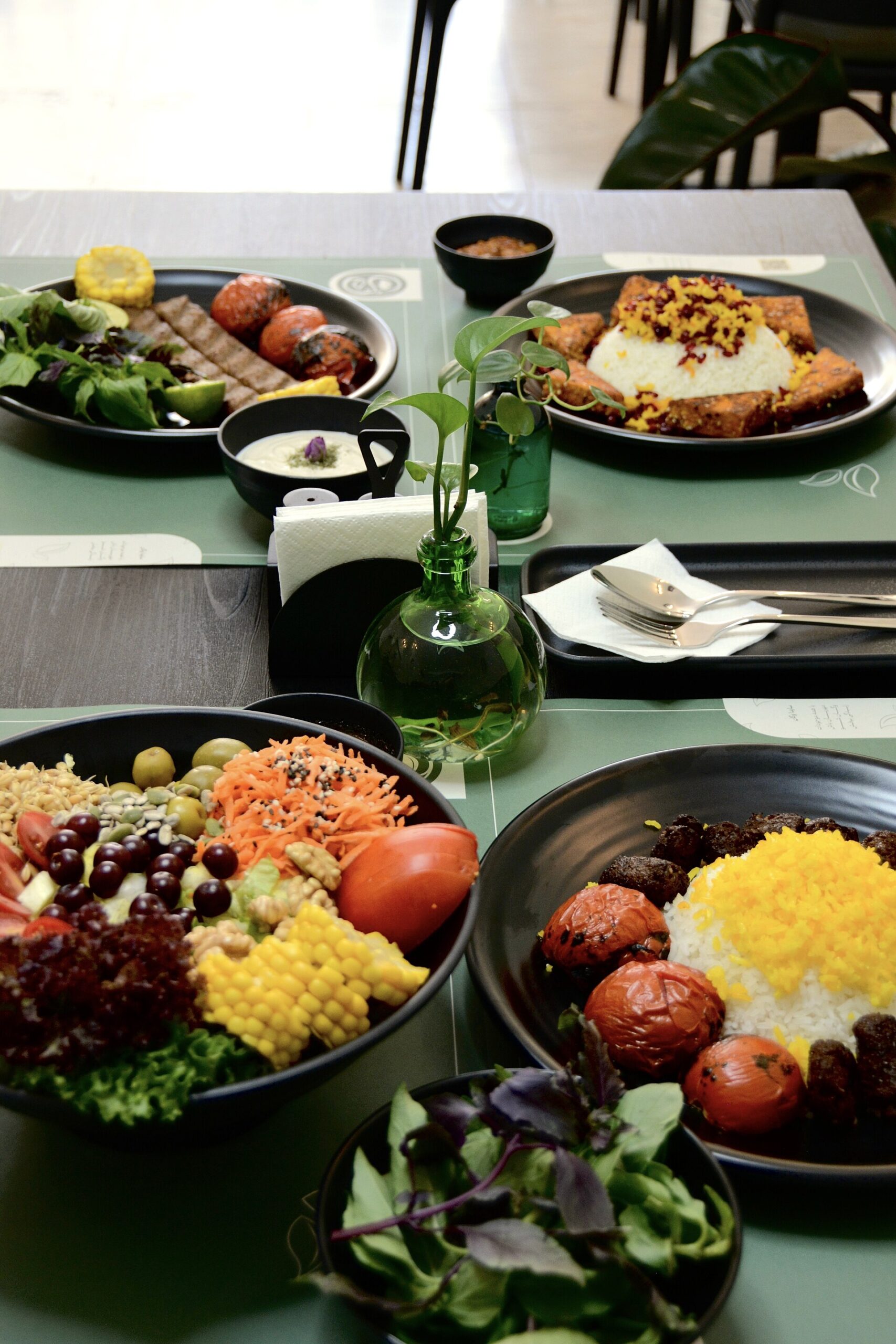
Kebabs at home. Chelow kabab, rice with grilled kebab, is the dish most visitors fall for in Tehran. The minced-meat version, koobideh, will not stay on an ordinary round skewer: it needs wide, flat ones the meat can grip. These flat stainless-steel skewers are about 60cm long and come in a set of eight, enough for a barbecue for a family. Squeeze the mixture firmly along the blade, make a few dents with your fingers, and turn often over a hot grill.
Ash reshteh noodles. Ash reshteh is the thick soup of beans, herbs and noodles topped with kashk, fried onion and dried mint that Iranians cook in big pots, especially in the days before Nowruz. The noodles, reshteh, are flatter and saltier than pasta and are hard to substitute. Anjoman reshteh are sold on Amazon in 450g packs, enough for a large pot. The kashk and dried mint are in the pantry guide.
Pomegranates for Yalda. On Yalda Night, the longest night of the year on 20 to 21 December, Iranian families stay up late reading Hafez and eating pomegranates and watermelon. A bowl of jewel-red seeds is the centrepiece, and getting them out cleanly is a messy job. A pomegranate deseeder from the Spanish kitchenware brand IBILI makes it quicker. Read more about the night itself in our Yalda guide.
The sofreh. A sofreh is the cloth Iranians spread for a meal, traditionally on the carpet and now just as often on a table. The most beautiful are ghalamkar, cotton printed by hand with carved wooden blocks, a craft long associated with Isfahan. This hand block-printed ghalamkar-style tablecloth is a square of about one metre, large enough for a small table or a Yalda or Nowruz spread. It is not cheap, so treat it as a gift or a keepsake.
One cookbook to start with. If you buy a single book, make it Joon: Persian Cooking Made Simple by Najmieh Batmanglij, the writer who did more than anyone to bring Iranian home cooking to English-speaking kitchens. It is shorter and more practical than her classic Food of Life, and it covers the everyday basics, rice included. For more ideas, see our list of the best Persian cookbooks in English.
Make it a proper Persian table. Finish the meal with tea: our guide to making Persian tea at home covers the samovar, the glasses and the nabat.
Main image: Persian kebab with saffron rice by Rkarimiy, Wikimedia Commons, CC BY-SA 4.0.