Updated 9 November 2026 with the latest exchange rate, inflation figures and advice on paying for things.
Product prices in Iran can be baffling when you first arrive. Labels are printed in Persian numerals, people quote prices in tomans while the banknotes say rials, the same packet of washing powder can cost very different amounts depending on where it was made, and the figure on the shelf may well have changed since last week. Once you understand how pricing works, though, shopping in Tehran becomes much simpler, and choosing well can save you a great deal.
For current figures on the dollar, gold and housing, see our Iran prices tracker, refreshed every week, and our live exchange rates, which update through the day.
What your money is worth right now
On 9 November 2026 the US dollar was trading at about 264,000 tomans on Tehran’s open market, the euro at about 298,000 and the British pound at about 354,000. That is the rate that matters for everyday life: it is what exchange offices pay and what shopkeepers have in mind when they reprice imported goods.
To put it another way, one dollar buys roughly 2.6 million rials. A price tag reading 2,640,000 rials, or 264,000 tomans, is therefore worth about a dollar. Rates move every day, sometimes sharply, so check the live rates before you change money or compare prices with home.
Rials, tomans and the coming redenomination
The official currency is the rial, but almost everyone talks and thinks in tomans. One toman is ten rials, so a price tag showing 500,000 rials will be read out as 50,000 tomans. In conversation people often drop the thousands altogether, so “fifty” can mean 50,000 tomans. Always check which unit someone means before you hand over money.
This is set to change. Iran has approved a redenomination that removes four zeros from the currency, so one new rial will equal 10,000 old rials. According to IntelliNews, systems have until December 2027 to prepare, followed by a three-year period in which old and new notes circulate together, with the old rial withdrawn by 2030. The central bank plans to show prices in both old and new units during the switch, so expect dual labelling on shelves and receipts.
Reading printed prices
Most packaged goods made in Iran carry a price printed on the wrapper or box, labelled as the consumer price (qeymat-e masraf-konandeh). That figure is the most a shop should charge, which makes everyday items such as biscuits, dairy products, toiletries and cleaning products easy to compare. Staples such as bread have long been subject to government price controls.
The catch is that these numbers are written in Persian numerals. Learning the ten digits takes an afternoon and pays off every time you shop:
| Western | 0 | 1 | 2 | 3 | 4 | 5 | 6 | 7 | 8 | 9 |
|---|---|---|---|---|---|---|---|---|---|---|
| Persian | ۰ | ۱ | ۲ | ۳ | ۴ | ۵ | ۶ | ۷ | ۸ | ۹ |
Persian numbers are read from left to right, just like Western ones, even though Persian text runs right to left. Until you are confident, simply ask; nobody will mind, and most shopkeepers will happily tap the figure into a calculator or phone for you.
Why prices keep rising
Inflation is a fact of life in Iran, and 2026 has been exceptionally hard. Figures from the Statistical Centre of Iran put annual inflation at 76.8% in the twelve months to 22 October 2026, with prices 88.7% higher than a year earlier. Food has risen fastest: by the Statistical Centre’s measure, food prices more than doubled over the year to June.
In practice this means the printed price on a product can change between one delivery and the next, and older stock may still show a lower figure than new stock. If you see two different printed prices for the same item, the shop is entitled to charge the one on the packet in your hand. It also means any figure you read online, including older articles on this site, can be out of date within weeks, which is why we point you to the weekly tracker rather than quoting fixed prices here.
Imported versus Iranian-made goods
The biggest saving you can make is to choose Iranian-made products. Iran protects local industry heavily: when a product can be made domestically, the imported version is often banned or carries steep duties, and every slide in the rial pushes import prices up again. Imported sauces, branded cleaning products, baby items and electronics are typical examples of goods that cost far more than local alternatives.
Many international brands get round this by producing in Iran through local partners, so you will find familiar names on goods that are actually made in the country and priced accordingly. A friend of ours spent months buying imported nappies before discovering that a well-known Turkish brand manufactured in Iran cost roughly a third of the price for much the same product.
Quality is generally good. Iranian crisps, sauces, dairy products and household cleaners are perfectly decent, and in many cases you will not notice the difference. Try the local version first and only pay the import premium for the few things you genuinely cannot do without.
Where to shop
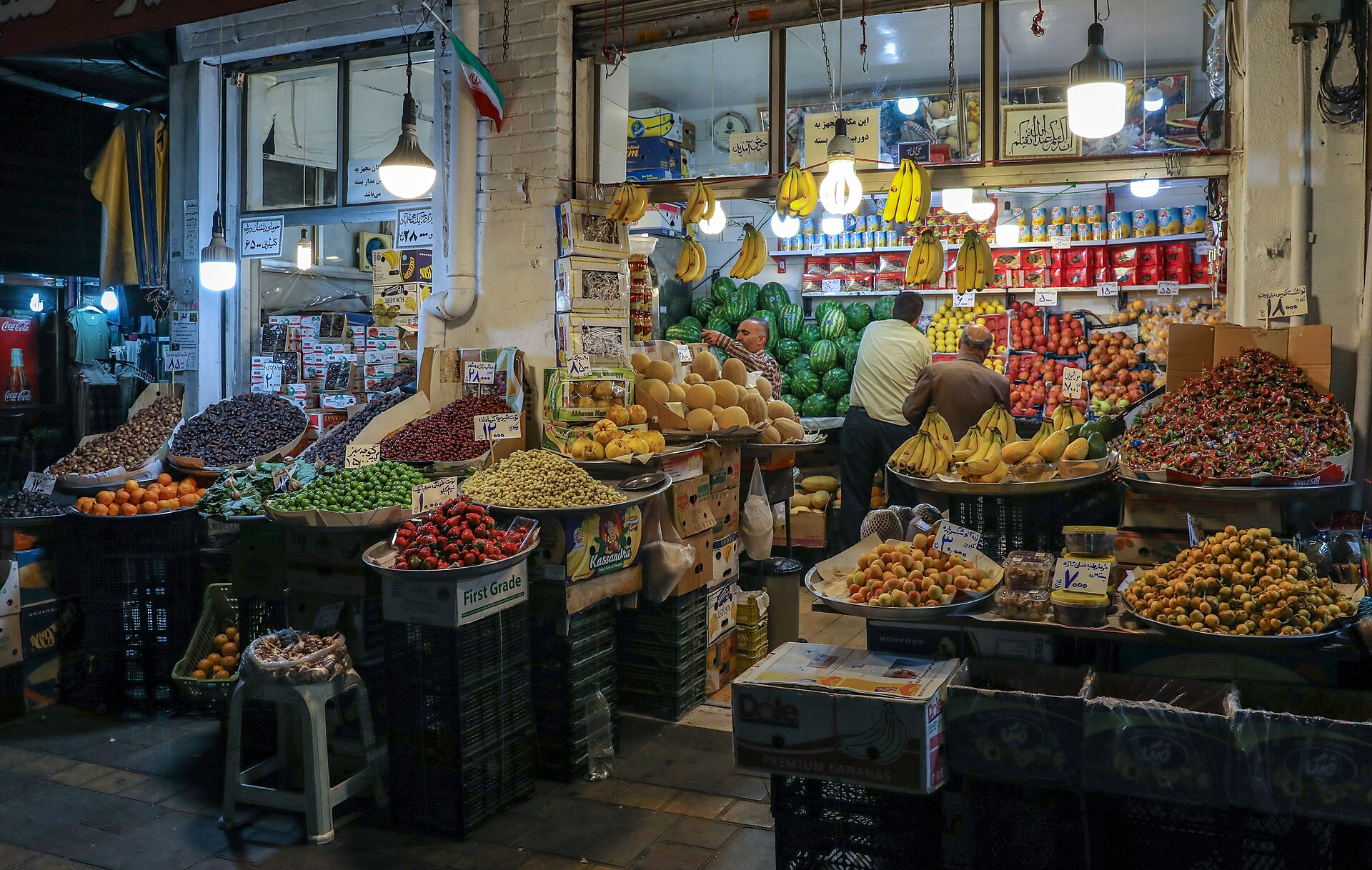
Chain supermarkets such as Refah, Ofogh Kourosh and Shahrvand have fixed prices and are the easiest place to start. For fruit and vegetables, the municipal fruit and vegetable markets (meydan-e mive va tarebar) and neighbourhood greengrocers are usually cheaper and fresher. Online shops and delivery apps such as Digikala and Snapp Market are widely used in Tehran and let you compare prices before you buy.
Haggling is normal in the bazaar and for larger purchases such as carpets, furniture or a second-hand car, but not in supermarkets or for goods with a printed price.
Paying for things
Foreign-issued Visa and Mastercard cards do not work in Iran because of international sanctions, so visitors need cash, changed at a licensed exchange office, or a prepaid tourist card from an Iranian bank. Residents with a local bank account pay by debit card, and card readers are found in almost every shop, taxi and market stall. Large sums in cash are bulky, so most people move to cards as soon as they can.
Quick tips for shopping in Tehran
- Learn the ten Persian numerals so you can read printed prices yourself.
- Always confirm whether a spoken price is in tomans or rials.
- Treat the printed consumer price on packaged goods as the maximum you should pay.
- Compare Iranian-made and imported versions of the same product before buying.
- Check the live exchange rate before changing money, and expect prices to change often.
For more on managing money day to day, from bank cards to transfers, see our banking and finance section.
Learn the Persian: Persia Learning’s lesson on numbers, prices and money explains tomans and rials and how prices are said out loud. Try the first lesson free →