Updated November 2026 We have added the long-established Glassware and Ceramic Museum (Abgineh) to this guide alongside the private Farzaneh Ceramic Museum, which opened in 2020.
If you are looking for a ceramic museum in Tehran, you have two quite different options. The Glassware and Ceramic Museum of Iran, known locally as the Abgineh Museum, is the city’s main collection of historic pottery and glass, housed in a beautiful early 20th-century mansion downtown. In the north of the city, the Farzaneh Ceramic Museum is a small private museum built around the work of a contemporary ceramic artist. Both are worth knowing about if you have any interest in one of Iran’s oldest crafts.
Glassware and Ceramic Museum of Iran (Abgineh)
The Abgineh Museum sits on 30 Tir Street in central Tehran, a short walk from the National Museum and the old embassy quarter. The building is as much of an attraction as the objects inside. It was the home of the Qajar-era statesman Ahmad Qavam between 1921 and 1951, later served for several years as the Egyptian embassy, and was converted into a museum in the late 1970s. The Austrian architect Hans Hollein designed the conversion, adding elegant display cases and staircases that suit the mansion’s mix of Persian and European styles.
The collection runs to more than a thousand pieces, from prehistoric pottery to Islamic-period lustreware and Qajar glass. Look out for ceramics from historic centres such as Nishapur, Kashan, Gorgan and Rey, and do not miss the mirror hall on the upper floor, decorated with traditional ayeneh-kari mirrorwork. It is a manageable museum: an hour to an hour and a half is enough for most visitors.
Practical tips:
- Combine it with the National Museum of Iran and a walk along 30 Tir Street, which is known for its street-food stalls in the evening.
- Foreign visitors pay a higher ticket price than Iranians, as at most state museums; check our Iran price trackers for a sense of current costs.
- Opening hours change with the season and on public holidays, so it is worth calling ahead or checking locally before you go.
Farzaneh Ceramic Museum
The Farzaneh Ceramic Museum opened in 2020 on Jebeli Street, just north of Niavaran Square in the far north of Tehran. It was founded by the ceramic artist Leila Farzaneh to display her own work, and at its launch it was described as the first private museum in Iran devoted to ceramic art.
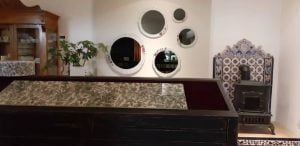
Unlike the Abgineh, this is a contemporary space. The idea from the start was to make it a place where people engage with ceramics rather than simply look at them behind glass, with workshops and educational sessions on how ceramics fit into everyday life. Pieces range from decorative vessels to sculptural work.
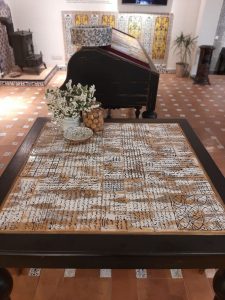
Because it is a small, privately run venue that also works as the artist’s studio, opening times are not fixed in the way a state museum’s are. Contact the studio before making the trip, and if you are in the area, combine a visit with Niavaran Palace and the cafés around Niavaran Square.
A craft with deep roots
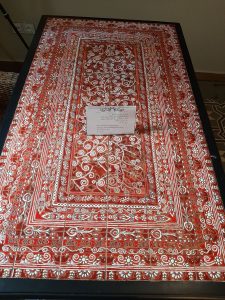
Pottery has been made on the Iranian plateau for many thousands of years, and it has shaped the country’s architecture and daily life as much as its art. Over the centuries Persian potters absorbed new techniques and designs, from early painted wares to the glazed tiles that cover the country’s great mosques. Today, ceramics are made both industrially and by hand, and traditional pottery villages and towns remain active across Iran, including Lalejin in Hamedan province, Meybod in Yazd province and Kalpuregan in Sistan and Baluchestan.
Seeing the historic pieces at the Abgineh and the modern work in Niavaran on the same trip gives a good sense of how that tradition continues. If you enjoy smaller specialist collections, our guide to the International Dolls Museum in Tehran is another good addition to a museum day.