This page contains affiliate links. If you buy through them, LiT may earn a small commission at no extra cost to you. Read our disclosure.
If you walk into an Iranian home in the days before Nowruz, the Persian New Year, you will usually find one table that has been given more attention than any other room in the house. It is covered with a cloth, and on it sit seven things, each one starting with the Persian letter S. That table is the Haft Seen, which means, plainly, seven S’s. Families gather around it at the exact moment the new year arrives, and it stays set through the thirteen days of the holiday.The table as a public display
The Haft Seen is the main symbol of Nowruz, in the way a Christmas tree is the main symbol of Christmas. It is not only a private family table. In the days around the new year, Haft Seen tables and their items are displayed as decoration in streets, shops, shopping malls, parks, and other popular public places. People take their New Year photos beside their own table at home and beside the large public displays, and many people put great effort into making the nicest table they can, choosing the cloth, the dishes, the flowers, and the arrangement with care. If you are visiting Iran at Nowruz, look out for these public tables as well as the home ones: they are meant to be seen, admired, and photographed. Every Haft Seen table is unique. Millions of Iranians design their own setting to their own taste, from simple tables with just the seven items to elaborate tables made by the wealthy.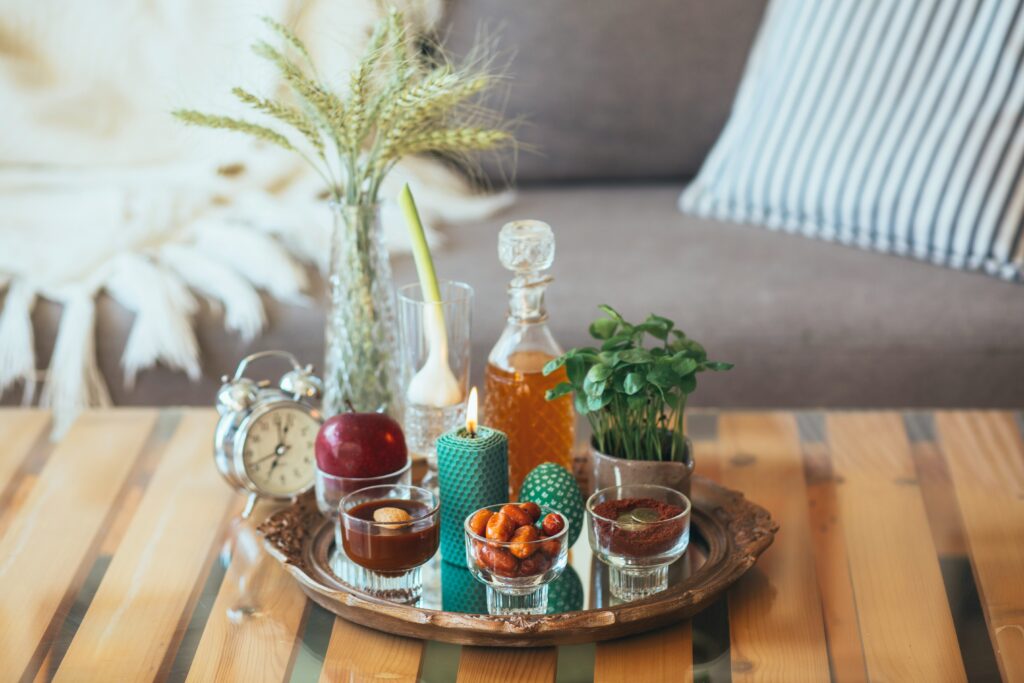
The seven items
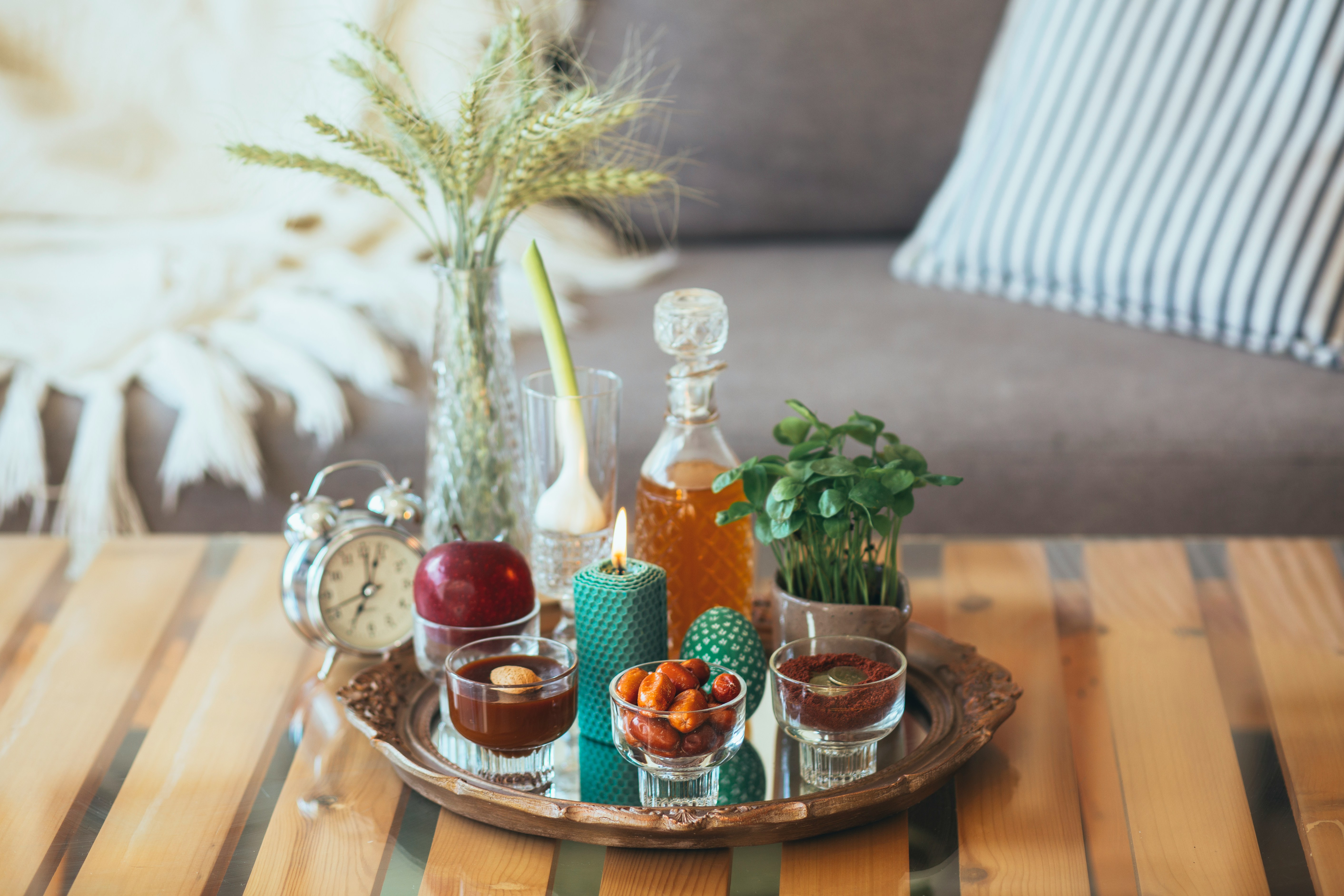
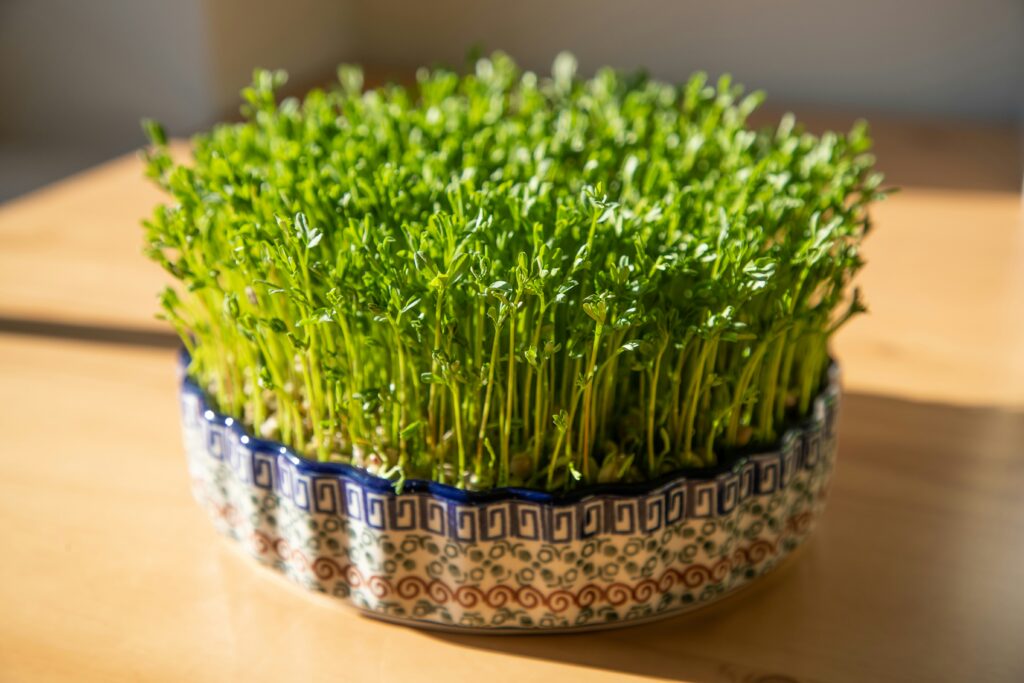
Each of the seven belongs in its own small bowl or dish. The names vary a little from family to family, so both spellings are given where they differ. Sabzeh (سبزه) – wheatgrass or lentil sprouts, grown in a dish. It stands for rebirth and the renewal of nature. It is the one item you have to plan ahead for, because the seeds need time to sprout before the new year. Samanu (سمنو) – a sweet pudding made from wheat germ. It stands for fertility and abundance, and also for affluence and the sweetness of life. Senjed (سنجد) – the dried fruit of the oleaster, sometimes described as the fruit of the lotus tree. It stands for love and affection. Serkeh (سرکه) – vinegar. It stands for patience and age. Seeb (سیب), also written Sib – an apple. It stands for health and beauty. Seer (سیر), also written Sir – garlic. It stands for good health. Somaq (سماق), also written Somagh – sumac, the crushed spice made from berries. It stands for the sunrise and the spice of life.Two more S items you will often see
Not every family stops at seven. Two further S items turn up regularly on the table: Sekkeh – a coin, for wealth and prosperity. Sonbol – hyacinth, a spring flower, for beauty and fragrance.What else goes on the table
Beyond the S items, most tables also hold a mirror, for self-reflection and the sky; candles, for light and guidance; a goldfish in a bowl of water, for movement and life; coloured eggs, for birth and creation; and a book of wisdom, placed where it can be seen. That book is usually the Quran, the Shahnameh, or the Divan of Hafez. Sweets are often there too, for spreading sweetness through the year.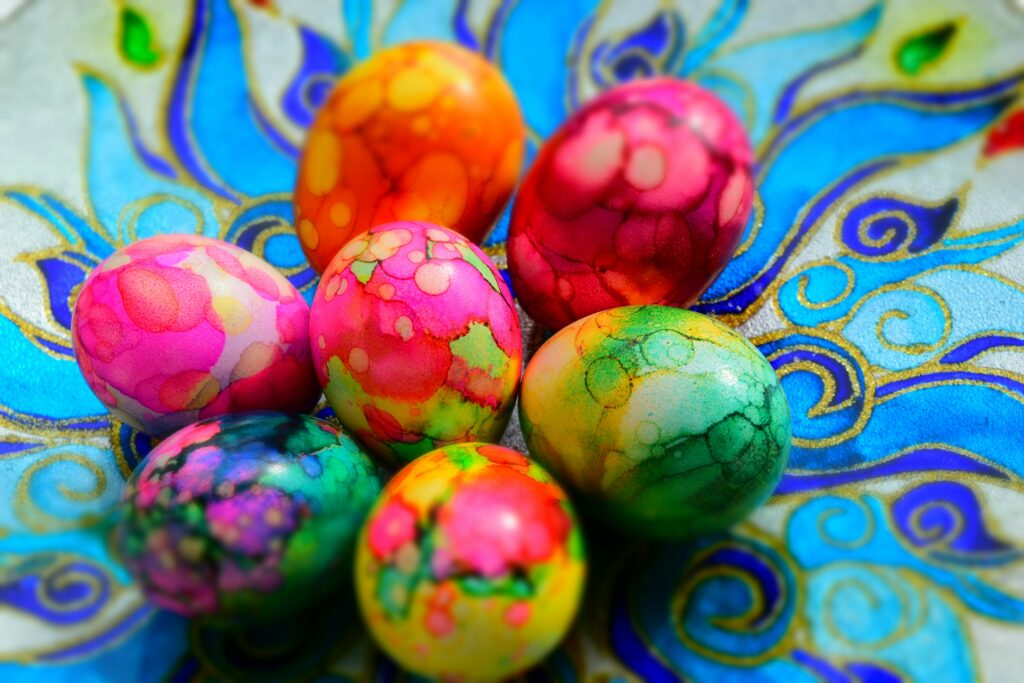
An old story about the table, told as tradition
There is an old story that the table was once called Haft-sheen, seven Sh items: Sham (candle), Shahd (honey), Shirini (sweets), and Sharab (wine) among them. The story goes that after the Arab conquest of Persia, wine came to be seen as sinful, so it was replaced with Serkeh (vinegar), and the rest of the items were replaced with S items over time. This is a traditional story, not settled history, and it is worth keeping it labelled that way.Setting it up, step by step
1. Choose a tablecloth. A traditional Persian design, such as Termeh, is the usual choice. The cloth itself is part of the display, and the table is called the sofreh. 2. Arrange the seven S items. Each one goes in a separate bowl or dish, spaced so the table reads as a set rather than a pile. 3. Add the other symbols. Mirror, candles, goldfish, eggs, coins, and flowers go around the seven, not in front of them. 4. Place the book. Put the book of wisdom where it stands out, since it is the item families turn to at the moment of the new year. 5. Finish the arrangement. Step back and check that everything is neat and visible. A crowded table hides the items; a spaced one shows them.View this post on Instagram
Tips
Plan ahead. Gather the items well in advance, and start the sabzeh about two weeks before Nowruz, so it has time to sprout. If a traditional item is hard to find where you live, improvise with something similar that starts with S; the symbolism matters more than an exact shopping list. And set the table together: in most families, decorating the eggs and arranging the dishes is a shared job, not one persons task. If you are buying ready-made items in Tehran, the Grand Bazaar and Tajrish Bazaar are good places to start.What happens to the table after day thirteen
The table stays set for the thirteen days of Nowruz. On the thirteenth day, Sizdah Be-dar, families take the sabzeh outside, tie knots in its blades while making a wish, and throw it into running water. That is the tables last act, and it is covered in full in our separate Sizdah Be-dar guide.For the wider celebration, see our main Nowruz guide.
Where to buy what you need. If you are setting a table outside Iran, our guide to everything you need for a haft-sin goes through each item. Jars of samanu, packets of senjed and sumac can all be ordered online, and hyacinth bulbs planted indoors a few weeks ahead should flower in time.
Got a question this guide didn’t answer?
Ask people who live in Tehran, or have just moved there, in the LiT forum. Club members can also put questions straight to the LiT team in Ask LiT.