Updated November 2026 Section 2 is now open in both directions after the return carriageway opened in September 2025; Section 3 is still under construction, with completion targeted for 2030.
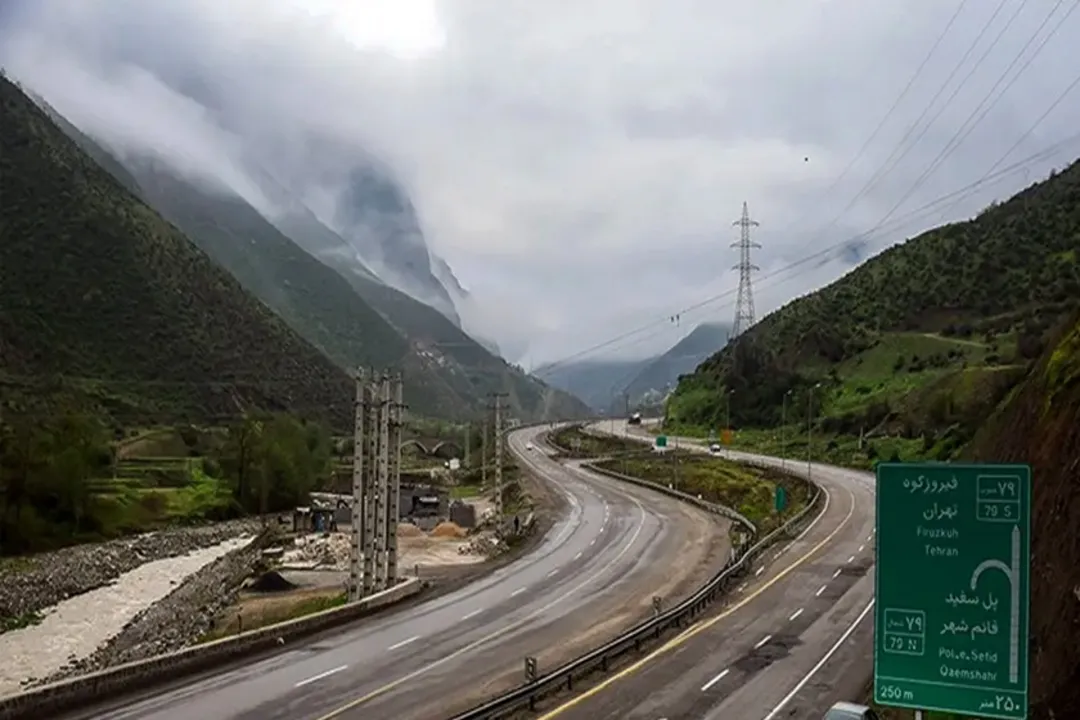
The Tehran-North Freeway (Azadrah-e Tehran-Shomal) is the long-promised fast road from the capital through the Alborz to the Caspian coast at Chalus. As of November 2026, three of its four sections are in use, and you can now drive the new road from north-west Tehran all the way to Pol-e Zanguleh in both directions. The difficult middle stretch down to Marzanabad is still being built, so for now every journey still finishes on the old Chalus Road.
The project dates back to before the 1979 revolution, stalled for years, and has been through many missed deadlines. This page sets out what you can actually use today and what is still to come.
What is open now
The freeway is about 121 km long and is divided into four sections. Here is where each stands:
| Section | Route | Length | Status |
|---|---|---|---|
| 1 | Tehran (Hemmat/Azadegan interchange) to Doab, Shahrestanak | 32 km | Open since February 2020 |
| 2 | Doab to Pol-e Zanguleh | about 25 km | Northbound open since July 2023; southbound open since September 2025 |
| 3 | Pol-e Zanguleh to Marzanabad | about 46–54 km (figures vary) | Under construction |
| 4 | Marzanabad to Chalus | 20 km | Open since 2013 |
The biggest change since this article was first written is the southbound side of Section 2. President Masoud Pezeshkian opened the 15.5 km return leg from Shahrestanak to the Alborz Tunnel on 8 September 2025, according to Press TV. That stretch includes 16 tunnels and 12 bridges. Before then, drivers coming back from the coast had to use the old road for much of the climb, which made Friday and holiday evenings painful.
Section 2 carries the Alborz Tunnel, at roughly 6.4 km one of the longest road tunnels in Iran. Section 1 has 28 tunnels of its own, the longest being the Talun Tunnel at nearly 4.9 km.
What is still being built
Section 3, the mountain and forest stretch from Pol-e Zanguleh down to Marzanabad, is the hardest part of the route. It needs dozens of tunnels and bridges through steep terrain, and its path crosses protected forest and wildlife habitat, which has slowed planning and approvals. It is a joint project between the government and the Mostazafan Foundation, which oversees the whole freeway. Chinese contractors worked on the project in earlier years before Iranian firms took over.
The Mostazafan Foundation has said it expects Section 3 to be finished around 2030. Work was visibly under way in summer 2026, when the foundation’s head toured the site in August. Given the project’s record, treat 2030 as a target rather than a promise.
Driving to the Caspian today
In practice, a trip from Tehran to Chalus now looks like this:
- Join the freeway in north-west Tehran and take Sections 1 and 2 through the tunnels to Pol-e Zanguleh.
- From there, continue on the old Chalus Road (Road 59) through the valley to Marzanabad. This is the slow, scenic part, and it is where the queues form.
- At Marzanabad, rejoin the new road for the final 20 km to Chalus.
The new sections have taken a real chunk of time out of the drive, but the bottleneck on the old road remains until Section 3 opens. A few tips from experience:
- Avoid Thursday afternoons heading north and Friday afternoons and evenings heading south if you can. Long weekends and the Nowruz holidays are the worst of all.
- Traffic police often run parts of the Chalus Road one way at peak times. Check the latest traffic announcements or a navigation app such as Neshan or Balad before you set off.
- The freeway is tolled. Iran’s freeways have largely moved to electronic toll collection, so find out how to settle the charge for your car before you travel to avoid a fine later.
- Fill up before leaving the city, and carry water and snacks. A short delay in a tunnel queue can turn into a long one.
- In winter, snow and ice affect the higher stretches. Check conditions and carry chains if the forecast is poor.
If you are heading north for a weekend, see our guides to free things to do around Tehran for ideas closer to home when the roads are at their worst, and keep an eye on fuel and travel costs with our Iran price trackers.