This page contains affiliate links. If you buy through them, LiT may earn a small commission at no extra cost to you. Read our disclosure.
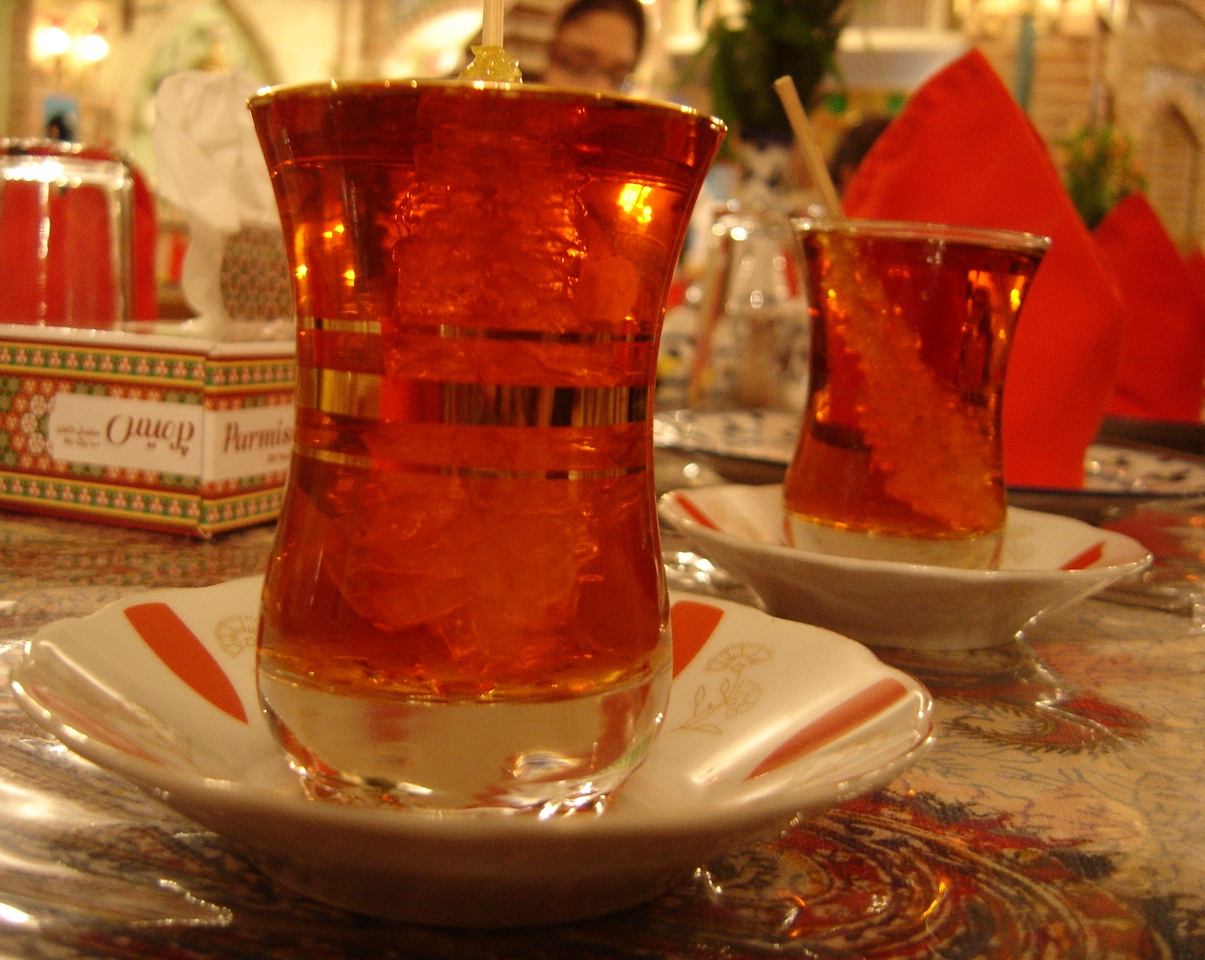
In Iran tea is not a drink so much as a background to everything else. It is poured the moment a guest sits down, at the end of every meal, in offices, in shops while you haggle over a carpet and in the tea houses tucked under bridges in the mountains above Tehran. It is almost always black, almost always served in small clear glasses so you can admire the colour, and almost never taken with milk. Making it the Persian way at home is easy, and it needs only a few things.
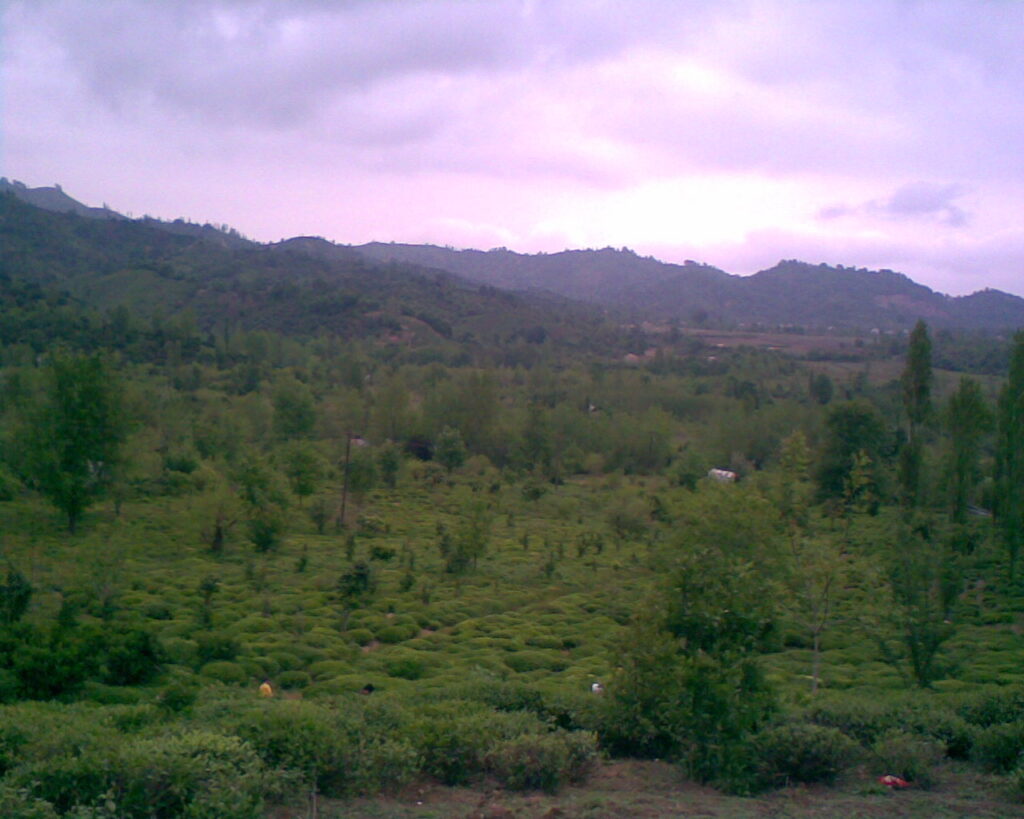
The tea. Iran grows its own tea in the green, rainy provinces along the Caspian, especially around Lahijan in Gilan, and Iranian tea is lighter and more fragrant than the strong blends drunk in Britain. Outside Iran, the closest everyday substitute is a good loose-leaf Ceylon. Ahmad Tea, a London company with Iranian roots, is the brand you will see in many Iranian homes abroad: try its Ceylon or its Earl Grey, since a hint of bergamot is very popular in Iran. Some families add a pod or two of cardamom or a few dried rose petals to the pot.
The samovar or double teapot. The traditional method is to boil water in a samovar and keep a small teapot of strong brew warming on top. Each glass is then made by pouring a little of the concentrated tea and topping it up with hot water, so everyone can have it as strong or as weak as they like. An electric samovar is the authentic option, but a double teapot, with a small pot sitting on a kettle, does the same job on any hob and takes up less room.
Brewing it right. Warm the small pot, add a generous spoonful of leaves for each person, pour on boiling water and leave it to steep on gentle heat for ten to fifteen minutes without letting it boil again. The aim is a deep reddish-amber, the colour Iranians call “rabbit’s blood” when they are being poetic about it. Fill each glass about a third with the brew and top it up with hot water.
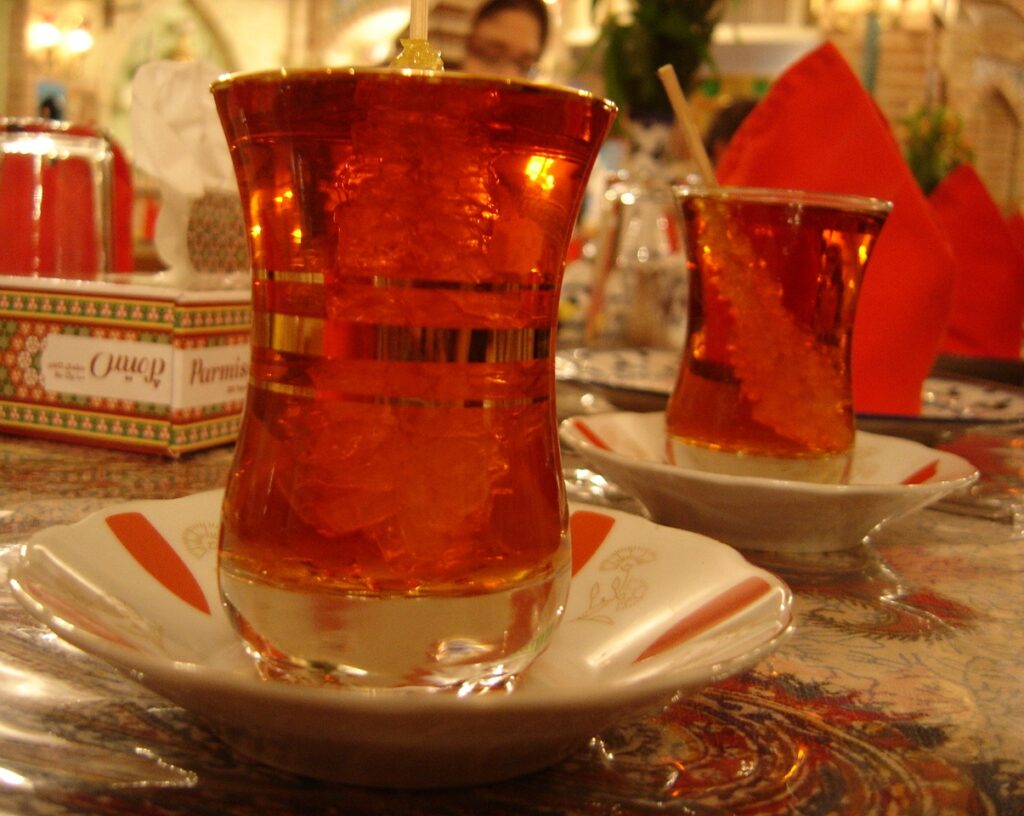
The glasses. Persian tea is served in small, thin, tulip-shaped glasses called estekan, often in a saucer or a metal holder. A set of estekan tea glasses is cheap and instantly makes the table feel right.
The sweetener. Iranians rarely stir sugar into their tea. Instead they hold a cube of hard sugar, ghand, between their teeth and sip the tea through it, or they stir a stick of nabat, a crystal rock sugar often flavoured with saffron, until it has dissolved as much as they want. Saffron nabat is also a traditional remedy for a cold or an upset stomach.
Something to go with it. Tea is often served with dates, pistachios, gaz from Isfahan or sohan, a saffron and pistachio brittle from Qom. Our Persian pantry guide has more ideas for stocking the cupboard, and our gift guide covers what to bring home from Iran.