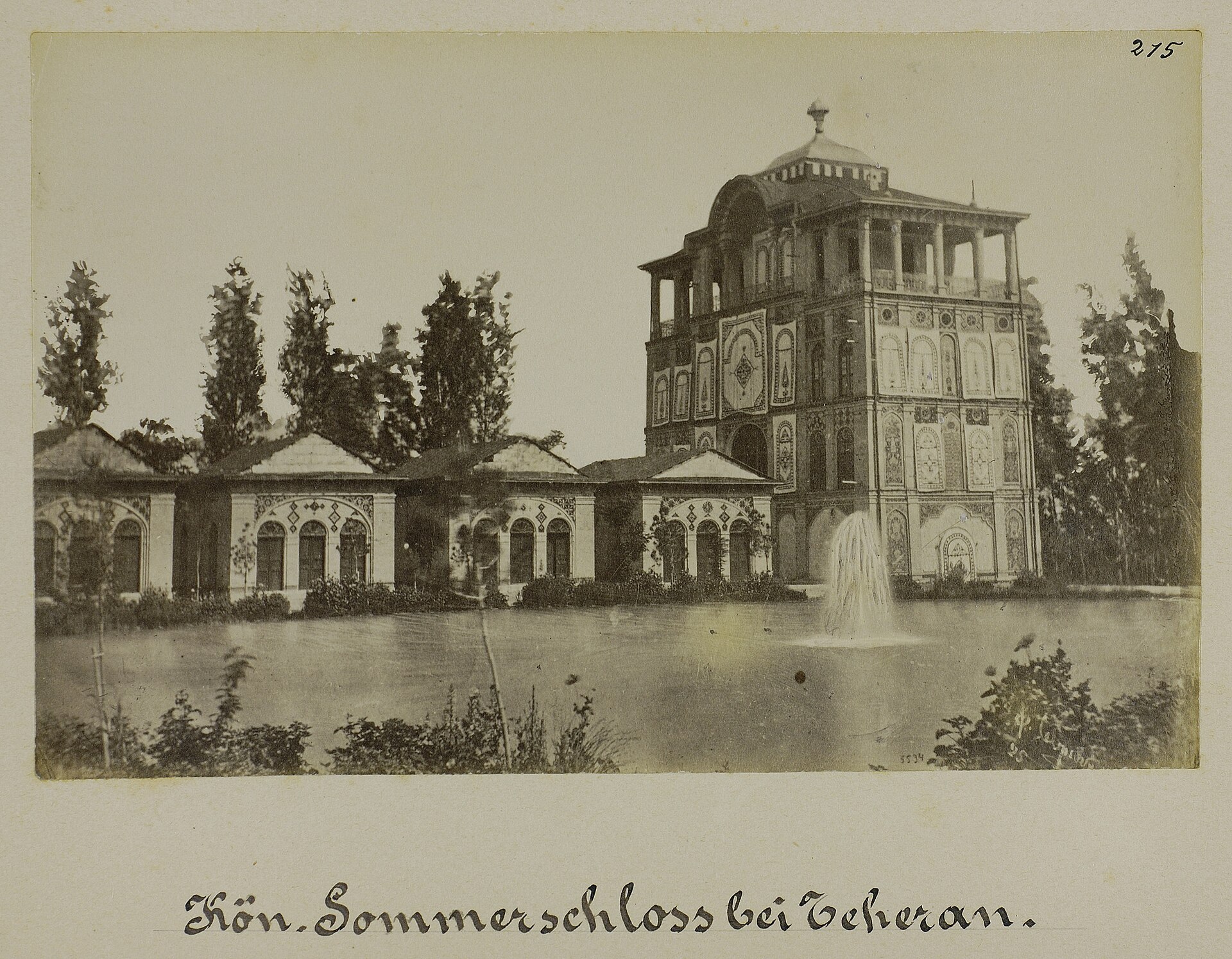
Drive along the Sayad Shirazi motorway in east Tehran and, if you know where to look, you will catch a glimpse of a tall, tired Qajar pavilion rising above the walls of a military base near Sepah Square. This is Eshratabad, once one of Naser al-Din Shah’s pleasure palaces and now one of the most intriguing lost buildings in the city.
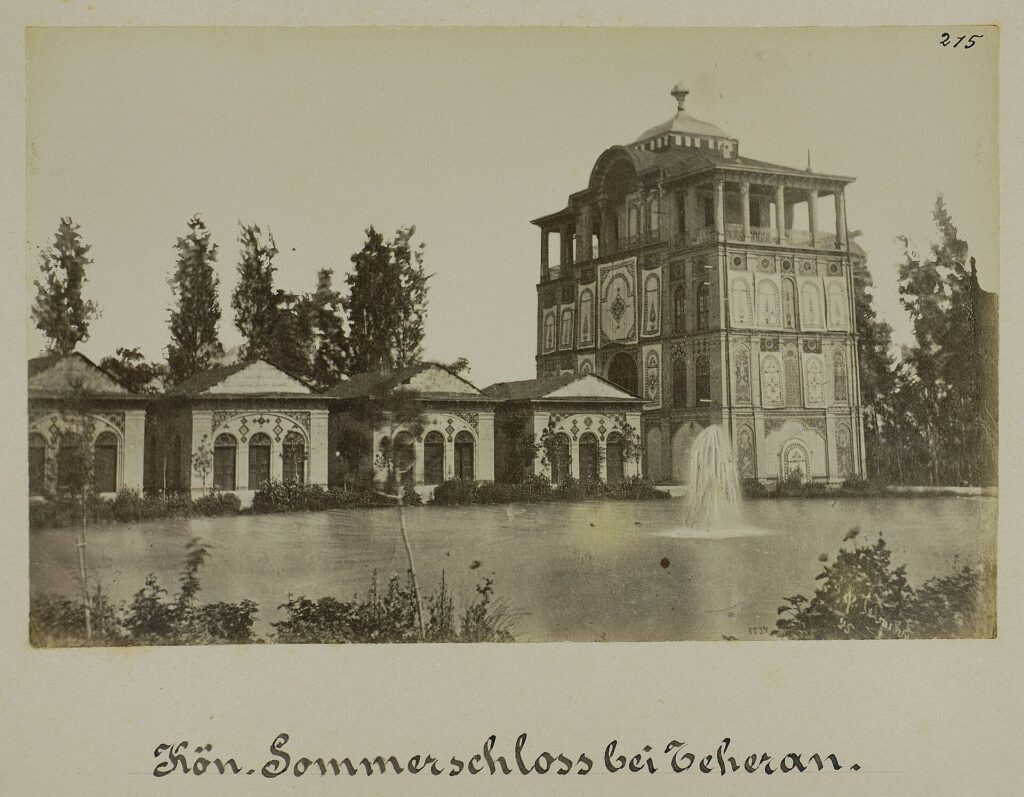
History. Eshratabad, whose name means “the abode of pleasure”, was built outside the old city walls after Naser al-Din Shah returned from his first tour of Europe in 1873, when he was full of ideas from the palaces he had seen. Its main building, known as the Kolah Farangi or “European hat” pavilion, is a tall, multi-storey tower in Persian style, with columned verandas, overlooking a large round pool fed by a qanat. It served as a summer residence and, for a time, as the quarters of Anis al-Dowleh, one of the shah’s favourite wives.
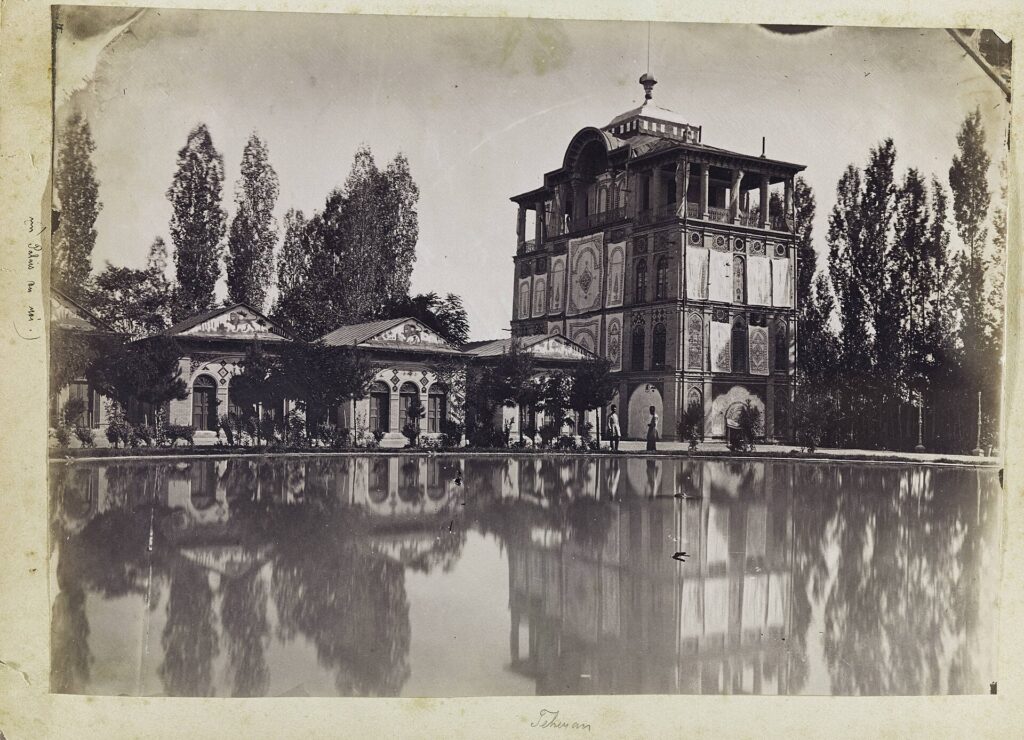
From palace to garrison. After the fall of the Qajars, the palace and its grounds were handed to the army. The area became the Eshratabad garrison, today known as the Vali Asr barracks, and its prison was notorious for much of the 20th century. The pavilion was added to Iran’s national heritage list in 1967, but because it sits inside a military zone it has been almost impossible to visit, maintain or restore.
Can you visit? Not at present. The palace lies within military land and is closed to the public. There has been talk of restoration and of opening the building to visitors, but nothing has come of it yet. You can see the pavilion from the outside, from around Sepah Square and the Sayad Shirazi motorway. The nearest metro station is Emam Hossein, on Lines 2 and 6.
See Qajar Tehran instead. For Qajar palaces you can actually walk into, visit Golestan Palace when it reopens, Masoudieh Palace, the Imam Jomeh House and Sahebqaraniyeh at Niavaran. Our museums and palaces guide has the full list.