Updated November 2026 We have turned this short news item into a visitor’s guide to the mosque and its historic clock, with the background checked against current sources.
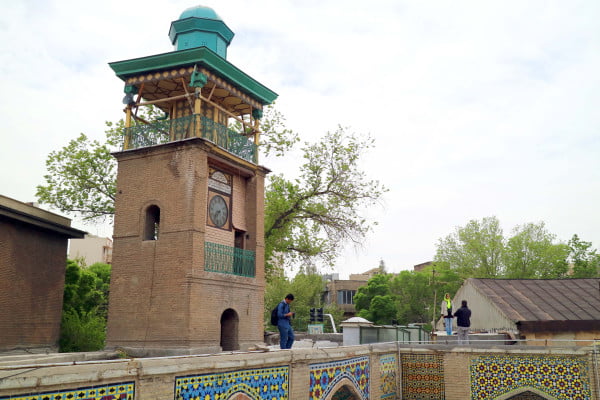
The Aqsa Mosque of Tehran, better known as the Moshir al-Saltaneh Mosque and School, is a Qajar-era mosque on Molavi Street in the old south of the city. Locals often call it Masjed-e Saat, the Clock Mosque, after the clock tower above its entrance, which holds what is thought to be the oldest public clock in Tehran. It is a modest building rather than a grand monument, but it is a rewarding stop if you are exploring the historic streets south of the Grand Bazaar.
The mosque was founded at the very start of the 20th century, around 1900 to 1903, by Mirza Ahmad Khan Moshir al-Saltaneh, a senior Qajar statesman. He served as a minister under Mozaffar ad-Din Shah and later became prime minister under Mohammad Ali Shah. Like many wealthy patrons of the period, he built a combined mosque and madrasa (religious school), and the complex is still known by his title as well as by the name Aqsa.
The clock is the building’s signature feature. Set into the tower over the entrance, together with a foundation inscription, it is well over a century old. A mechanical fault silenced it for around 70 years, until Tehran’s municipality announced a restoration project in late 2020. Experienced Iranian clockmakers were brought in to repair the mechanism, and work on the mosque’s exterior walls began at the same time, according to the Tehran Times and the city’s own photo archive.
Putting a clock on a mosque was unusual, and it reflects the late Qajar court’s fascination with European timepieces, the same taste that gave Golestan Palace the clocks of its Shams al-Emareh tower.
A few practical points if you want to see it:
- The mosque is a working place of worship, so dress modestly. Women should wear a headscarf and loose clothing, and may be offered a chador at the door.
- The clock tower can be seen from the street at any time; going inside is easiest outside prayer times, and it is polite to ask before taking photos of people.
- Molavi Street is busy, commercial and close to the southern edge of the bazaar district, so the mosque fits easily into a walking day around the bazaar and the older mosques of south Tehran.
- Ask a taxi driver for “Masjed-e Moshir al-Saltaneh, Molavi” rather than “Aqsa”, as the Qajar name is more widely recognised.
The Clock Mosque will not take long to see, but it is a good example of how much Qajar heritage survives in the less-visited parts of Tehran, and of the recent efforts to bring some of it back to life.