Updated November 2026. Negotiating in Iran rewards patience. Deals take longer than in Europe or the Gulf, relationships matter more than presentations, and the first price is rarely the last. This guide covers the cultural rules, the practical steps and the legal checks every foreign company needs before sitting down with an Iranian partner.
This guide was first published in 2018 with advice from LiT’s business and HR contributor Reyhaneh Khalilpour. It has been fully updated for 2026.
Start with the legal checks
Before any meeting, check whether the deal is allowed. United Nations sanctions on Iran were reimposed in September 2025, and the United States, the EU and the UK all run their own sanctions regimes. Many Iranian companies, banks and individuals are on sanctions lists.
Screen every counterparty and every bank in the payment chain, and take legal advice in your own country. LiT is not a law firm, and this guide is not legal advice.
Relationships come first
Iranian business runs on trust, and trust takes time. Expect the first meeting to be about getting to know each other, over tea and often a long conversation about family and travel. Pushing straight to price can come across as rude.
Follow-up visits matter. Many deals are agreed in principle over dinner rather than in the boardroom, so accept invitations when you can.
Understand taarof
Taarof is the Persian system of ritual politeness. A host offers tea, and the guest declines once before accepting. A partner may say a deal is “no problem” to avoid an awkward refusal.
In negotiation, taarof means you should never take a first answer at face value. Ask again, in a different way, and confirm the key points in writing after each meeting.
Expect hard bargaining on price
Iranian negotiators are skilled and patient. Opening offers are often far from the final figure, on both sides. Build room into your first price, and be ready for several rounds.
Currency is a constant issue. The rial loses value quickly, so most foreign firms quote and invoice in euros or another hard currency. Agree on the exchange rate and the payment date in the contract. Our toman and rial explainer covers the basics.
Meetings and etiquette
- Greetings. Many Iranians do not shake hands with the opposite sex. Wait for your counterpart to offer a hand first. A hand on the heart and a nod is a polite alternative.
- Titles. Engineers are addressed as “Mohandes” and doctors as “Doktor”. Use them.
- Business cards. Have cards printed with English on one side and Persian on the other.
- Dress. Dress conservatively. Women must cover their hair in public, including in offices.
- Hierarchy. Decisions are usually made by the most senior person in the room, who may say little. Address them directly.
- Timing. Meetings often start late and run long. Allow plenty of time between appointments.
Plan around the calendar
The Iranian weekend is Thursday and Friday, with Friday the main day off. Almost all business stops for around two weeks at Nowruz, the Persian New Year in late March. Office hours are also shorter during Ramadan. Our guide to Iran public holidays lists the key dates.
Get the contract right
- Use both languages. Have contracts drafted in Persian and English, and state which version prevails.
- Agree on arbitration. Choose a neutral venue for disputes in the contract.
- Define payment routes. Spell out how and where payments will be made, since many international banks refuse Iran-related transfers.
- Use local help. A good local lawyer and a trusted translator are worth their fees many times over.
Where to find partners
The Tehran Chamber of Commerce, Industries, Mines and Agriculture is the main business association in the capital. Trade fairs at the Tehran International Permanent Fairground are another good way to meet suppliers and buyers. Iran’s free trade zones, including Kish, Qeshm and Chabahar, have their own rules for foreign investors.
For more on working in Tehran, see our guide to travel agencies in Iran, which can arrange business visas, and our Iran visa guide.
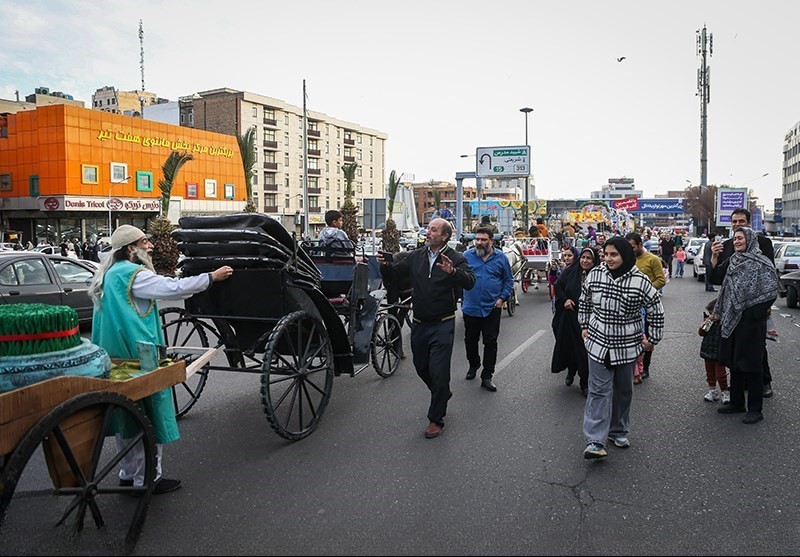
Nowruz, the Persian New Year, closes most Iranian businesses for around two weeks each spring.