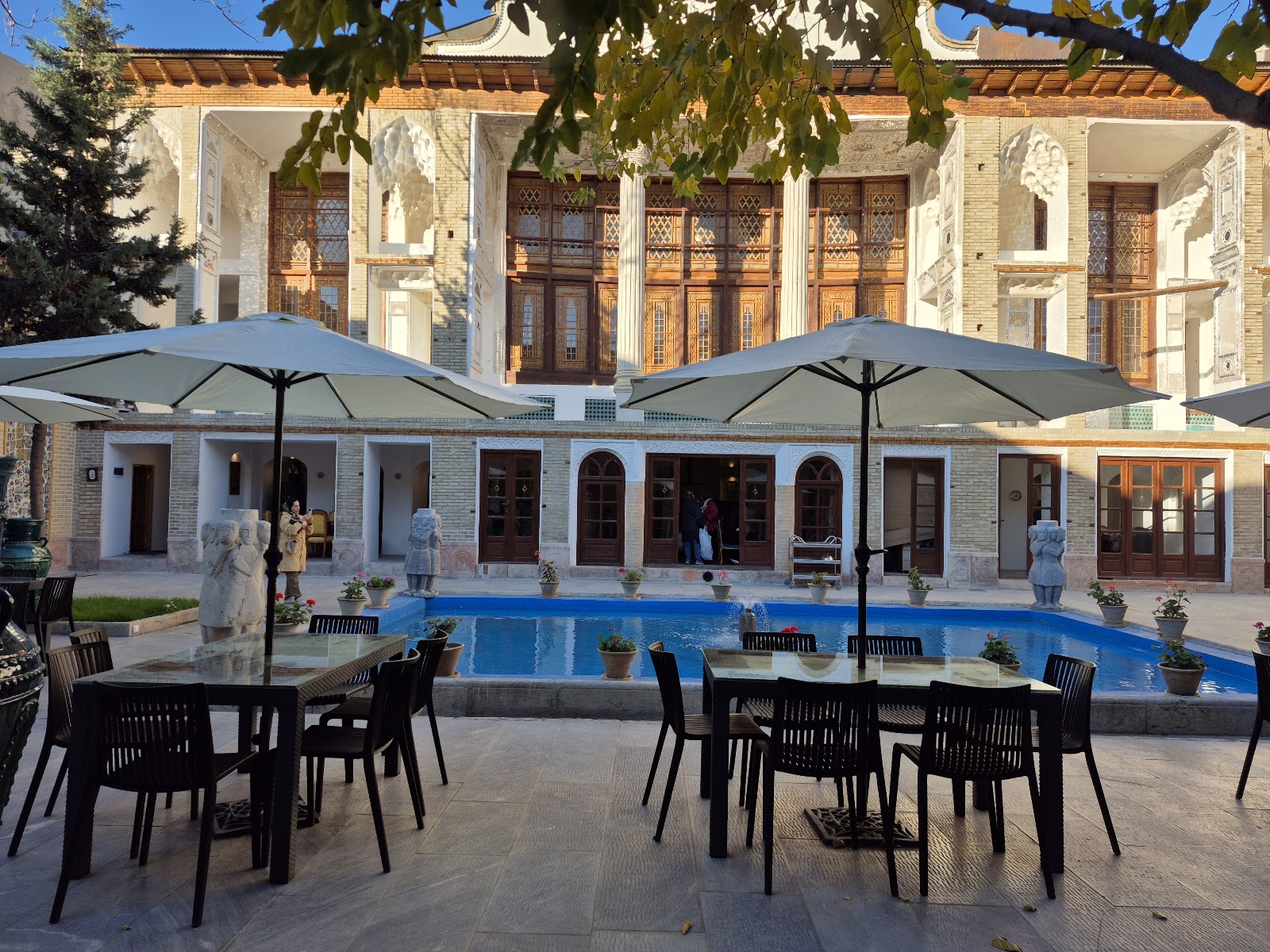
A few steps off Naser Khosrow Street, down a narrow lane opposite the Ministry of Economy, stands what many Tehranis call the most beautiful house in the city. The Imam Jomeh House, also known as the Sadr-e Azam House after its first owner, is a Qajar mansion of mirror halls, painted plaster and coloured glass. It has spent much of the last few decades locked up or wrapped in scaffolding. Since a long restoration finished its first phase in November 2024, visitors can once again get inside, and it is well worth an hour of your time.
Who built it. The house dates from the second half of the 19th century. It was built for Mirza Aqa Khan Nuri, who served as prime minister (sadr-e azam) to Naser al-Din Shah from 1851 until he was dismissed in 1858. In the early 20th century it was bought by Sayyed Abolqasem, the Imam Jomeh, or Friday prayer leader, of Tehran. He was also a son-in-law of Mozaffar al-Din Shah, and he held the post through the turbulent years of the Constitutional Revolution. His family lived there, and the name stuck.
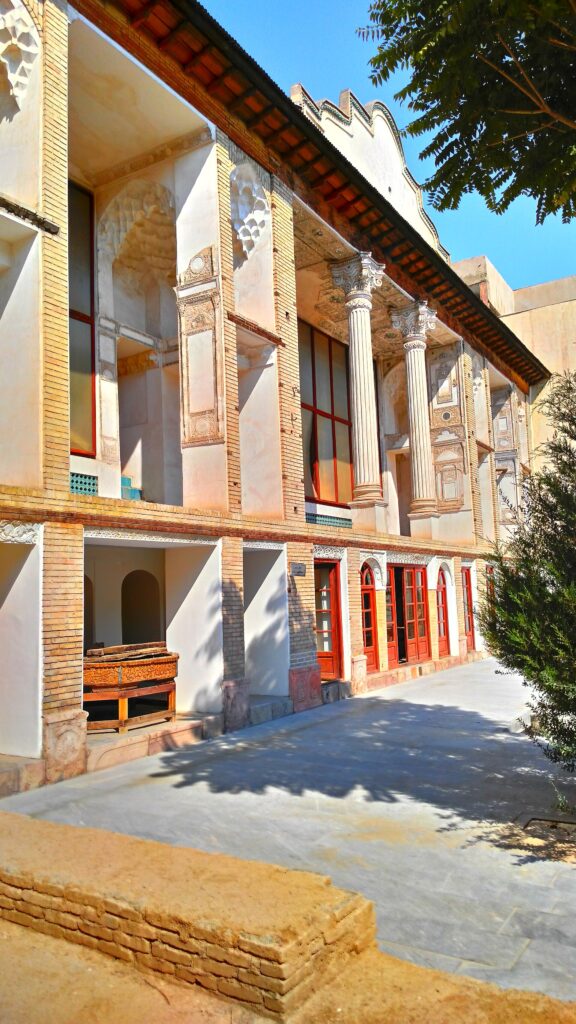
What you will see. Like most grand Persian houses of its time, it was originally divided into a biruni, the outer wing for receiving guests, and an andaruni, the private family quarters. What survives as the visitable house is essentially the outer wing. The andaruni was badly damaged over the years and later used as a school. The real reason to come is the decoration: walls and ceilings covered in mirror mosaic, stucco, and painting on plaster, and tall orosi sash windows of stained glass that throw colour across the floor in the afternoon. Some of the wall paintings show women in European dress, a sign of the fashion for all things farangi (Western) that swept the Qajar court. Art historians have written whole studies on what these paintings say about Tehran’s society at the time.
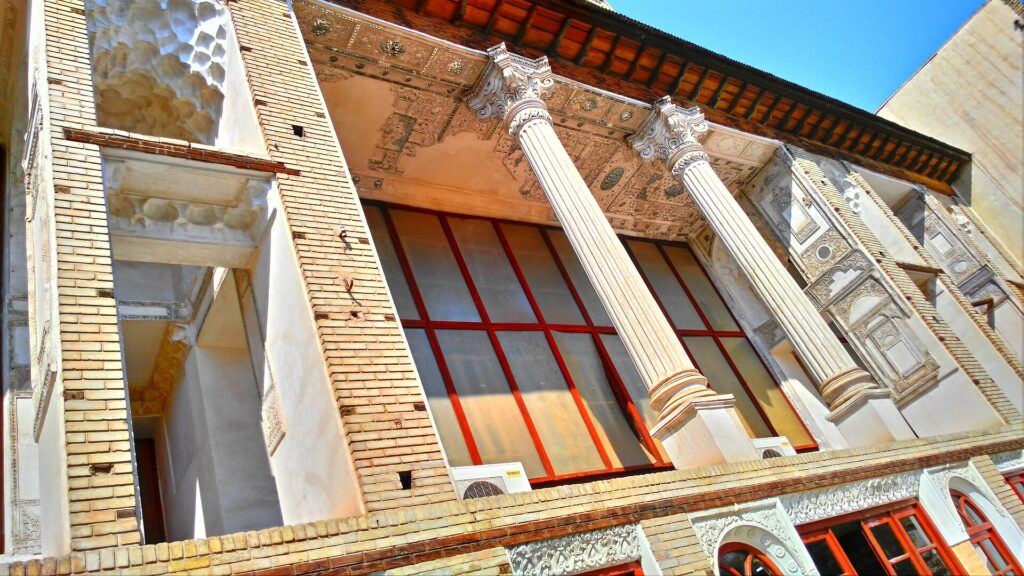
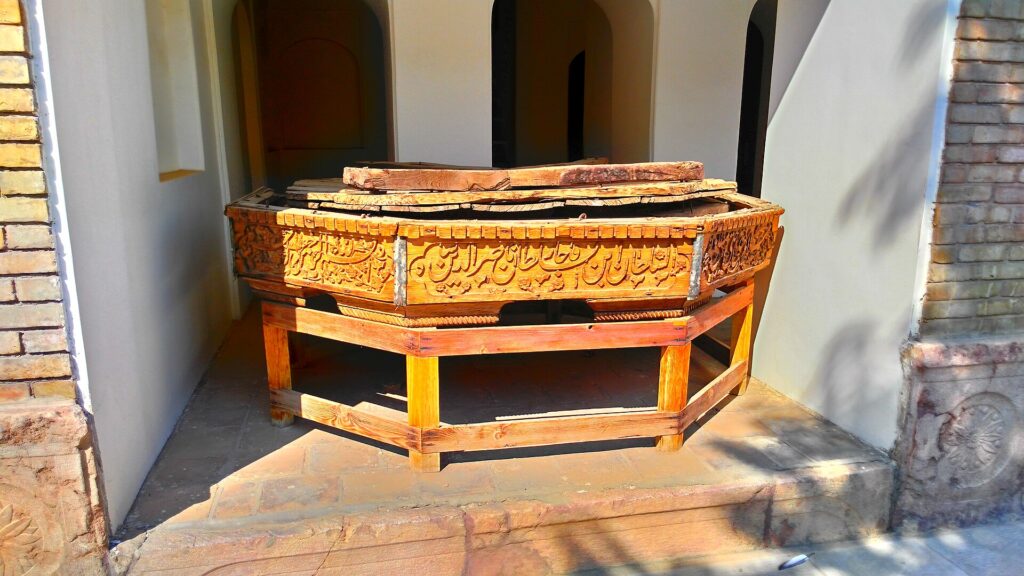
The neighbourhood. The house sits in what was once Oudlajan, one of the old aristocratic quarters of the walled city. Oudlajan was also home to Tehran’s Jewish community (see our piece on Tehran’s historic Jewish quarter). The great Tekyeh Dowlat theatre, where the Qajar court watched ta’zieh passion plays, stood a short distance away before it was demolished. Golestan Palace and the Grand Bazaar are both within a few minutes’ walk, so the house fits neatly into a day in the old city. Our walking guide to Naser Khosrow Street covers the route.
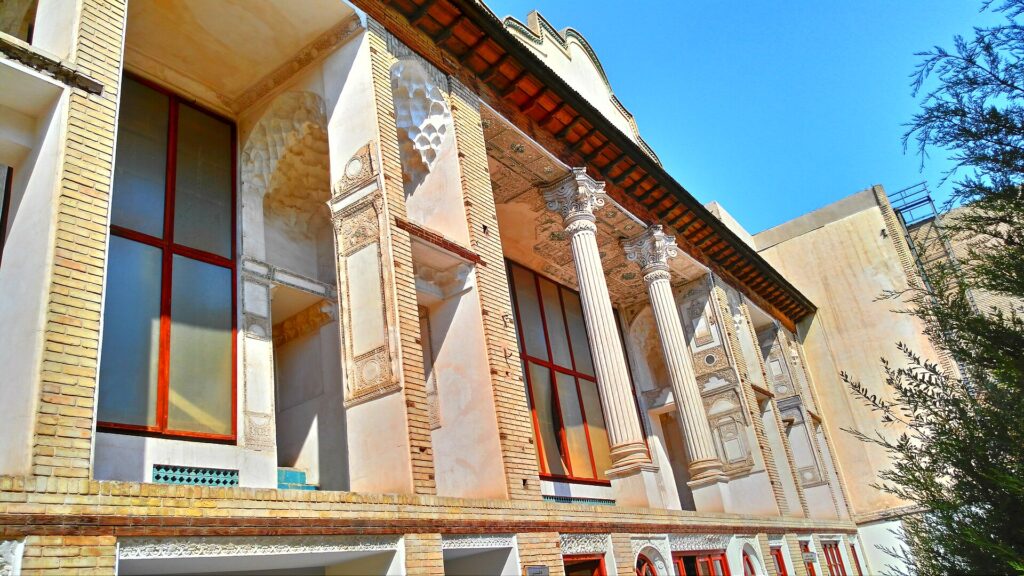
A troubled history. Before 1979 the house belonged to the Ministry of Culture and Arts. It then passed to Iran’s cultural heritage organisation and was added to the national heritage list in 1996. For years conservationists worried about it. A multi-storey car park built close by damaged the structure, and when the state fund that manages historic buildings offered it to private investors with a proposed “cultural and hospitality” use, there were public warnings that it might end up as a restaurant. The investor eventually restored the main building over about five years, and it reopened with space for cultural events and a display of fine Iranian handicrafts. It has since also been hired out for private functions, including weddings, which has caused some debate about how such buildings should be used.
Visiting. The address is No. 37, Imam Jomeh Alley, Naser Khosrow Street, close to Imam Khomeini Square. The nearest metro stations are Imam Khomeini (Lines 1 and 2) and Panzdah-e Khordad (Line 1), each a short walk away. Because the house is now privately operated and sometimes closed for events, opening hours and ticket prices change. Check locally or call ahead before you go, and avoid assuming it is open on Fridays and public holidays. Allow about an hour. Photography is usually allowed in the main rooms, but ask first.
If Qajar interiors are your thing, combine the visit with the Moghaddam Museum on Imam Khomeini Street and Golestan Palace itself. Our guide to museums in Tehran has the full list.