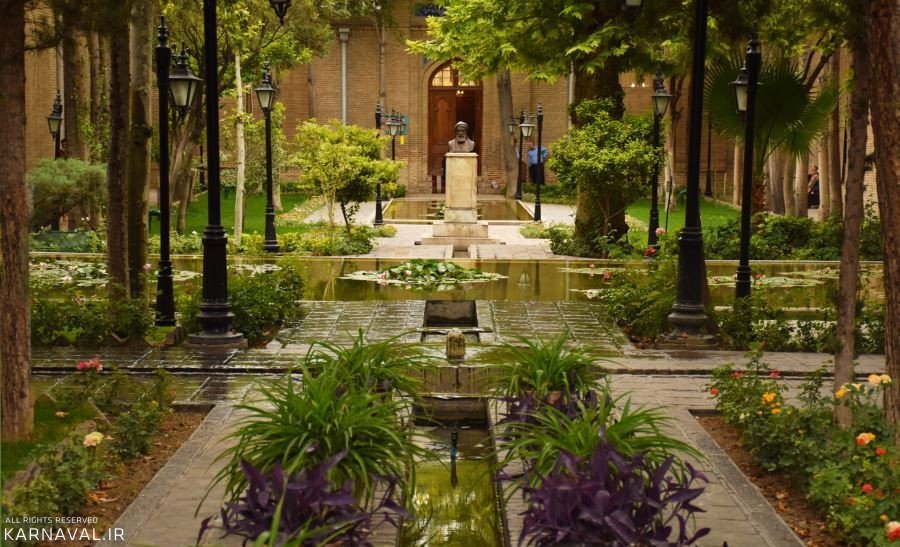
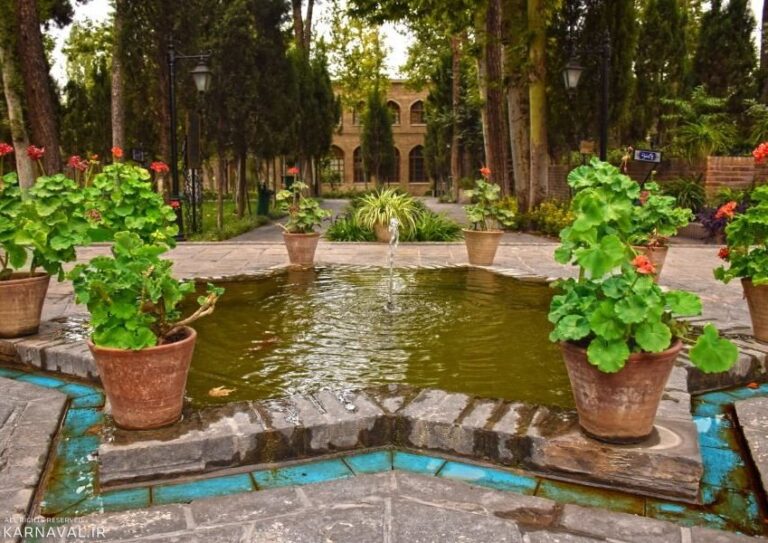
The Negarestan Garden Museum is a walled Qajar garden near Baharestan Square in downtown Tehran. Once a royal summer retreat and later the country’s leading teacher-training college, it is now a museum run by the University of Tehran, with paintings by Kamal-ol-Molk and his pupils and a gallery devoted to the artist Monir Farmanfarmaian.
Shady paths, a pool and a well-designed café make it one of the calmest places to spend an hour or two in the old centre.
History of the Negarestan Garden
Fath-Ali Shah Qajar laid out the garden in the early 19th century as a summer residence outside the old city walls. Its pavilions were built in the kolah-farangi style of the period, and their halls were covered with large wall paintings of the shah and his court by artists such as Mirza Baba. Those paintings gave the garden its name, which means “place of pictures”.
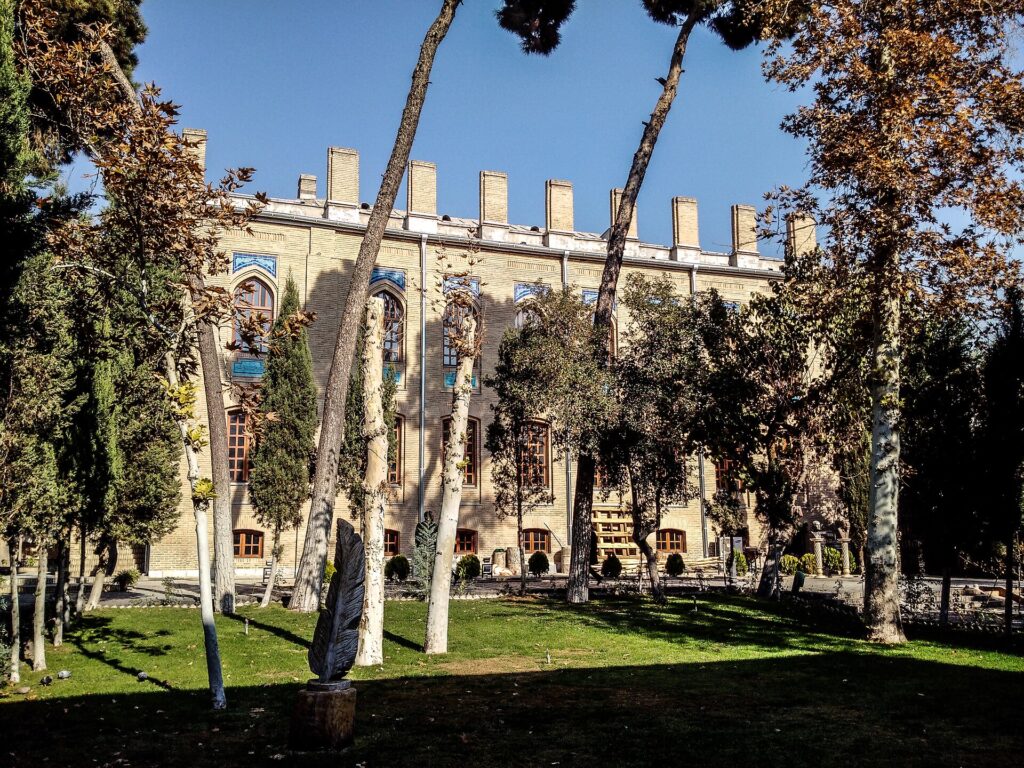
The garden once stretched from what is now Baharestan Square to the old Shemiran Gate. Over time most of the Qajar buildings were demolished and the grounds shrank to today’s 11,469 square metres. In the early Pahlavi era the present main building, with 64 rooms and four large halls, was built for the Higher Teachers’ College.
The college trained many of Iran’s best-known scholars and writers, among them the poet Malek-osh-Shoara Bahar, the lexicographers Ali-Akbar Dehkhoda and Mohammad Moein, the physicist Mahmoud Hessabi and the literary scholars Badiozzaman Forouzanfar and Parviz Natel-Khanlari. The garden is listed on Iran’s national heritage register as monument number 2082.
What to see at the Negarestan Garden Museum
- The Kamal-ol-Molk school museum: paintings by Mohammad Ghaffari, known as Kamal-ol-Molk, the father of modern Iranian realist painting, and by the students he trained.
- The Monir Farmanfarmaian hall: works donated by the celebrated artist, known for her mirror mosaics.
- Donated collections: works given by other leading Iranian artists, shown in rotating displays.
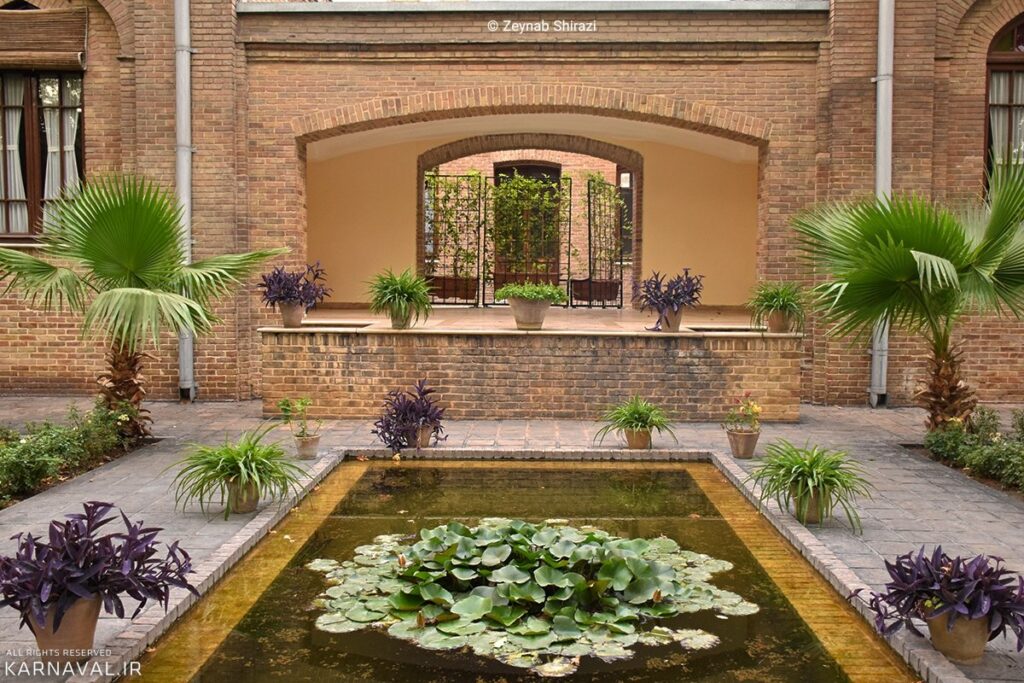
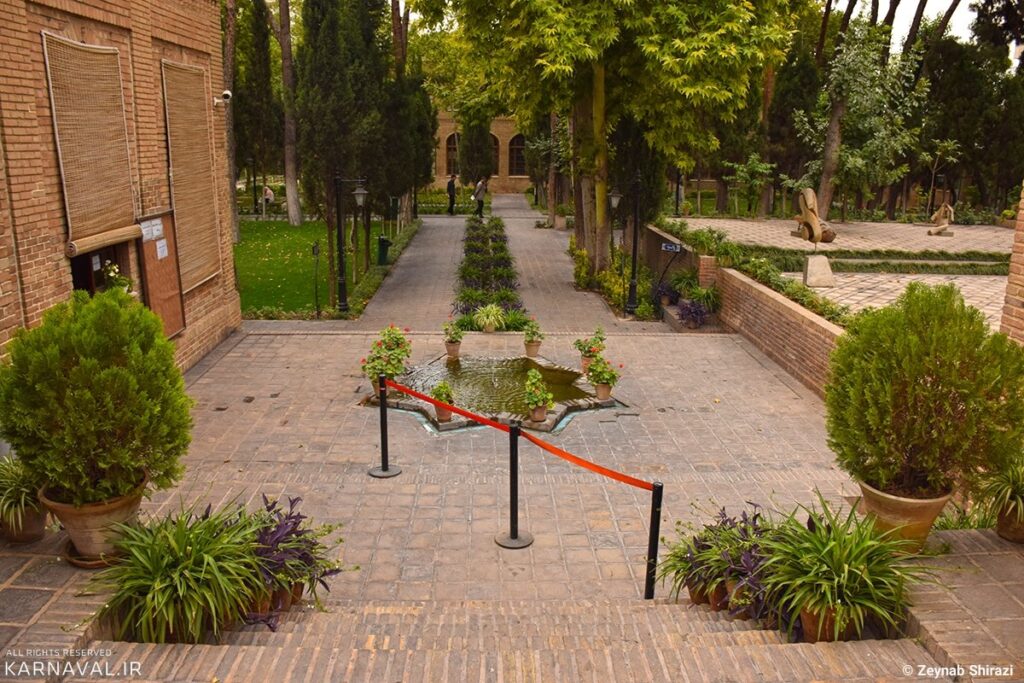
- The garden itself: at its best in spring and autumn, when it becomes a favourite spot for photographers.
- The café-restaurant: set in the grounds and designed to match the historic buildings.
Tips for visiting
- The museum has usually closed on Mondays. Check before you go, as hours change on public holidays.
- Allow one to three hours, including time in the café.
- Combine your visit with Baharestan Square and the Sepahsalar Mosque next door.
Stories from the garden
Fath-Ali Shah is said to have come here before every journey so that the court astrologers could choose an auspicious hour to set out. The pavilions were decorated with huge wall paintings of the shah and his court, which gave the garden its name, “the place of paintings”. In 1835 the prime minister Qa’em-Maqam Farahani was killed here on the orders of Mohammad Shah. In the early 20th century the garden housed the School of Fine Arts founded by Kamal-ol-Molk, which trained a generation of Iranian artists. Today the collections also include a museum of Qajar art and a sculpture collection, and the garden, café and restaurant stay open later than the museums. Masoudieh Palace is next door, and the old parliament building and the Sepahsalar Mosque are across Baharestan Square.
Visiting the Negarestan Garden Museum: at a glance
- Opening hours: Saturday to Sunday: 09:00 to 20:00; Monday: closed; Tuesday to Friday: 09:00 to 20:00
- Time needed: 1 to 3 hours
- Phone: +98 21 ٣٣١١٩٥٨٦
- Address in Persian (show this to your driver): تهران، میدان بهارستان، خیابان دانشسرا، خیابان شریعتمدار رفیع
- Open the Negarestan Garden Museum in Google Maps
Hours can change on public holidays and during Ramadan, so check before you set out.
After the Qajar pavilions were demolished, the Negarestan Garden shrank to 11,469 square metres.