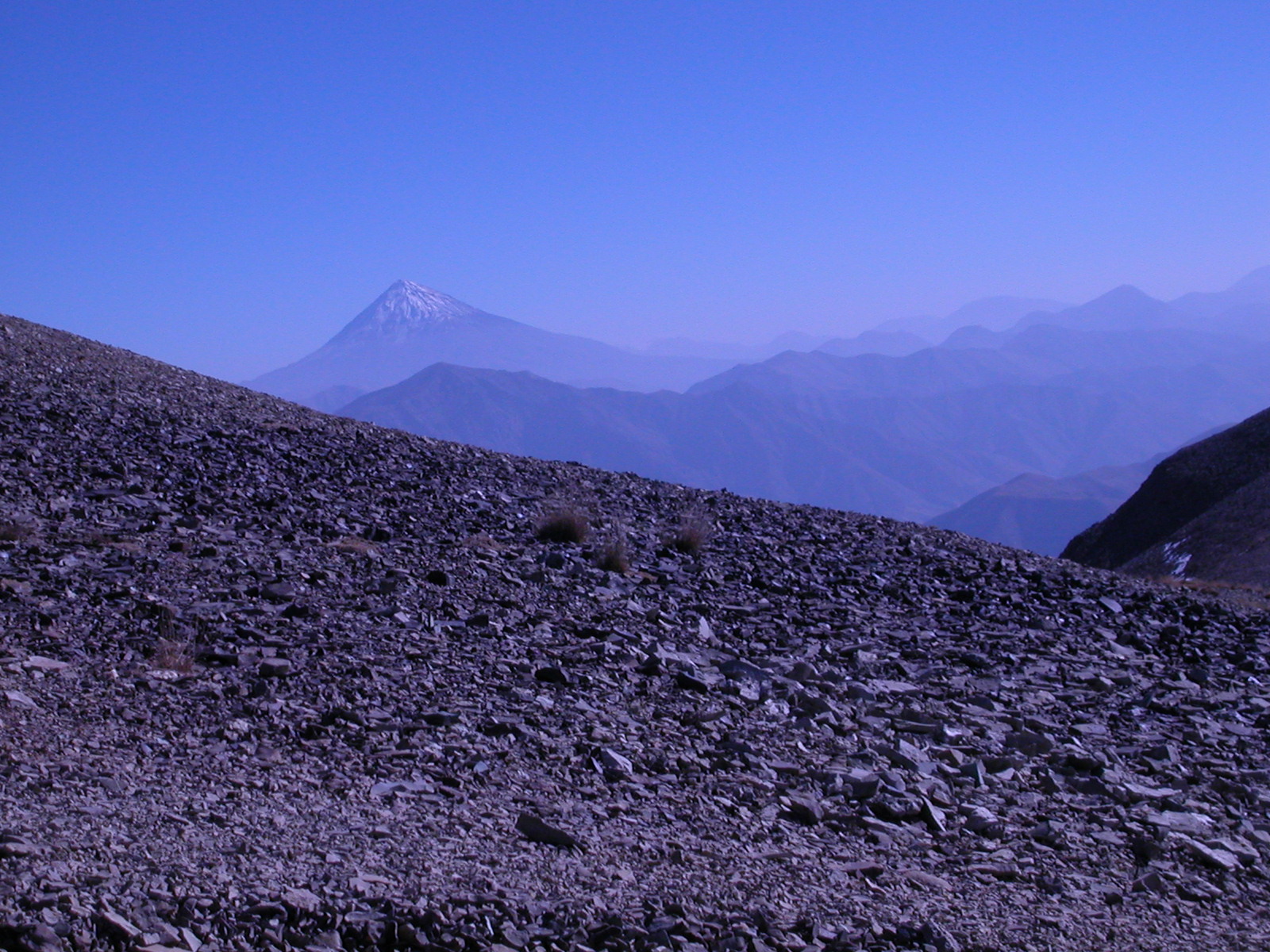
Most people in Tehran know Damavand as the white cone on the north-eastern skyline. Fewer realise that the town of the same name, a little over an hour’s drive east of the capital, makes one of the easiest and most varied day trips in the province. Within a short radius of the old town there are two high mountain lakes, a chain of waterfalls, a cave big enough to swallow a house, a Seljuk-era brick tower and a Safavid bathhouse. You will not see all of it in a day, and you should not try, but you can easily put together a good one.
A quick note on geography before you set off. The town of Damavand and Damavand County sit in Tehran province, on the southern slopes of the central Alborz. The 5,610-metre summit itself is over the provincial border in Amol County, Mazandaran, and is reached from the Haraz road, not from the town. If climbing the peak is what you are after, our guide to Mount Damavand covers it. This piece is about everything else.
Getting there. By car, take the Zeinoddin expressway out of east Tehran onto the Pardis freeway, carry on past Bumehen and follow the Firuzkuh road through Gilavand into Damavand. It is roughly 74 kilometres, and depending on where you start and how bad the Friday traffic is, it takes between one and two hours. Leave early. Coming back on a Friday afternoon, when half of eastern Tehran is returning from its gardens, is the worst part of the day. Some of the sights below are on side roads and dirt tracks, so look up the route to each one before you go rather than relying on signs.
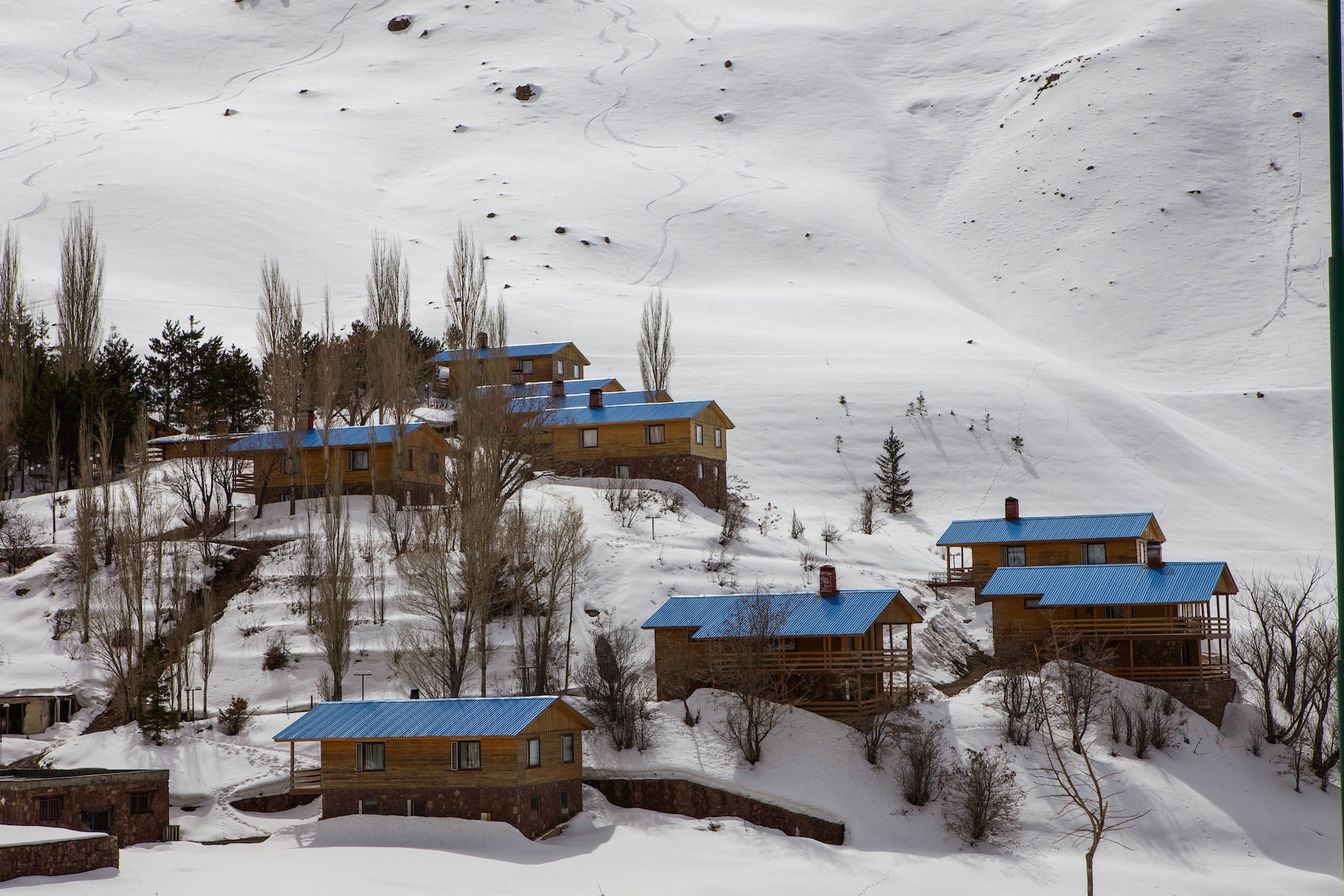
When to go. Damavand is high and cool for most of the year, and winters are properly cold. Spring and early summer are best for the green valleys and the waterfalls, when the snowmelt is still running. Autumn brings orchards and poplars turning gold and is lovely for walking and photography, which makes now a good time, but be aware that the higher dirt roads can close early with the first snow. In winter the draw moves to the ski slopes at Abali on the Haraz road (see our guide to skiing and sledging near Tehran). Whatever the season, check the weather and road conditions the night before.
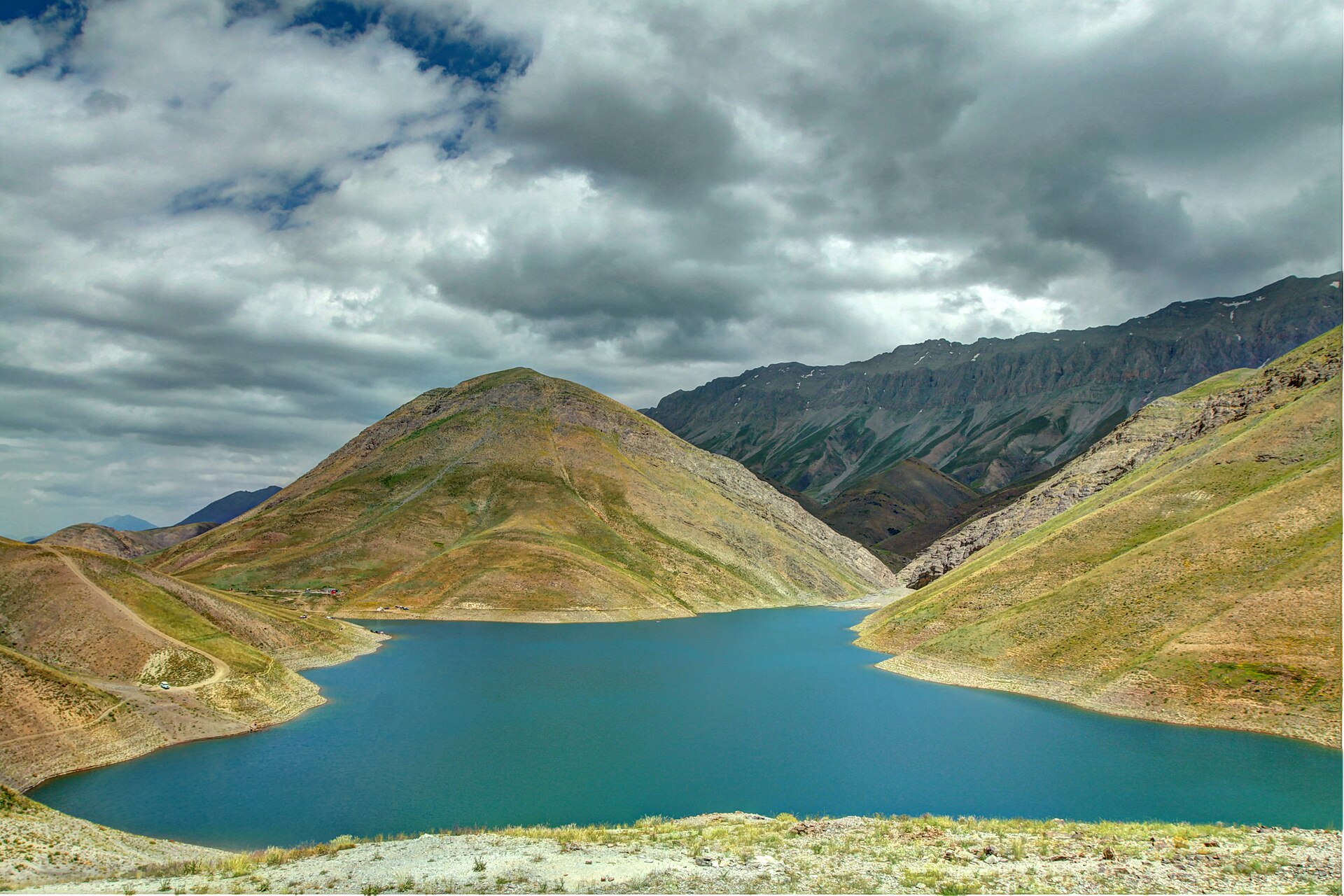
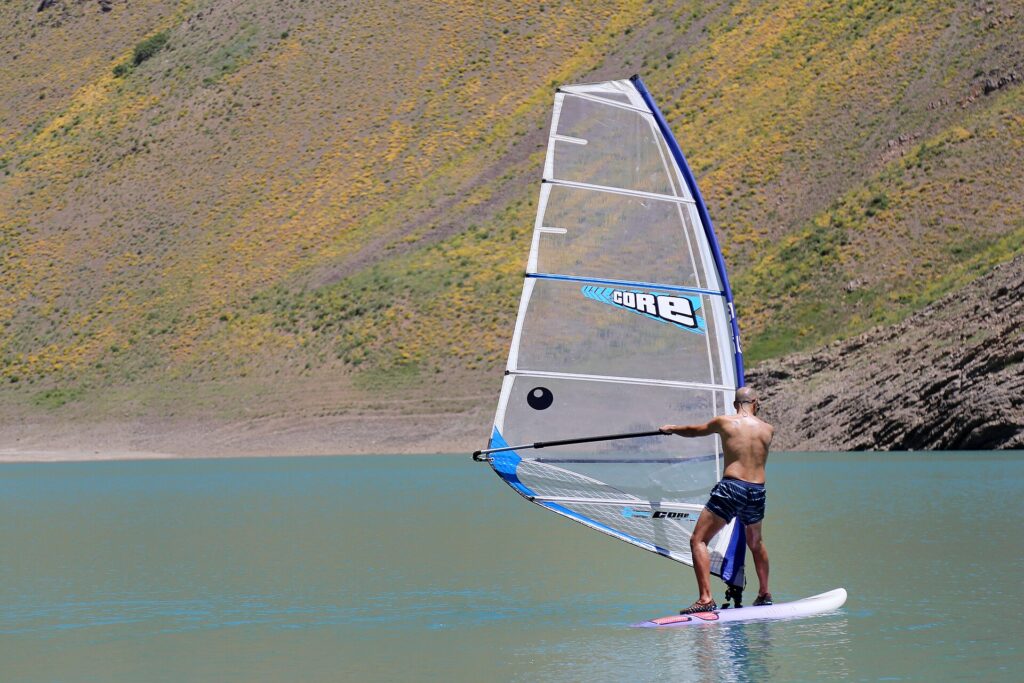
Tar and Havir lakes. These are the headline act. Two natural lakes sit in a bare, treeless basin high in the mountains, a few hundred metres apart, fed by springs in the lake beds and by snowmelt from the peaks around them. There are no forests here, just wind, big skies and still water, which is exactly why photographers love them. The usual route is from Damavand towards the village of Chenar and then along a mining road. The last stretch is unsealed and rough, so a high-clearance car is a real help. There is a second approach from the Firuzkuh road via the villages around Yahar that some smaller cars manage. The lakes are stocked with trout and popular with anglers, and some people camp overnight to fish at dawn. Swimming is possible in high summer, but the water is cold and deep, so take care. There are no shops or cafés, so bring everything you need.
Mosha. If you would rather walk through green meadows than sit by a lake, head for the Mosha plain, about six kilometres north-west of the town towards the Haraz road. In spring the slopes are covered in wild flowers, and in summer the air stays cool when Tehran is baking. Close by is Siah Sang, a strong spring that feeds the streams and small falls of the area. The surrounding slopes are good for spotting wild roses, barberry and borage if you know your plants.
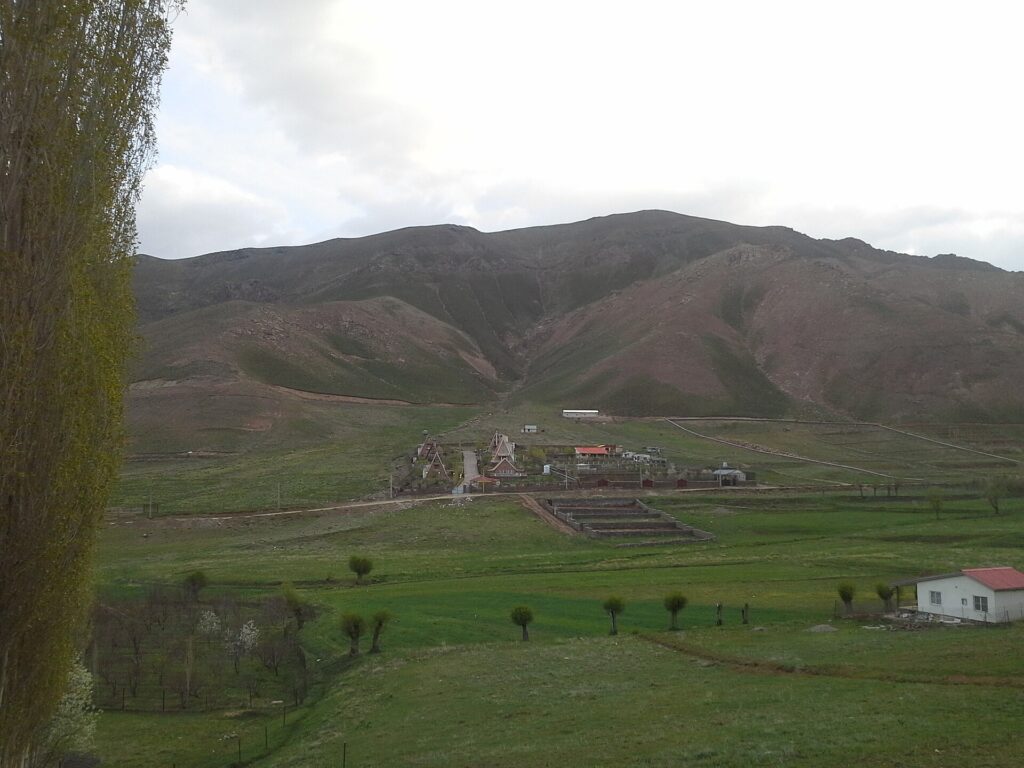
Cheshmeh Ala. About seven kilometres north-east of the town, this spring once watered Damavand’s orchards and fields. Today much of its flow goes to a bottled-water plant, but the green, shaded area around it is still a pleasant place for a picnic on a hot day.
The Gorubar valley. East of town, in the Ruhafza neighbourhood, this willow-lined valley is the place for a proper walk. The Gorubar waterfall, around 20 metres high, is the easiest to reach. Further up are the taller Ayeneh Rud falls, at roughly 30 to 35 metres and set among old walnut and juniper trees, and the Jangalak waterfall on the valley’s northern side. Jangalak takes a few hours of mountain walking, so it is only for people who are fit and have the right shoes. Go with someone who knows the side valleys, because there are several and they are easy to confuse.
Tizab. A few kilometres from the town, reached via the Valiran district, is a spring whose water has a noticeably sour, astringent taste. That is where it gets its name, which means “sharp water”. A small waterfall of the same name is a short walk away.
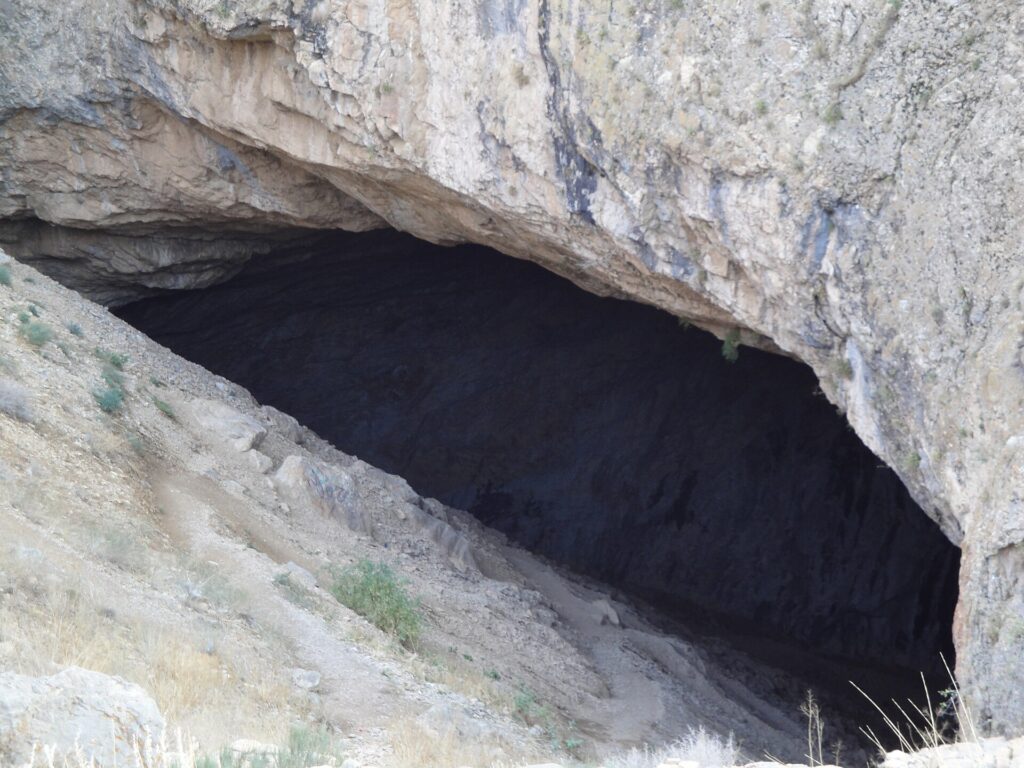
Rudafshan cave. This is the most unusual stop on the list. The cave lies off the Firuzkuh road, reached by a side road after the villages of Sarbandan and Seyyedabad, followed by a walk up from a car park. Its mouth is enormous, among the largest cave entrances in Iran, and surveys have mapped about a kilometre and a half of passages and chambers beyond it. One inner chamber with a pool is locally called the Temple of Anahita, after the ancient Persian water goddess, and there are bats roosting in parts of the roof. You can see the entrance and the first section without special kit. Beyond that it is dark, wet and uneven, and you should only go in with a torch, good boots and, ideally, a local guide or caving group.
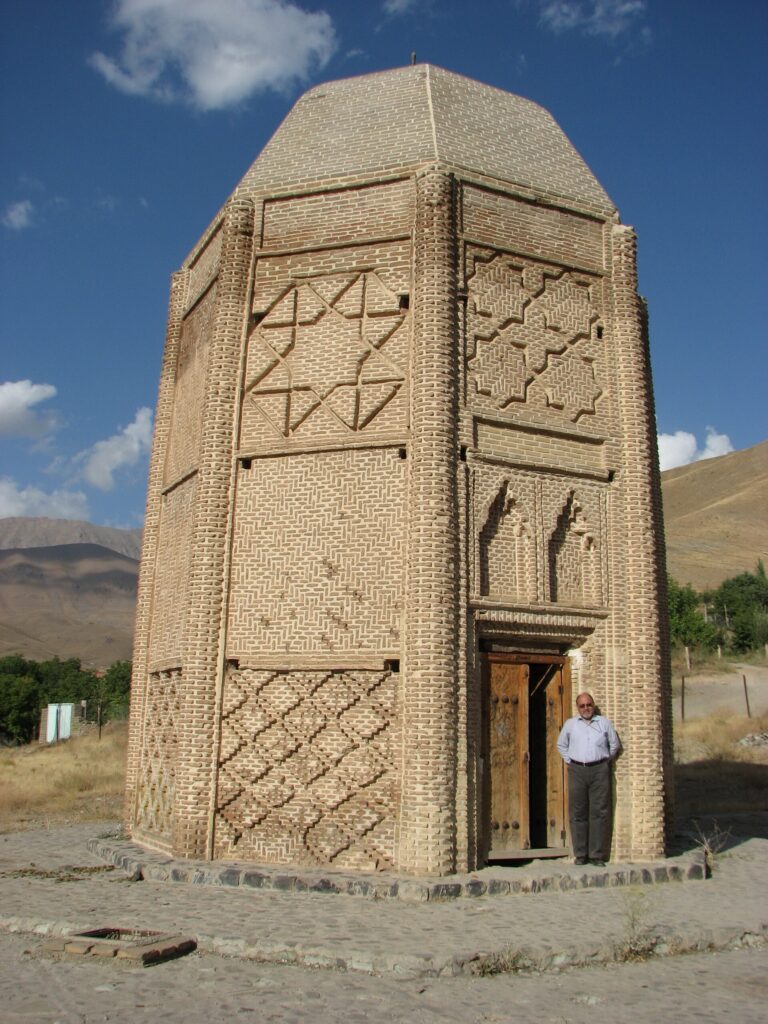
The Sheikh Shebli tower. Back in town, on a rise on the eastern side, stands Damavand’s best-known monument. It is a brick tower about ten metres tall, octagonal outside and round inside, with a cellar beneath it and an old cemetery around it. The brickwork is usually dated to the Seljuk period, although some historians place the original structure earlier. It commemorates Sheikh Shebli, a Sufi and a respected governor of Damavand. Local tradition says that when he died in Baghdad, the townspeople built this memorial because they could not bring his body home. It is easy to reach by car and takes twenty minutes to see.
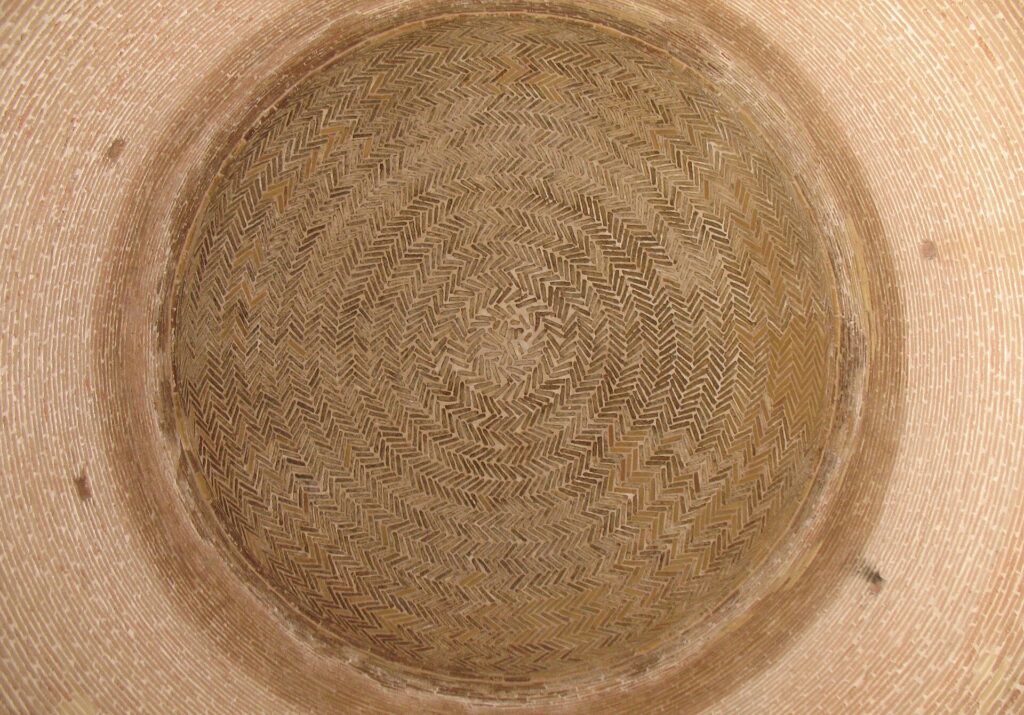
The Darvish quarter bathhouse. Also in the Ruhafza area, this Safavid-era hammam is unusual because it is built mostly of stone, lime mortar and plaster rather than the brick used in most Iranian bathhouses. It has two separate sections, reached through a winding entrance passage, with stone benches and some old tilework surviving. It is on Iran’s national heritage list. Opening times are irregular, so ask locally.
Putting a day together. The key is not to zigzag. One good plan is to leave Tehran at dawn, spend the morning at Tar and Havir, and then drop back into town for lunch and the Shebli tower. Another, for walkers, is Mosha or the Gorubar valley in the morning, followed by the tower and the bathhouse. Rudafshan is best treated as its own outing, possibly combined with the tower on the way back. Damavand has plenty of kebab houses and family restaurants along its main boulevards and in Gilavand. Do not expect to find food at the lakes or the cave.
What to bring. Mountain weather turns quickly, so carry a warm layer even in summer. Wear shoes with grip for the waterfalls and the cave, and bring plenty of water and snacks. A torch is essential for Rudafshan. Fill up with fuel before you leave the main road, and take your rubbish home with you. These places are only as beautiful as the last group of visitors left them.
If you enjoy Damavand, the same eastern side of the Alborz has plenty more. Our guide to parks, hiking and the outdoors around Tehran collects the best of it, and for a full day further afield, try the day trip to Filband, the village in the clouds.