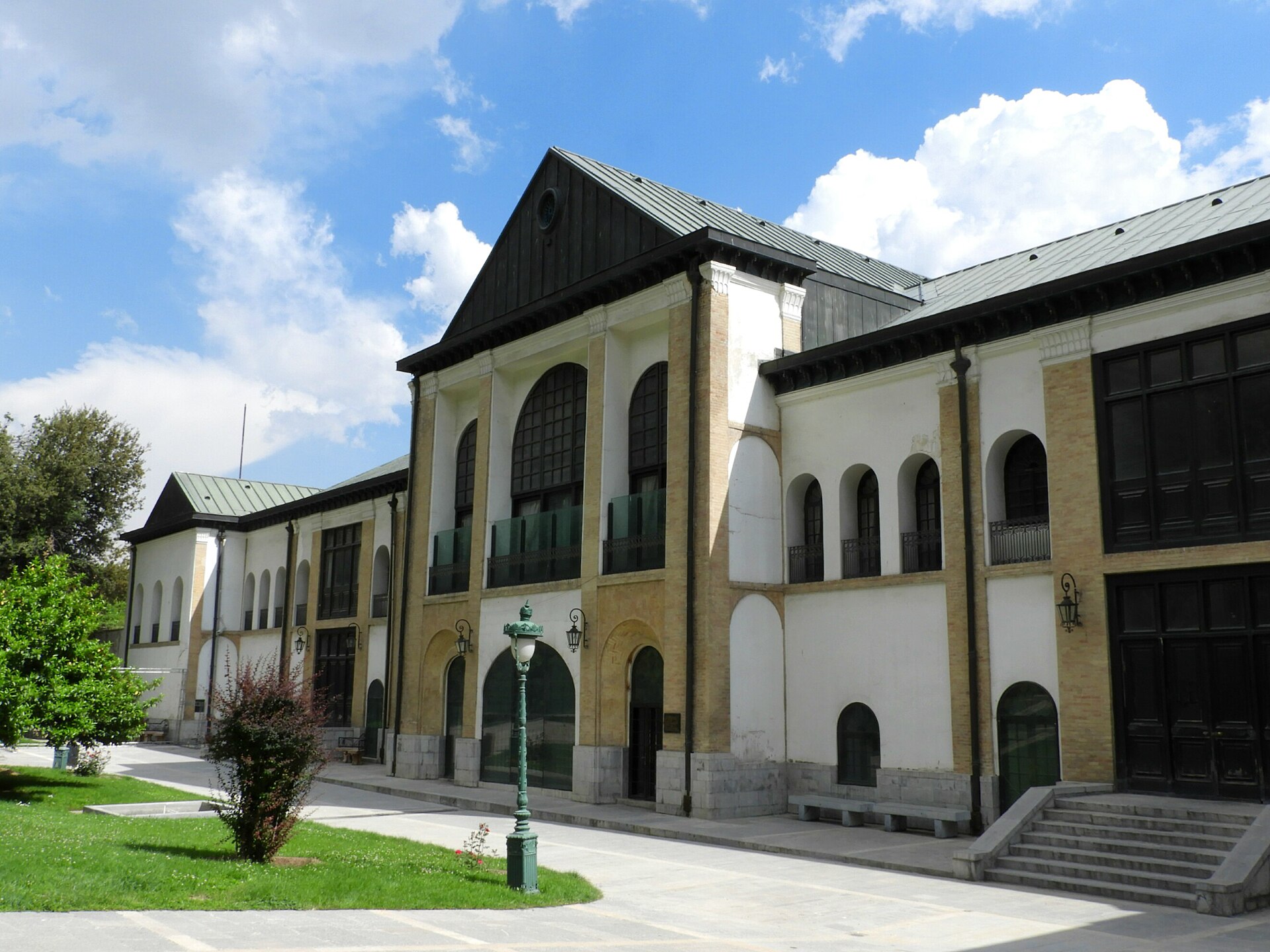
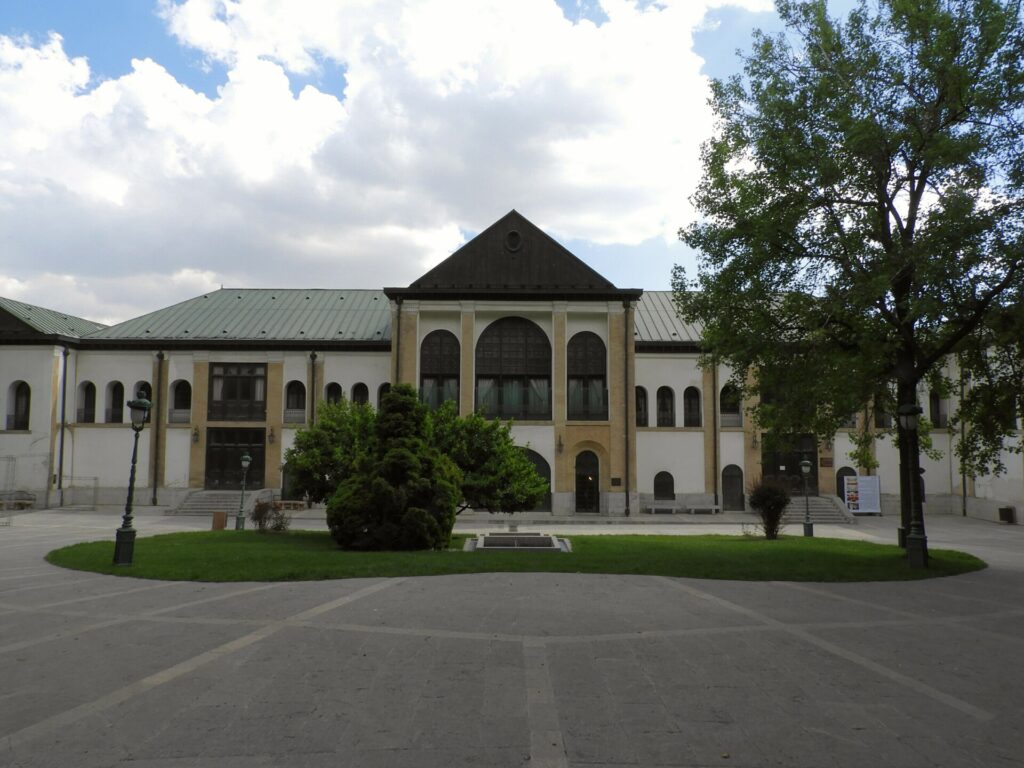
Most visitors to the Niavaran Palace complex in north Tehran come to see the last shah’s 1960s home. But the first building you reach, and in many ways the more interesting one, is Sahebqaraniyeh, a Qajar summer palace whose history runs from Naser al-Din Shah in the 19th century to Mohammad Reza Shah in the 1970s.
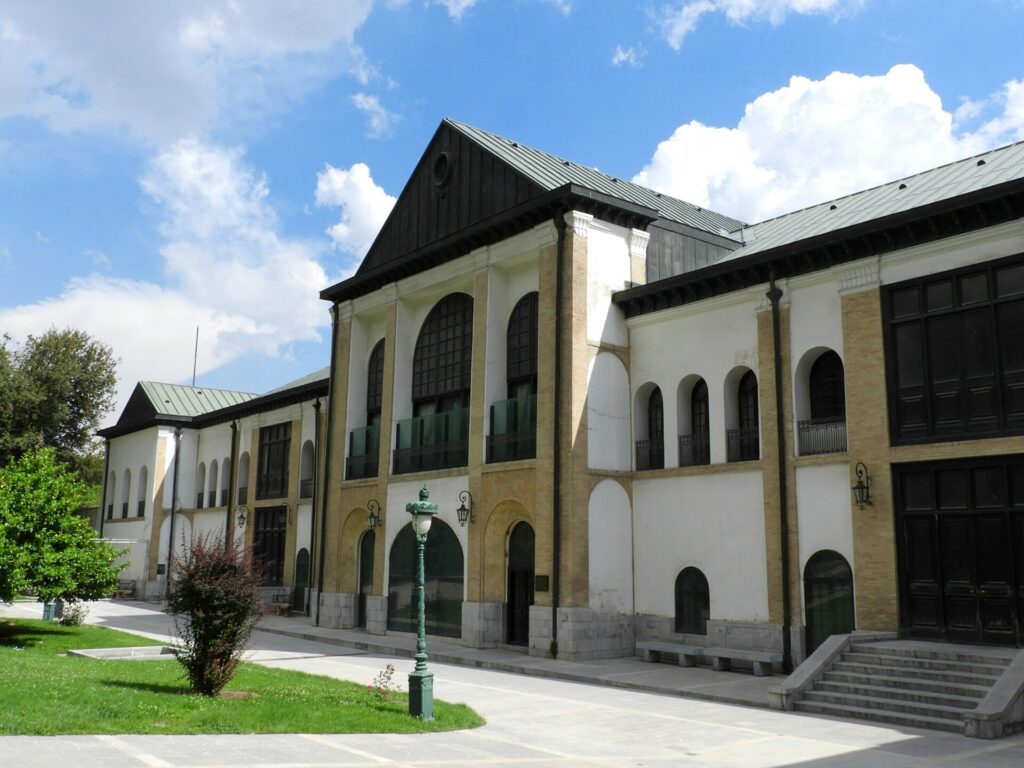
History. The Qajar kings had used the cool gardens of Niavaran as a summer retreat since the time of Fath-Ali Shah. Naser al-Din Shah, who styled himself Saheb-qeran, a title meaning a ruler whose reign spans a great cycle of time, ordered the palace that bears his title in the mid-19th century, and it was rebuilt and extended later in his reign. Later Qajar kings used it in turn, and it is traditionally said to be where Mozaffar al-Din Shah signed the decree establishing Iran’s first constitution in 1906. When the Pahlavi family moved into the new Niavaran Palace in the late 1960s, Sahebqaraniyeh became Mohammad Reza Shah’s office, used for meetings and official business until 1979.
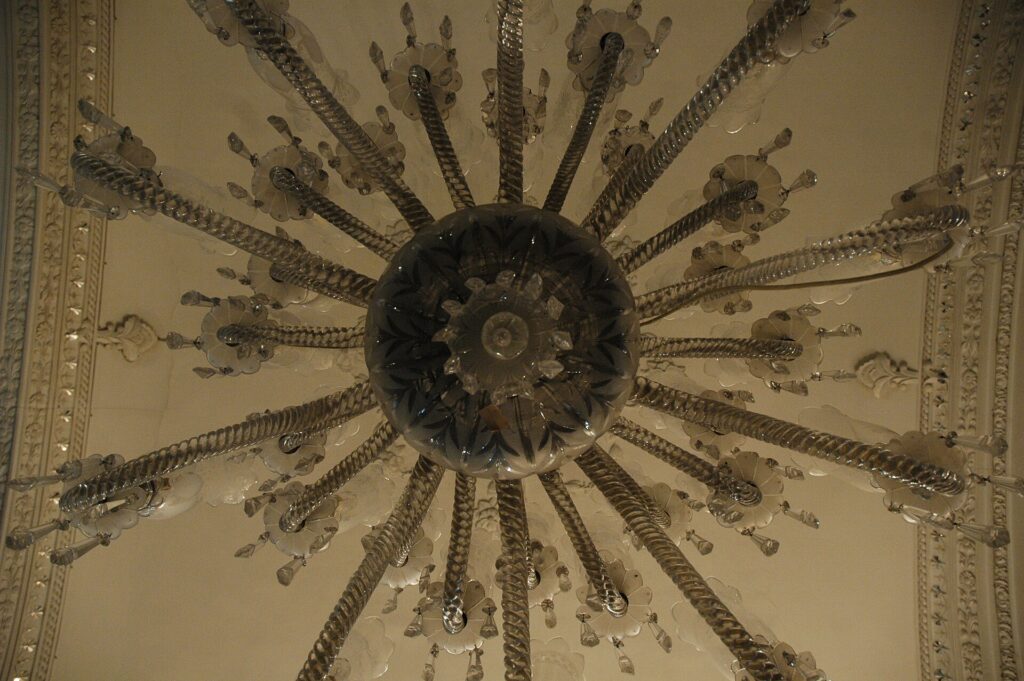
What you will see. The building mixes Qajar decoration with later Pahlavi furnishings, which makes it a fascinating record of changing tastes. Highlights include the mirror hall, the Brilliant Hall, the shah’s office and private rooms, a Qajar-era bathhouse and Ahmad Shah’s study.
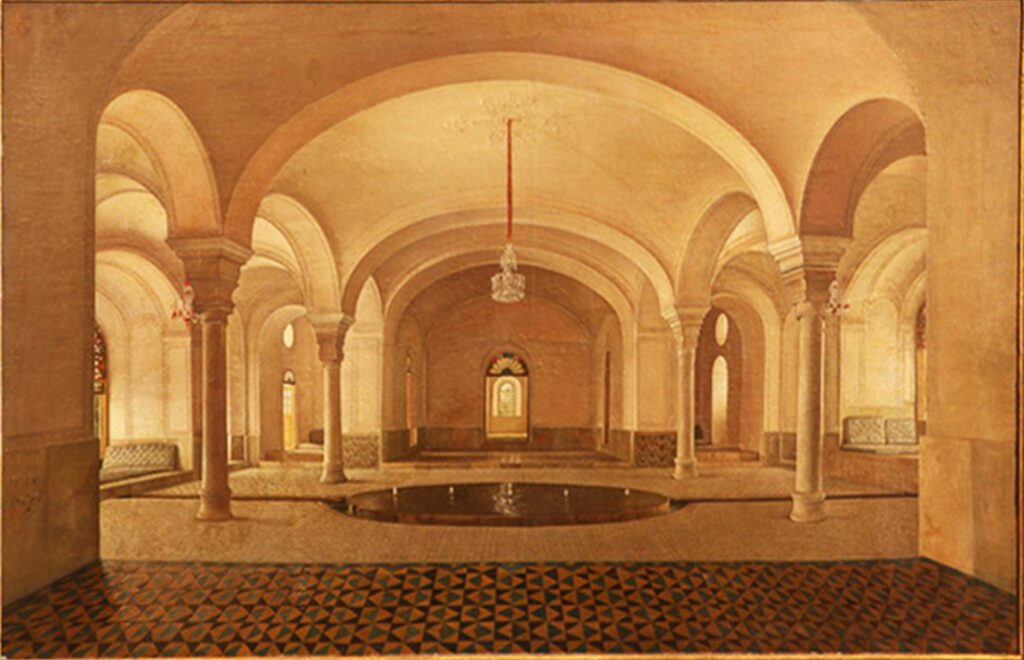
The pool house. In the basement is the howzkhaneh, a cool room with a central pool where the royal family escaped the summer heat. It is now a small museum of art and objects, and was famously painted by Kamal-ol-Molk, the great court painter of the late Qajar era.
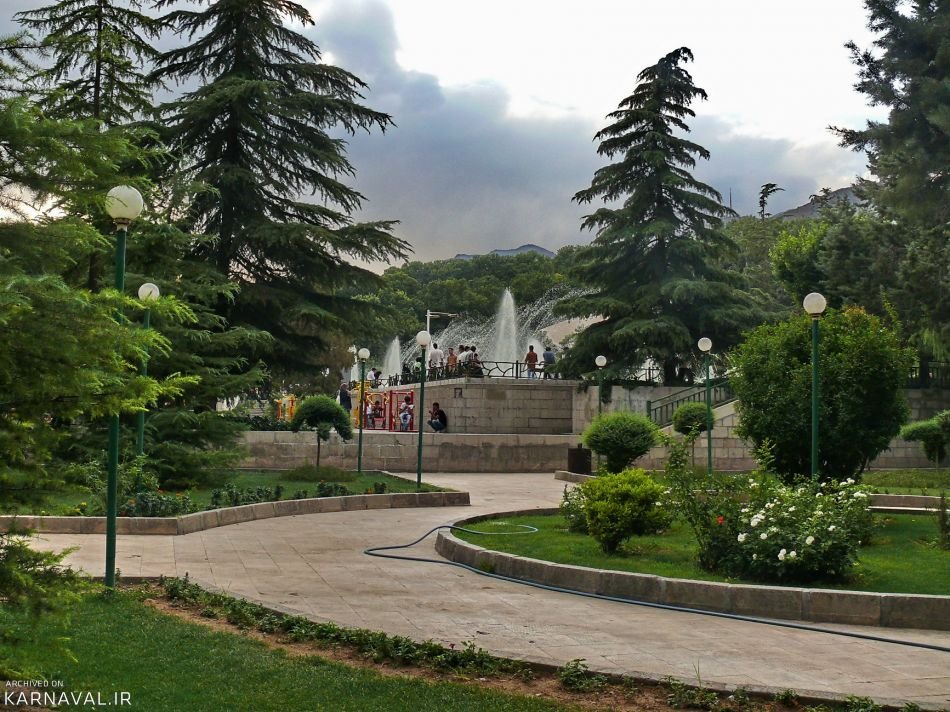
The rest of the complex. One ticket covers the grounds, and separate tickets usually give entry to each building: the Niavaran Palace itself, the Ahmad Shahi pavilion, the Jahan Nama museum of the shahbanou’s art collection, the private library and the royal car museum. Sahebqaraniyeh is a short walk from the main palace. Allow two to three hours to see the whole complex. Our Niavaran guide has the latest on what is open.
Getting there. The Niavaran complex is on Shahid Bahonar (Niavaran) Square in north-east Tehran. The nearest metro station is Tajrish on Line 1, from where it is a short taxi ride. Opening hours change with the seasons, typically from 9am to late afternoon, and the complex closes on some religious holidays, so check before you go. For more palaces, see our guides to Sa’dabad and museums and palaces in Tehran.