Updated November 2026 We have corrected the mansion’s history and owners, added its current role as the Barg (Leaf) art gallery, and put the Tehran Conference story in its proper context.
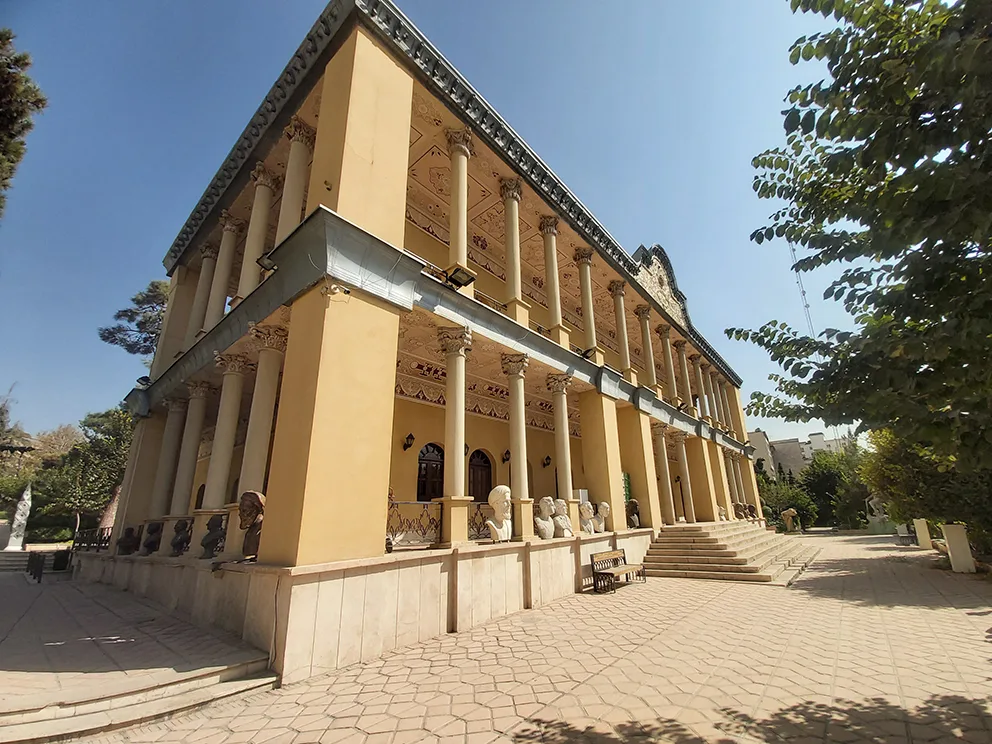
Eyno-Doleh Mansion, also spelled Ein ad-Dowleh or Eyn-od-Dowleh, is a late Qajar garden house in the Pasdaran district of north-east Tehran. It is one of the city’s least known historic houses, partly because modern apartment blocks have grown up all around it, but it is free of crowds, pleasant to wander and now home to an art gallery, which makes it a worthwhile stop if you are in the area.
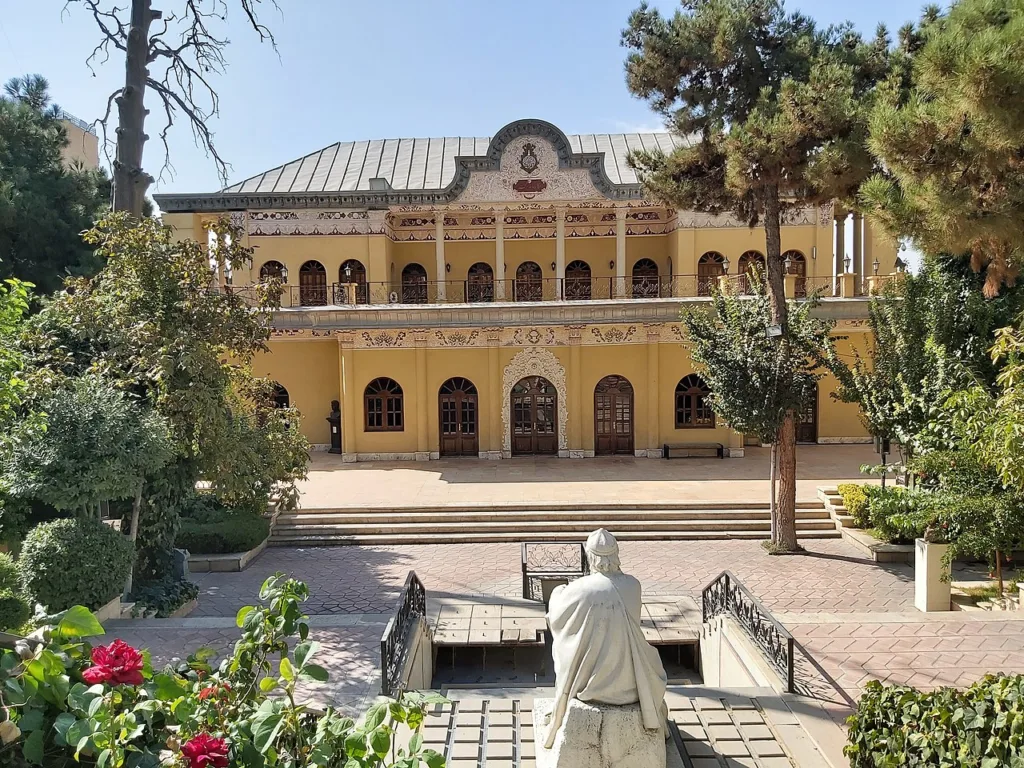
The house was built at the turn of the 20th century as a summer residence for Abdol Majid Mirza, a Qajar prince who served as prime minister and who held the title Ein ad-Dowleh, roughly “eye of the state”. In those days this part of Tehran was cooler, greener countryside well outside the old city, and wealthy families built garden retreats here to escape the summer heat. Sources differ slightly on the exact years of construction, but the building dates from the final decades of the Qajar era.
Around the time the Qajars gave way to the Pahlavi dynasty, the property passed to the Heravi (Haravi) family, whose name lives on in nearby Heravi Square. After many years of neglect the complex was brought back to public attention in the late 1990s, and in 1998 it was registered as a national heritage site. It is now managed for public use, and the main building hosts the Barg Gallery, sometimes translated as the Leaf Gallery, which shows exhibitions of work by Iranian artists.
Architecturally, the house is a good example of how Qajar builders blended Persian tradition with European influence. Look out for the tall columns across the front, the fine plaster (stucco) decoration, and the coloured glass in the windows that is typical of the period. The building sits within a large garden with mature trees and a pool, which still gives a sense of the estate as it once was, even with the city pressing in on every side.
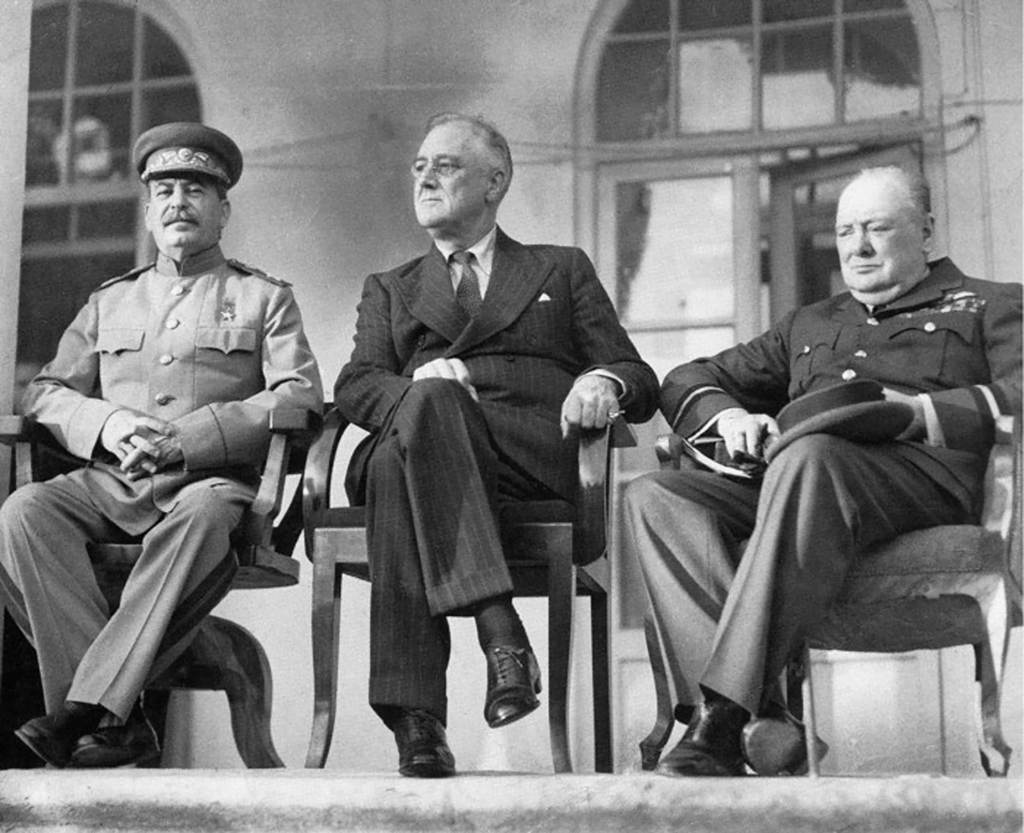
The mansion is often linked to the Tehran Conference of late 1943, when Franklin D. Roosevelt, Winston Churchill and Joseph Stalin met in the city to coordinate their war strategy, including the Allied landings in northern France. Some local sources say the building played a part in hosting delegates, but the main sessions of the conference were held at the Soviet embassy in central Tehran, and historians consider it unlikely that the mansion was a venue. Treat the connection as a local tradition rather than established fact. The conference did produce the Declaration on Iran, in which the three powers recognised Iran’s independence and territorial integrity.
The mansion stands off Heravi Square in Pasdaran. There is no metro station close by, so Snapp or a taxi is the easiest way to get there; ask for Emarat-e Eyn od-Dowleh or Gallery-ye Barg near Meydan-e Heravi. Recent listings show it open during the day and closed on Fridays, but times change with exhibitions and holidays, so check before making a special trip. Allow an hour to see the house, the garden and whatever is on in the gallery.
If you enjoy Qajar houses, Tehran has several more worth seeing. Browse our museums section for other historic homes and collections across the city.