This recipe contains affiliate links. If you buy through them, LiT may earn a commission at no extra cost to you. As an Amazon Associate, LiT earns from qualifying purchases. See our affiliate disclosure.
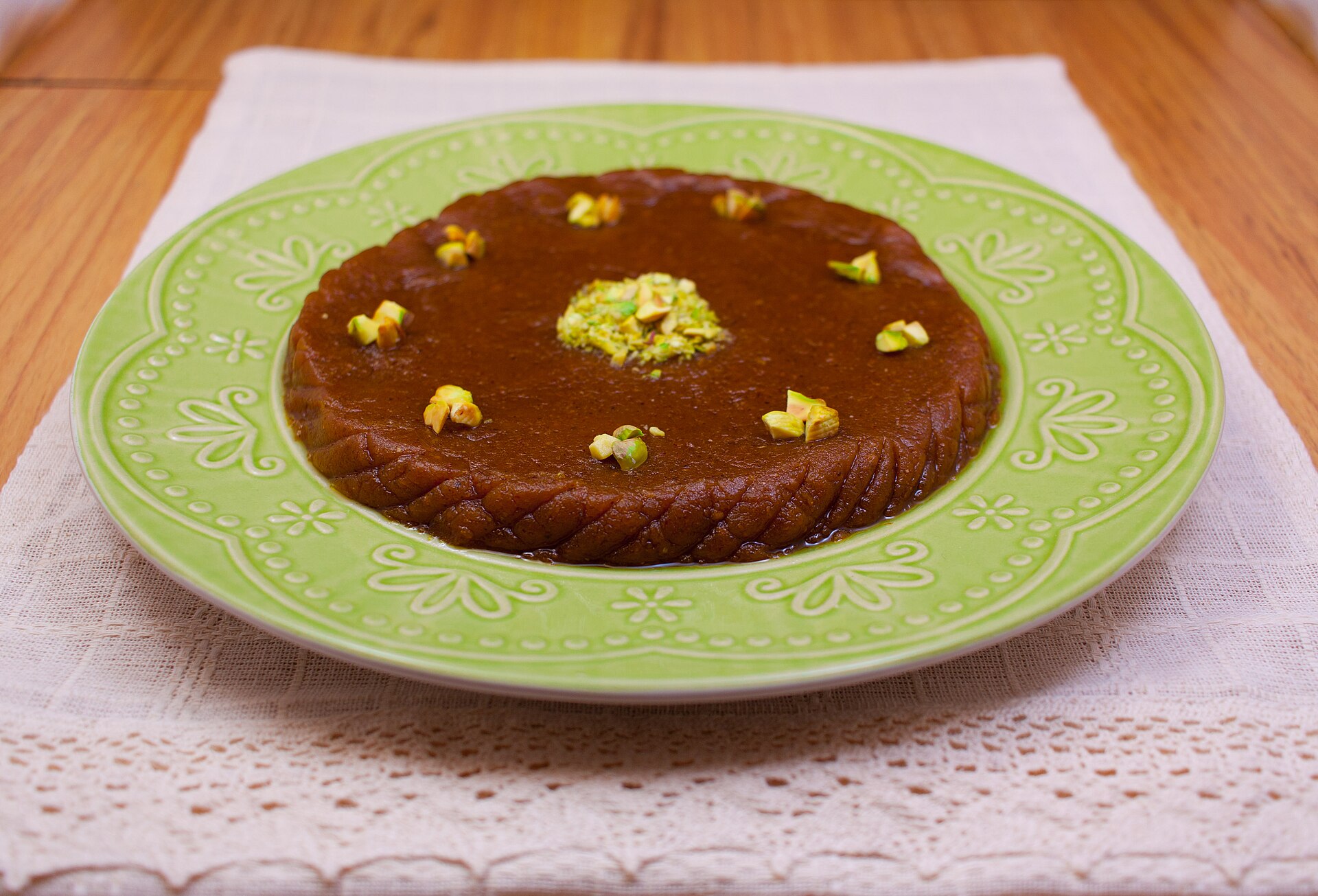
Halva-ye umaj is the Tabriz way of making halva. Most Iranian halva starts with flour toasted straight in the pan. In Tabriz the flour is first rubbed with milk into tiny crumbs, called umaj. The crumbs fry into a halva with a grainy, nutty texture. Saffron, cardamom and rose water do the rest.
Halva is the sweet of family gatherings in Iran. It is served at memorials, at mosques in Ramadan and on Thursday evenings, when families remember their dead. This version is rich enough for a party table.
Serves 8 to 10. Time about 1 hour.
Ingredients
- 2 cups plain wheat flour
- Milk, a few tablespoons, enough to crumb the flour
- ½ cup vegetable oil
- 50g butter
- 1½ cups sugar
- 1 cup water
- ¼ cup rose water
- 2 tbsp brewed saffron (a good pinch of threads, ground and steeped in hot water)
- ½ tsp ground cardamom
- Slivered pistachios or almonds, to decorate
Method
- Make the syrup first. Warm the water and sugar in a pan until the sugar dissolves. Take it off the heat and stir in the rose water, saffron and cardamom. Keep it warm.
- Make the umaj. Spread the flour in a wide tray. Sprinkle over a spoonful of milk at a time and rub it into the flour with your fingertips. Stop adding milk as soon as the flour looks like breadcrumbs.
- Push the crumbs through a coarse sieve, breaking up any large lumps. Spread them out on a tray and leave until the surface feels dry.
- Melt the butter with the oil in a wide pan over a low heat. Add the umaj and stir constantly until it turns golden and smells toasted. Keep the heat low, so the crumbs colour evenly.
- Pour in the warm syrup a little at a time, stirring all the while. Keep stirring until the halva gathers into one mass and comes away from the sides of the pan.
- Spread the halva on a serving plate and smooth it with the back of a spoon. Press a pattern into the top and scatter over the nuts. Serve warm or at room temperature.
Keep the crumbs dry. Add the milk slowly. Umaj that turns doughy or sticky will not fry into separate grains.
Go slow on the heat. The flour burns easily, and a scorched batch tastes bitter. Low heat and constant stirring give an even colour.
Where to buy the ingredients. Outside Iran, you can order saffron and rose water online. A mini mortar grinds the saffron threads. Our Persian kitchen essentials guide covers the rest of the kit, and our pick of the best Persian cookbooks has more sweets to try.
Shop the ingredients. Everything for this halva, ready to order.

Banu organic saffron threads
For the saffron syrup.

Cortas rose water
The floral note in the syrup.

Natco ground cardamom
Half a teaspoon perfumes the halva.

Porcelain mini mortar
Grinds saffron threads to powder.

Slivered pistachios
For decorating the top.

Tefal 24cm stewpot
A heavy non-stick pan stops the flour scorching.
Adapted from a recipe published by Delgarm.
Tabriz cooks call the crumbled flour umaj, and they make it with nothing but flour and milk.