Updated November 2026 We have expanded this guide to the Haft Sin with practical tips on putting together your own table in Tehran, and corrected the timing of Nowruz, which follows the exact moment of the spring equinox.
The Haft Sin is the heart of the Persian New Year. It is a spread, or sofreh, of seven symbolic items whose Persian names all begin with the letter sin (S), laid out in homes, offices, hotels and shop windows across Iran in the days before Nowruz. Each item stands for a hope for the year ahead, from health and patience to love and prosperity, and families gather around the table at the moment the old year turns into the new.
When is Nowruz?
Nowruz, which means “new day”, begins at the exact moment of the spring equinox, known in Persian as sal tahvil. Depending on the year, that moment falls on 20 or 21 March, and it can come at any hour of the day or night. Families watch the countdown on television and greet the new year together around the Haft Sin. The festival has been celebrated for thousands of years and marks the end of winter and the start of spring. For the wider story of the holiday, see our full guide to Nowruz.
The seven S items
There are more than seven possible items beginning with S, and families choose their favourites, but these are the most common:
- Sabzeh (sprouts): wheat, lentil or mung bean shoots grown in a dish, symbolising rebirth and the renewal of nature.
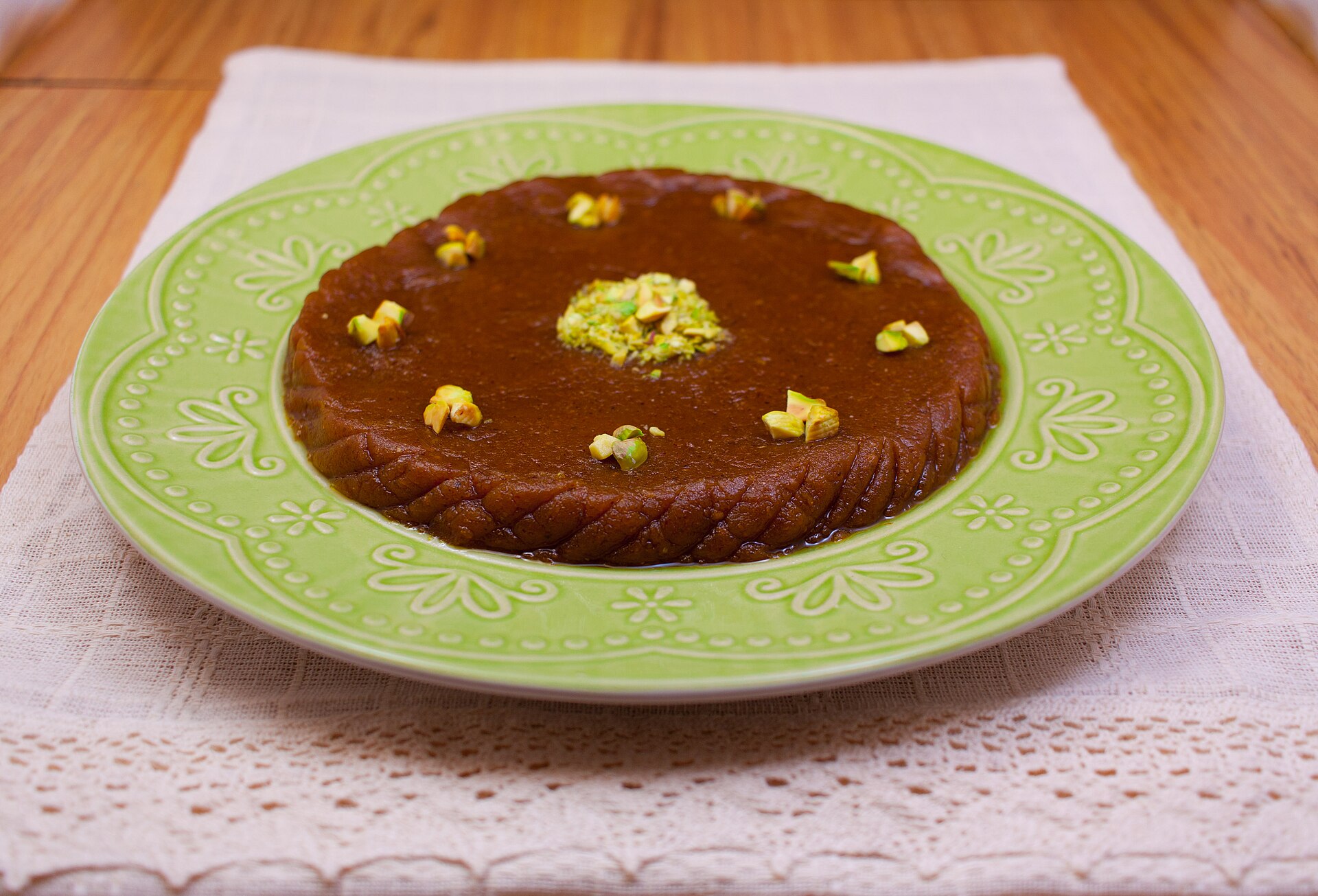
- Samanu: a thick, sweet pudding made from sprouted wheat, representing abundance and affluence.
- Senjed: the dried fruit of the oleaster, or Persian olive, tree, a symbol of love.
- Sir (garlic): for good health and medicine.
- Sib (apple): for health and beauty.
- Somagh (sumac): its deep red recalls the colour of sunrise, and the triumph of light.
- Serkeh (vinegar): for age, patience and wisdom.
Two other S items often appear alongside or instead of these: sekkeh (coins), for wealth and prosperity, and sonbol (hyacinth), the scented spring flower whose perfume fills Iranian homes at Nowruz.
What else goes on the table
Most Haft Sin tables also carry items that do not start with S but are just as traditional:
- Mahi: goldfish in a bowl, representing life.
- Tokhm-e morgh: painted or decorated eggs, for fertility.
- Ayeneh: a mirror, for reflection and looking ahead.
- Sham: candles, for light and enlightenment.
- Shirini: sweets and pastries, so the new year is a sweet one.
- A book: usually a copy of the Quran or the poetry of Hafez, often opened at random for a fal, or reading of fortune.
Many people now avoid goldfish because large numbers die after the holiday or are released into rivers and lakes, where they harm native wildlife. A glass fish ornament or a bowl of water with an orange floating in it are popular alternatives.
Making your own Haft Sin in Tehran
In the weeks before Nowruz, Tehran’s markets fill with everything you need. Pop-up stalls and street vendors sell ready-grown sabzeh, hyacinths, painted eggs and goldfish, and Tajrish Bazaar and the Grand Bazaar are especially lively. Supermarkets and confectioners sell samanu in jars, and dried senjed and sumac are available from any attari (herbalist) or grocery.
If you want to grow your own sabzeh, soak wheat or lentils about two weeks before the equinox and keep them damp in a shallow dish. Tie a red or green ribbon around the shoots once they are a few centimetres tall.
The table usually stays up until the 13th day of the new year, Sizdah be-dar, when families spend the day outdoors and throw their sabzeh into running water to carry away bad luck. Read our guide to Sizdah be-dar in Tehran for more.
Visiting Tehran at Nowruz
Nowruz is a lovely time to be in Tehran. The weather is usually mild, the traffic eases as many residents travel to the provinces, and the city takes on a relaxed holiday mood. Many museums and historic sites stay open for visitors, though offices, banks and some shops close for the first days of the holiday, and hotels in other cities fill up fast. If you are invited into an Iranian home, you will almost certainly see a Haft Sin, and admiring it is a good conversation starter.
The run-up to the new year has its own traditions too, from spring cleaning, or khane tekani, to the bonfires of Chaharshanbe Suri on the last Tuesday night of the year. Nowruz is also celebrated well beyond Iran; see our guide to the countries that celebrate Nowruz.