
Updated November 2026 Iran has passed a law to knock four zeros off the rial. Larger 5 million and 10 million rial notes appeared in early 2026. Here is how that affects the toman and rial today.
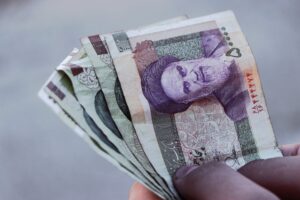
The difference between toman and rial is simple once you know the trick. The rial is Iran’s official currency. One toman equals ten rials. Banknotes, bank statements and official documents use rials. Almost everyone in Tehran, from taxi drivers to shopkeepers, quotes prices in tomans. There is a second twist. Prices are so high that people also drop the thousands. So “50 toman” in a shop usually means 50,000 tomans, or 500,000 rials.
Toman vs rial at a glance
| You hear or see | What it means |
|---|---|
| A price in rials (printed on notes, receipts, bank apps) | Divide by 10 to get tomans |
| A price in tomans (spoken, menus, shop labels, exchange boards) | Multiply by 10 to get rials |
| “Ten toman” in a shop | Usually 10,000 tomans (100,000 rials) |
| “One million” for a taxi fare | Almost certainly a million rials, i.e. 100,000 tomans; check if unsure |
Why people drop the thousands
Years of high inflation have pushed prices into the hundreds of thousands and millions, so people shorten them. In everyday speech “ten toman” normally means 10,000 tomans, and people call a 500,000 rial note “fifty toman”. Context is everything: for a cup of tea “twenty” means 20,000 tomans, for a carpet it may mean 20 million.
The safest habit is to ask the seller to write the figure down or show it on their phone. Then confirm whether it is in tomans or rials. Shopkeepers expect this and will not mind.
Banknotes and coins
The notes you will actually handle are the higher denominations. Small notes such as 500, 1,000, 2,000 and 10,000 rials have largely vanished. Coins are effectively worthless for spending. Much of the cash in use consists of “Iran Cheques”, bearer notes issued by the Central Bank in large values. The Central Bank introduced a 5,000,000 rial Iran Cheque in early 2026 and followed it with a 10,000,000 rial note in March, the largest denomination yet.
Most Tehranis pay by bank card or phone for almost everything. Foreign Visa and Mastercard cards do not work in Iran. Since 16 November 2026, six Iranian banks sell visitors a prepaid rial card under a new central bank scheme. Our guide to how to pay in Iran as a tourist explains the card, the limits and where to get one.
The difference between toman and rial when you pay by card
Card machines and banking apps show amounts in rials. Shopkeepers will still quote the price in tomans. Check the zeros on the terminal before you enter your PIN. A meal priced at 500,000 tomans should read 5,000,000 rials on the screen.
Exchange rates: use the street rate
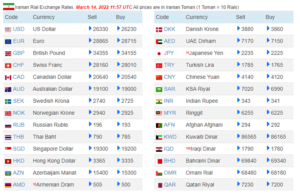
Exchange offices in Tehran display their rates in tomans. Add a zero if you want the rial figure. Exchange offices will offer you the free-market (street) rate. That is the rate that matters for your spending money.
Do not rely on the figure Google or XE.com shows you. Those sites tend to report the official Central Bank rate. It is far stronger than the market rate, and individuals cannot get it. Bonbast tracks the open-market rate independently; licensed money changers usually pay slightly less than its figures. For a quick overview, see our page of today’s Iran exchange rates, and the wider Iran price trackers.
Change money at licensed exchange offices, never with men on the street. Count your notes before you leave the counter. If you arrive late, our guide to hotels at Tehran’s IKIA airport covers staying near the terminal.
Removing four zeros: what is changing
Officials debated simplifying the currency for years. A law amending the Central Bank Act finally took effect in December 2025. Under it, one new rial will equal 10,000 current rials, divided into 100 qirans. The name stays “rial” rather than switching officially to toman.
The change is gradual. According to the Central Bank’s implementing regulations, banks and businesses have until around December 2027 to prepare their systems and show dual price labels. A three-year period follows in which old and new notes circulate together. The central bank plans to withdraw the old notes fully by 2030.
For now, nothing changes in practice: shops still quote prices in tomans and you still pay in current rials. Once the new rial arrives, one new rial will equal 1,000 of today’s tomans. The old habit of dropping the thousands will probably live on in a new form.
Learn the Persian: Persia Learning’s lesson on numbers, prices and money teaches you how to say and understand tomans, rials and big numbers. Try the first lesson free →