This page contains affiliate links. If you buy through them, LiT may earn a small commission at no extra cost to you. Read our disclosure.
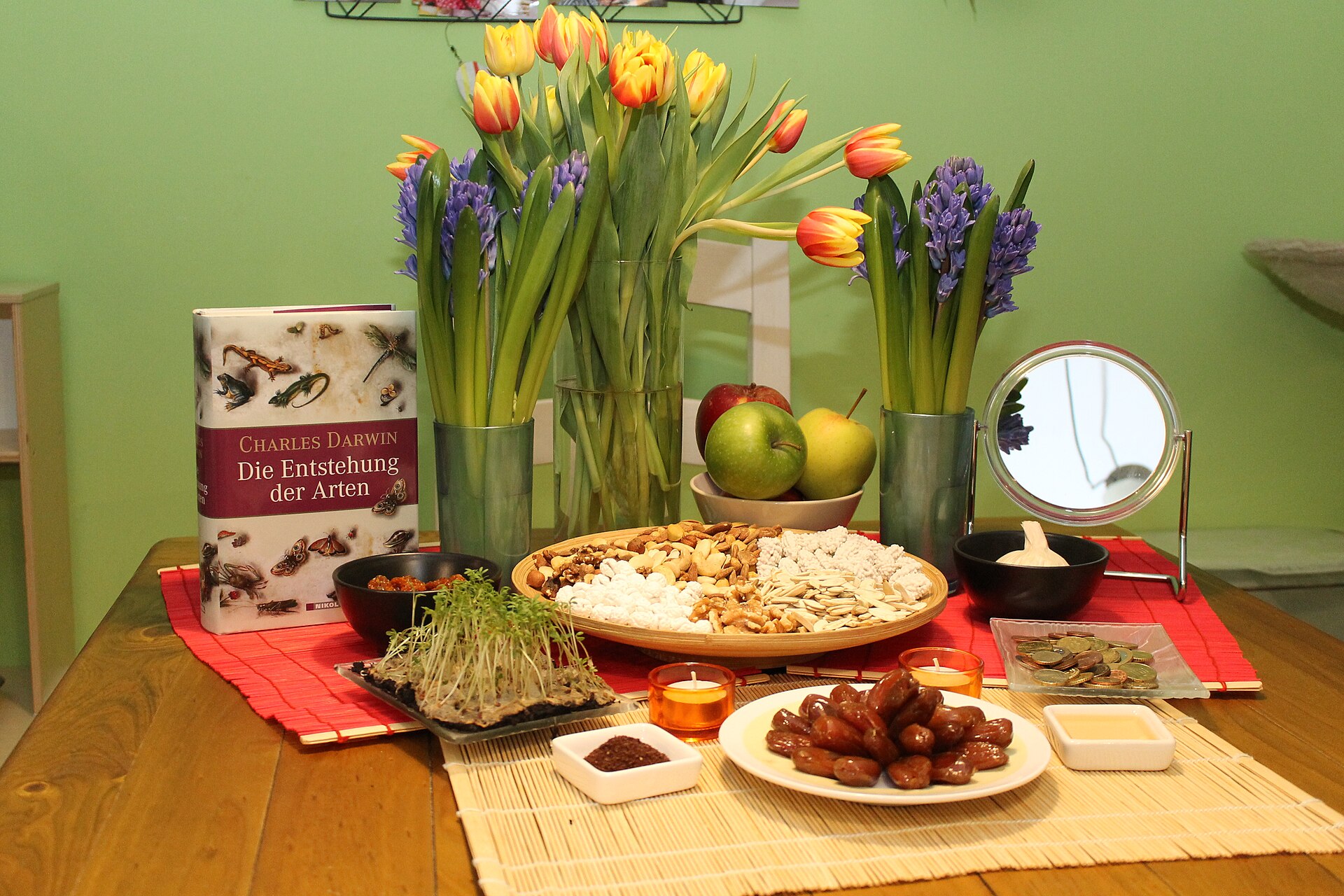
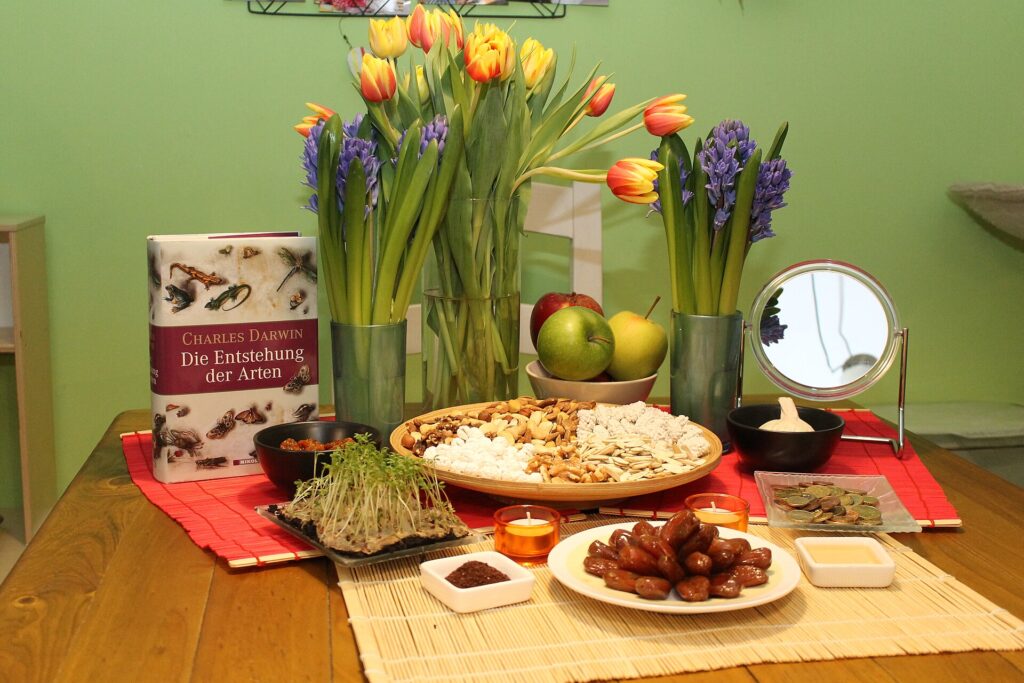
The haft-sin is the table every Iranian family lays for Nowruz, the Persian New Year, which begins at the spring equinox. Its name means “seven S’s”, because at its heart are seven items whose Persian names begin with the letter sin. Each carries a wish for the year ahead. If you are living outside Iran, or simply want to set one up at home for the first time, almost everything you need can be found online or in a good Middle Eastern grocer. This guide walks through the table item by item, with links to where you can buy what you can’t make.
In this guide
Sabzeh, the sprouts. A dish of green shoots grown from wheat, lentils or mung beans stands for rebirth and growth. This is the one item you need to start early: soak the seeds overnight, spread them on a damp cloth or in a shallow dish, keep them moist and they will be a thick green carpet in around ten days to two weeks. Tie a red ribbon round the middle when it is ready. You can use ordinary green lentils from the supermarket or a sprouting seed kit. On the 13th day of the new year, Sizdah Bedar, families take the sabzeh out to a park or river and throw it away, taking the bad luck of the year with it.
Samanu, the sweet wheat pudding. Samanu is made by slowly cooking sprouted wheat into a thick, dark, gently sweet paste, a job that traditionally took a whole night with neighbours taking turns to stir. It stands for affluence and the power of patience. Most people now buy a jar; samanu is sold by Iranian food sellers online.
Senjed, the dried oleaster fruit. These small, floury, sweet fruits stand for love. You will find senjed in Persian shops, sometimes labelled as oleaster or Russian olive.
Sir, sib and somagh: garlic, apple and sumac. A whole bulb of garlic is for health, a red apple for beauty, and a small bowl of sumac, the colour of sunrise, for the triumph of light. Garlic and apples come from any greengrocer, and you can order sumac if your local shop doesn’t stock it.
Serkeh, the vinegar. A small dish of vinegar stands for age and patience. Ordinary wine vinegar is fine.
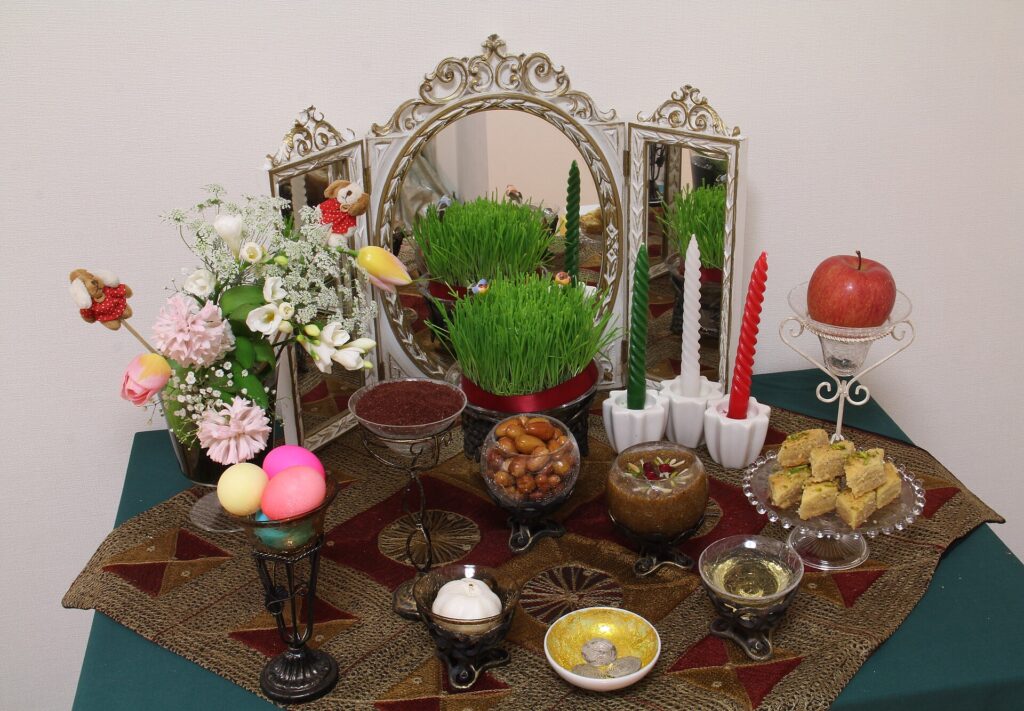
The extras. Most tables carry far more than seven things. Sekkeh, coins, are for prosperity. Sonbol, a pot of hyacinth bulbs, fills the room with scent; plant them indoors a few weeks before and they should flower in time. A mirror and candles, for reflection and light, are central; a simple mirror and candle set works well. Painted eggs stand for fertility, and an egg decorating kit is a good job to give children. Many families add a goldfish in a glass bowl, though more people now use a ceramic or glass fish instead of a live one, and a book, often the Quran or the Divan of Hafez.
The cloth and the dishes. The table is usually laid on a fine cloth; a termeh, the woven silk-and-wool fabric of Yazd, is the traditional choice. If you would rather buy everything matching, ready-made haft-sin sets of bowls and dishes are widely sold.
Making it your own. There is no single correct haft-sin. Some families add rosewater, sweets, hyacinths in every colour or photographs of relatives who have died. Take a look at our guide to the haft-seen table and our Nowruz guide for the history and the customs around it, and our Yalda night piece for the other great family celebration of the Persian year.
Got a question this guide didn’t answer?
Ask people who live in Tehran, or have just moved there, in the LiT forum. Club members can also put questions straight to the LiT team in Ask LiT.