Updated November 2026. Yalda Night, or Shab-e Chelleh, is the evening Iranians stay up late with family to see out the longest night of the year. In 2026 it falls on Monday 21 December, the night of 30 Azar 1405, ahead of the first day of winter on Tuesday 22 December (1 Dey). Expect pomegranates, watermelon, nuts, poetry and a house full of relatives. We refresh this guide every year before Yalda.
When is Yalda Night 2026?
Yalda is always celebrated on the evening of the last day of autumn in the Iranian calendar, 30 Azar, and runs into the first morning of Dey. In 2026, 30 Azar 1405 is Monday 21 December, so the gatherings happen on Monday evening and go on past midnight.
The calendar date lines up closely with the astronomy. The US Naval Observatory puts the December solstice at 20:50 UT on 21 December 2026, which is 00:20 on Tuesday 22 December in Tehran (Iran Standard Time, UTC+3:30), just after midnight on Yalda Night itself. For Iranians abroad, the solstice is at 20:50 GMT in London, 21:50 in Berlin and 15:50 in New York and Toronto on Monday 21 December, though diaspora families celebrate Yalda on the evening of 21 December regardless.
Yalda is not an official public holiday in Iran. Offices and shops work normally the next day, which does not stop many families from staying up very late.
What is Yalda?
The name Yalda comes from a Syriac word meaning “birth”, and the night has long been linked with the birth or rebirth of the Sun: after the solstice the days start to lengthen and light gradually wins out over darkness. Its other name, Shab-e Chelleh (“night of forty”), refers to the forty coldest days of winter that follow.
The customs go back to the ancient Persian world, when the longest night was seen as a time of danger, and people kept each other company, fed the fire and stayed awake until dawn. Through the Islamic era the festival survived as a family occasion rather than a religious one, and it is still celebrated by Iranians of every faith and none, as well as in Afghanistan, Tajikistan and the wider Persian-speaking world.
In 2022 UNESCO added Yalda/Chella to its list of the intangible cultural heritage of humanity, on a joint nomination from Iran and Afghanistan. The listing describes families gathering at the homes of elders around a table set with a lamp for light, water for cleanliness and red fruits for warmth, with poetry, storytelling, games, music and gifts.
Traditions
Gathering at the elders’ house
Yalda is above all a family night. Relatives converge on the home of the oldest generation, usually grandparents, and the evening is spent talking, eating and passing round stories. Newly engaged and newly married couples get special attention: the groom’s family traditionally sends the bride a decorated tray of fruit, sweets and gifts, known as the shab-e chelleh or Yalda gift.
Reading Hafez
No Yalda is complete without the Divan of Hafez, the 14th-century poet of Shiraz. The custom is fal-e Hafez: each person makes a silent wish or asks a question, then the book is opened at random and the poem on that page is read aloud as an answer. An older family member usually reads, and the interpretation, generous, teasing or gently cryptic, is half the fun. Some families also read from Ferdowsi’s Shahnameh or tell old folk tales.
Staying up late
Traditionally people stayed awake until dawn to keep the darkness at bay. Today most families manage a very late night rather than an all-nighter, with tea, cards, music and television specials. Candles and lamps are lit to reflect the theme of light overcoming darkness.
What people eat on Yalda
Red fruit dominates the table, its colour standing for dawn, warmth and life.
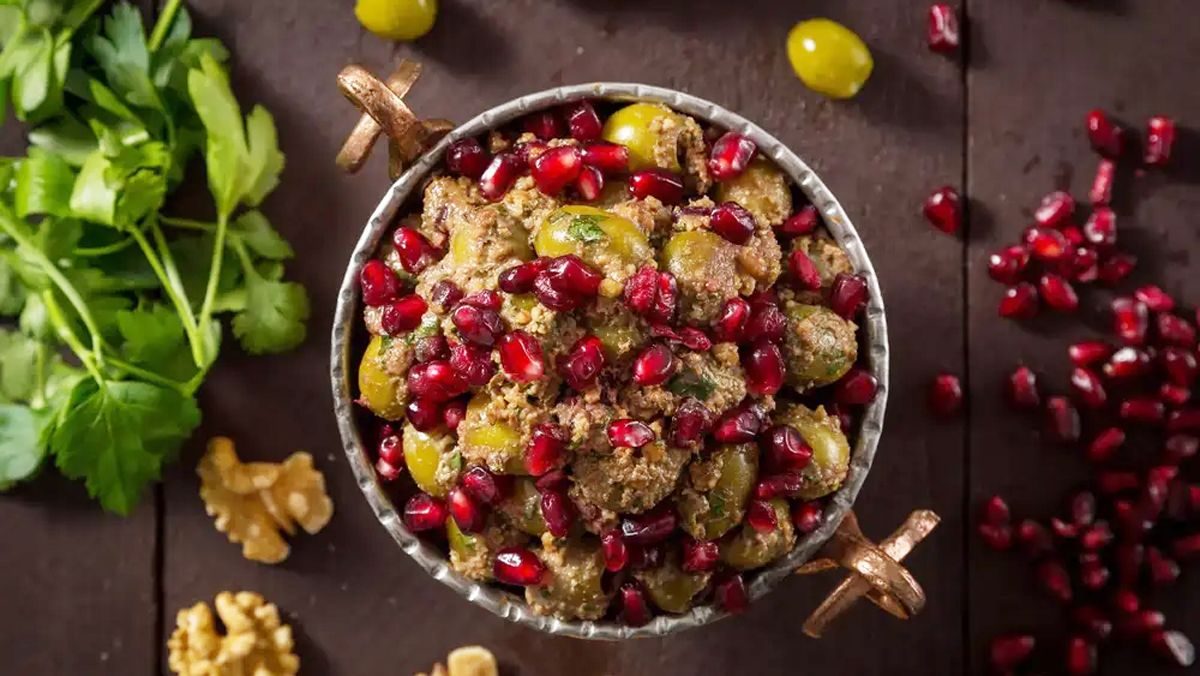
- Pomegranates (anar): the symbol of Yalda, served whole or as glistening bowls of seeds, sometimes sprinkled with golpar (Persian hogweed) and salt.
- Watermelon (hendevaneh): kept from summer or bought at a premium, eaten in the belief that it protects against illness through the winter.
- Ajil: the festive mix of pistachios, almonds, hazelnuts, roasted chickpeas, seeds, raisins and dried mulberries and figs. Yalda ajil is sold ready-mixed in every bazaar in December.
- Persimmons, grapes and sweets: persimmons are in season, and many families add pastries and halva.
- Dinner: there is no single Yalda dish. Many households serve a rice dish such as sabzi polo or a hearty ash, and regional specialities vary by city. Browse our Persian recipes for ideas, including zeytoon parvardeh for the side table.
Expect prices for pomegranates, watermelon and nuts to rise steeply in the days before Yalda. Buying a few days early, or from a wholesale fruit market, helps.
Where to experience Yalda in Tehran
The real Yalda happens in people’s homes, so the best way to experience it is to accept an invitation if you get one. Bring something for the table, fruit, sweets or a box of pastries, and be ready to have your fortune read from Hafez.
Out and about, the run-up is easy to enjoy:
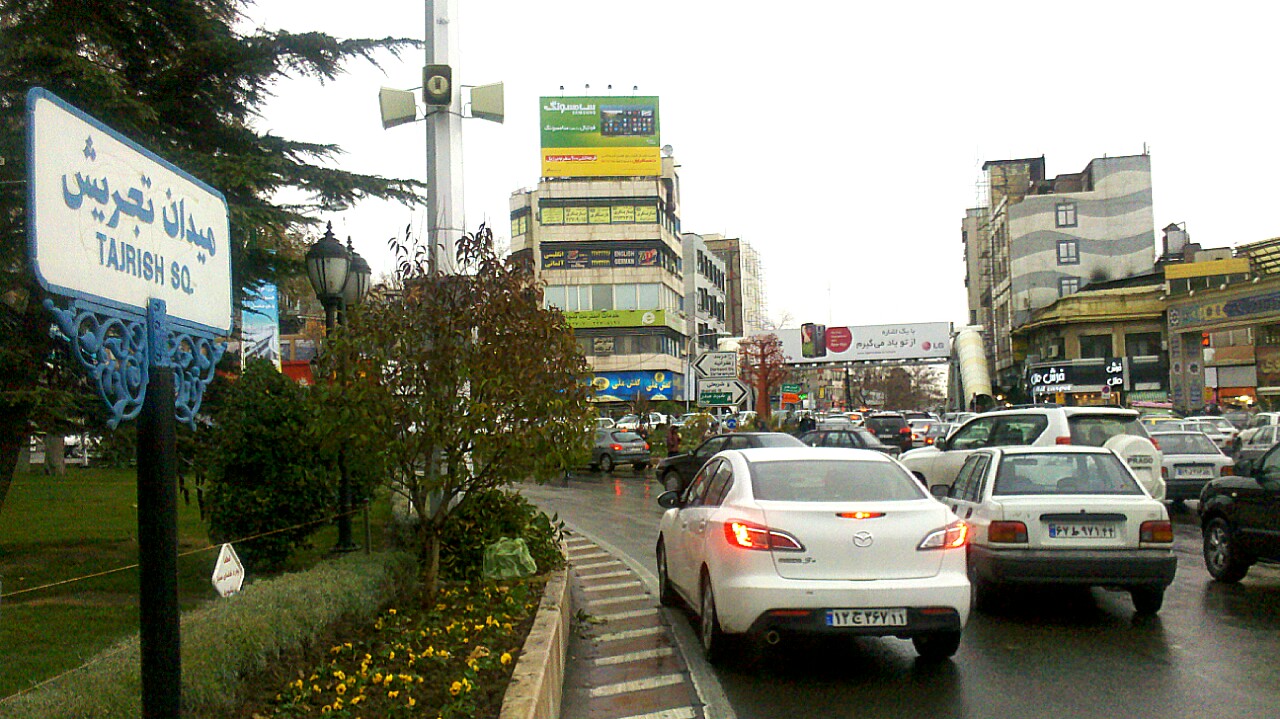
- Bazaars and fruit stalls. Tajrish Bazaar in the north of the city is at its most colourful in the week before Yalda, piled with pomegranates, watermelons and gift trays. The Grand Bazaar is the place for nuts, dried fruit and sweets in bulk.
- Municipal events. Tehran Municipality has in recent years staged Yalda programmes across the city’s 22 districts, with music, storytelling and poetry in parks and cultural centres. Check local listings in December for the current year’s line-up.
- Cafés, restaurants and cultural venues. Many cafés decorate for Yalda and some host poetry readings or live music. Our cafés and restaurants and art and culture sections are a good starting point.
December is also smog season in Tehran. If you plan to be out, check the air-quality index and our guide to Tehran’s winter smog.
Yalda around the world
Iranians abroad keep Yalda with great enthusiasm, and Iranian community organisations from Los Angeles and Toronto to London, Germany and Australia hold public gatherings. In Afghanistan the night is known as Shab-e Yalda or Shab-e Chella, and in Tajikistan as Shabi Yaldo. For the other big turning point of the Iranian year, see our guide to Nowruz, the Persian New Year.
Frequently asked questions
What date is Yalda Night 2026?
Monday 21 December 2026, the night of 30 Azar 1405. The next day, Tuesday 22 December, is 1 Dey, the first day of winter in the Iranian calendar.
What time is the winter solstice in Tehran in 2026?
At 00:20 Iran Standard Time on Tuesday 22 December 2026 (20:50 UT on 21 December), just after midnight on Yalda Night.
Is Yalda a public holiday in Iran?
No. Yalda is a family celebration rather than an official holiday, so offices, schools and shops normally open the following day.
Why do Iranians eat pomegranates and watermelon on Yalda?
Their red colour stands for the glow of dawn and the warmth of life. Pomegranates also represent fertility and renewal, and eating watermelon on Yalda is said to protect against illness during the cold months.
What is fal-e Hafez?
It is the custom of making a wish, opening the Divan of Hafez at random and reading the poem on the page as a kind of answer or fortune. It is a highlight of Yalda Night in most Iranian homes.
Is Yalda a religious festival?
No. Its roots are pre-Islamic and seasonal, and today it is a cultural and family occasion shared by Iranians of all backgrounds.
What should I bring if invited to a Yalda party?
Fruit (pomegranates are ideal), a box of pastries or nuts, or flowers. If you are invited by a newly married or engaged couple’s family, a small gift for the couple is a kind touch.
Learn the Persian: Learn the Persian months, the days of the week and how to say a date in our free lesson on time, days and the Persian calendar.