Four days after Valentine’s Day, a growing number of Iranians buy flowers for the women in their lives for a reason that has nothing to do with Saint Valentine. Esfandegan, also known as Sepandarmazgan, is an ancient Persian festival dedicated to women and to the earth, and over the past two decades it has been revived as an Iranian day of love and respect.
The festival is named after Spenta Armaiti, or Spandarmad, one of the Amesha Spentas, the holy immortals of Zoroastrianism. She stood for devotion, patience and unconditional love, and she was the guardian of the earth, of farmers and of women. In the old Zoroastrian calendar, the fifth day of every month was named after her, as was the twelfth month, Esfand, so her festival fell on the fifth of Esfand. In the modern Iranian calendar, with its 31-day months, that corresponds to 29 Bahman, which is 18 February in 2027, and this is the date most people now keep. Some still mark the old date of 5 Esfand, around 24 February.
Our main source for how the day was once celebrated is the scholar Al-Biruni, who wrote in the 11th century that it was a festival for women, when men gave them presents and they were free from work. He also recorded that ordinary people ate raisins and pomegranate seeds, and another early historian, Gardizi, wrote that women called the day mard-giran, the day of choosing men. Because Spandarmad was the spirit of the earth, the day was also a time to tend the land, clean the soil and plant.
How Esfandegan is celebrated today. The festival largely disappeared from public life for centuries and survived mainly among Zoroastrians, who still mark it as a day of honour for women and mothers. Since the 2000s, cultural groups have campaigned for it to be recognised as an Iranian alternative to Valentine’s Day, and many families now use it to give flowers and small gifts to mothers, wives, sisters and daughters. Unlike Valentine’s Day, the emphasis is on love and respect for women in every relationship, not only romance, and some people mark it by planting a tree or a flower in keeping with its link to the earth.
Esfandegan in Tehran. Esfandegan is not a public holiday, but in the days around it you will see flower sellers busier than usual and cafés and shops promoting it alongside, or instead of, Valentine’s Day. Tehran’s Zoroastrian community holds its own celebrations, often honouring the women of the community.
When is Esfandegan? In 2027 Esfandegan falls on Thursday 18 February (29 Bahman 1405), with the traditional date of 5 Esfand on Wednesday 24 February. It comes a few weeks after the midwinter fire festival of Sadeh and shortly before the run-up to Nowruz. For the full calendar, see our guide to the ancient festivals of Iran.
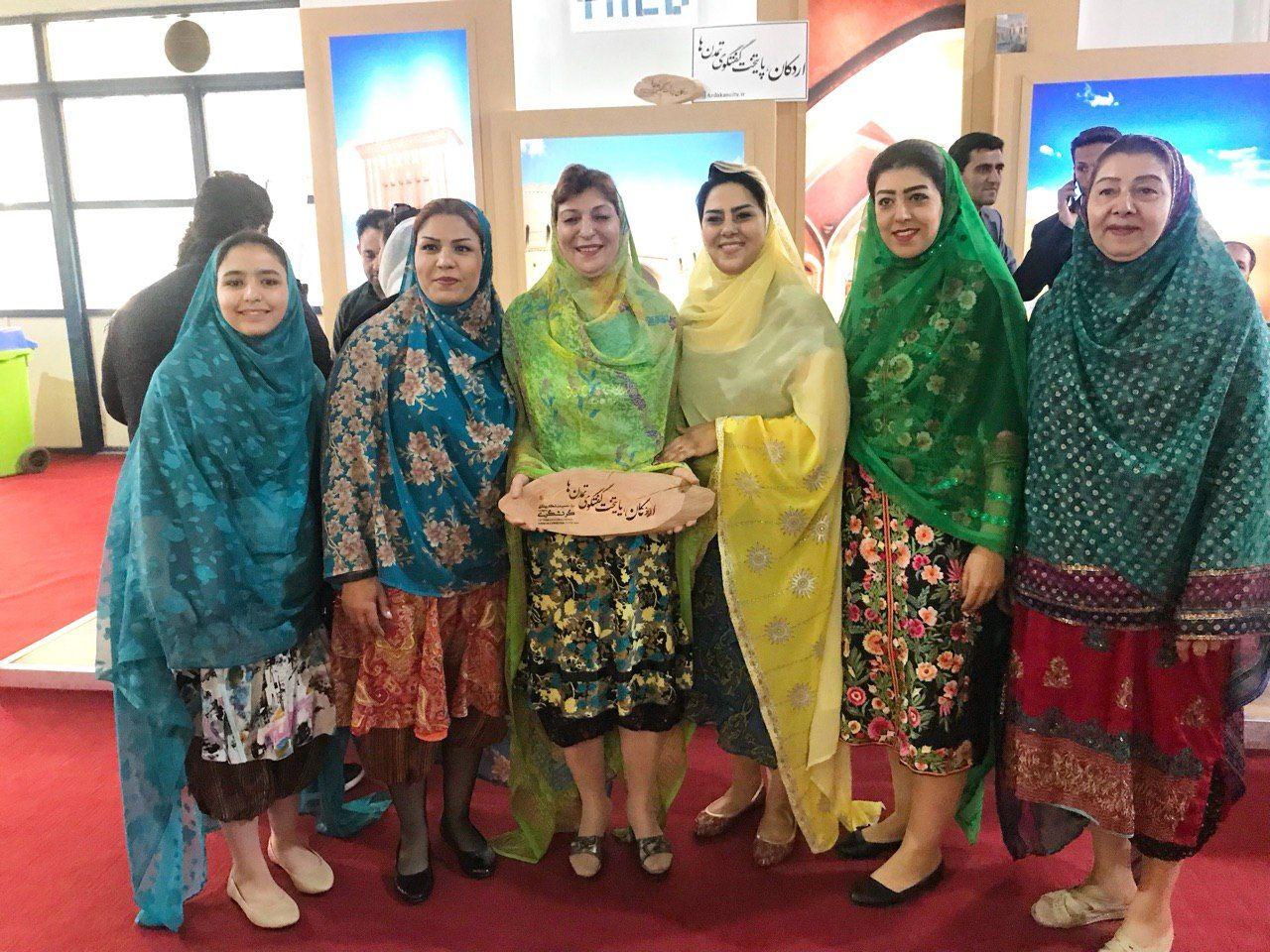
Header image: Zoroastrian women of Sharifabad, near Yazd, in traditional dress. Photo: Rezamihandoostdar / Wikimedia Commons, CC BY-SA 4.0