Updated November 2026 We have corrected the history of Ghazali Cinema Town, added directions and removed the old discount-ticket offer.
Ghazali Cinema Town is a full-scale recreation of old Tehran on the western edge of the city, built as a film set and open to visitors who want to wander streets that have long since disappeared from the real downtown. If you have watched an Iranian period drama set in Qajar or Pahlavi-era Tehran, there is a good chance it was filmed here, among the horse carriages, vintage cars and shopfronts of a city with far less traffic than today’s.
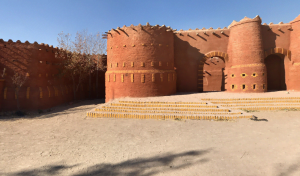
The set was built in 1979 (1358 in the Iranian calendar) for Hezar Dastan, the celebrated television series by the director Ali Hatami, who researched the period details himself. It was designed by Johnny Cortina and officially opened as a cinema town in the mid-1990s. Today it belongs to the state broadcaster, IRIB, and it is still a working production centre, so you may find a crew filming on part of the site when you visit.
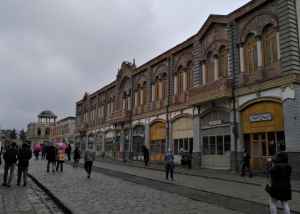
Walking through the set is like stepping into old photographs of central Tehran. The highlights include Toopkhooneh Square, the historic artillery square now known as Imam Khomeini Square, with a recreation of the old City Hall that once stood there. The original building was demolished in the 1970s, so this is the closest you will get to seeing it. Nearby is Lalehzar Street, once nicknamed the Champs-Élysées of Tehran for its cinemas, theatres and smart cafés, long before it became the city’s lighting and electrical goods district. Look out for the Grand Hotel and Pars Café, and the old train carriage on Lalehzar, which no longer moves but which you can climb into for a photo.
Other sets recreate the Khani Abad neighbourhood, built for a series about the wrestler Gholamreza Takhti, and a set resembling ancient Nazareth that was used for the film Saint Mary (2000). Productions shot here over the years include Delshodegan, Imam Ali, Kolah Pahlavi and the hit series Shahrzad, so Iranian visitors often spend the visit pointing out scenes they recognise. Vintage cars, including old Buicks and Cadillacs, are parked along the streets to complete the effect.
One of the most popular things to do is to hire a period costume and have your photo taken in an old-style atelier or in a horse-drawn carriage, which makes a fun souvenir. There are restaurants and snack facilities on site, and guides are available for groups of more than ten people.
To get there, head west from Azadi Square along the Makhsoos road (Shahid Lashgari Highway) towards Karaj. The cinema town is about 15 kilometres along this road, past the Saipa car factory, and has its own car park. Shared taxis heading along the Makhsoos road leave from Azadi Square, but a ride-hailing app is the simplest option. Tickets are sold at the entrance, and opening hours vary with the season and with filming schedules, so check before you set off. For a sense of what a day out costs, see our Iran price trackers.
Some of the buildings are only façades and others are fragile or unsafe inside, so keep an eye on children and do not let them go into the buildings alone. Spring and autumn are the most pleasant times to visit, as there is little shade on the set in summer.
If you are making a day of it in west Tehran, the National Botanical Garden of Iran is close by off the Tehran–Karaj freeway, and our city guide has more ideas for days out.