Updated November 2026 Tehran’s cinemas have reopened and audiences are returning after the disruption of the 2026 conflict; we have updated this list and added the Azadi Cinema Complex.
The best cinemas in Tehran are the big modern complexes, the pardis multiplexes, where a film comes with cafés, restaurants and often a shopping centre attached. Going to the cinema is one of the most popular nights out in the city, and Iranian films draw large, enthusiastic audiences. Here are our picks, from striking architecture in north Tehran to nostalgic halls in the west.
Almost everything on screen is Iranian, with screenings in Persian and no subtitles in most cases, although a few cinemas occasionally show foreign films and festival selections. Cinemas operated throughout the war, and attendance has been climbing since, according to Iran Daily.
Mellat Cinema Gallery, Valiasr
Mellat is the architect’s choice. Designed by Reza Daneshmir and Catherine Spiridonoff and completed in 2008, its folded concrete and glass building rises out of the slope at the top of Mellat Park, off Valiasr Street, and has won international attention. Inside you will find several screening halls with good sound and projection, exhibition spaces and a café, and below ground there are more places to eat. It mainly shows Iranian releases and is a good place to catch the films everyone is talking about.
Charsou Cinema Complex, central Tehran
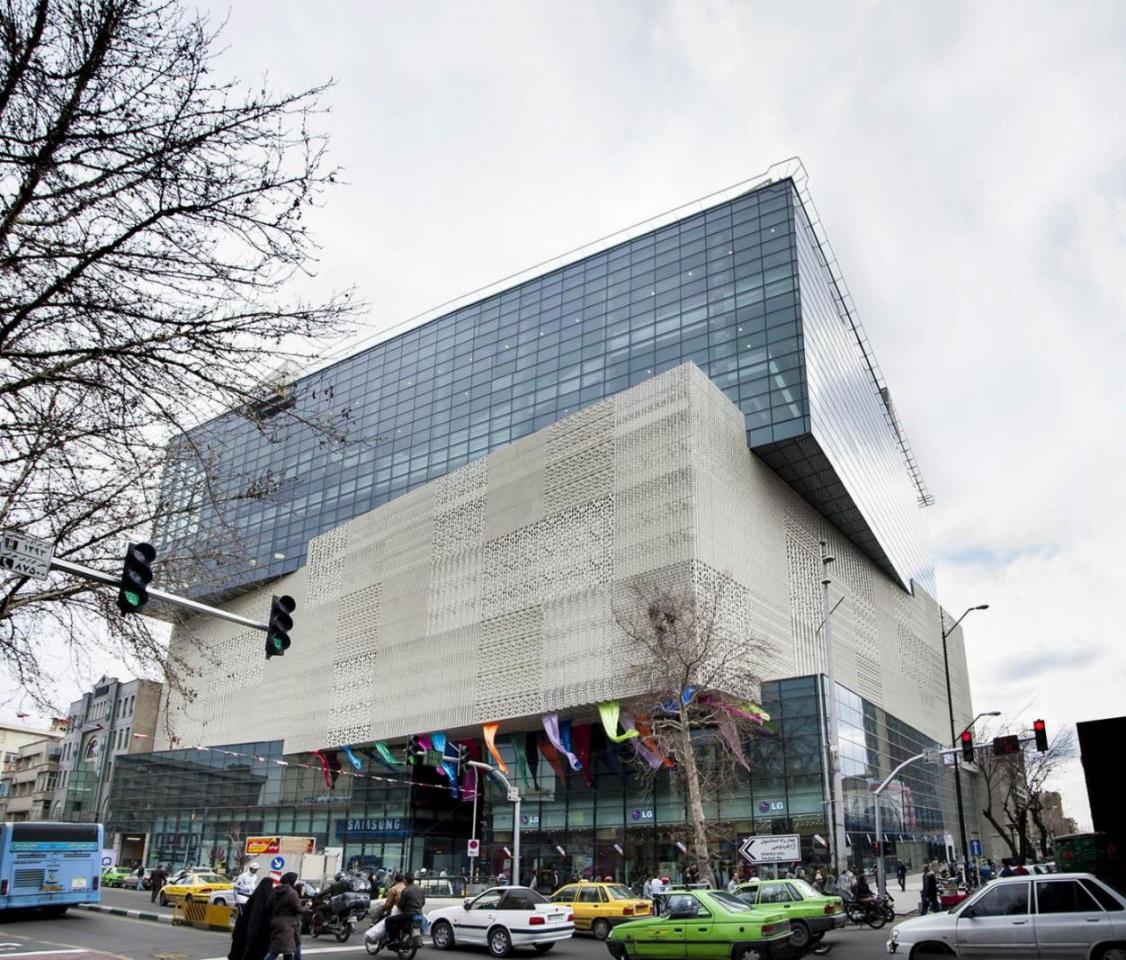
Charsou opened in 2014 as part of a shopping complex on Jomhouri Street, near the Hafez junction, an area better known for its mobile phone shops. Its white metal-clad façade is easy to spot from the Hafez flyover. The cinema has five halls on the upper floors, and there is a food court and plenty of parking in the building. It is one of the most convenient modern cinemas if you live or work downtown. See our guide to the top malls in Tehran for more on the complex.
Azadi Cinema Complex, Beheshti Street
The Azadi has been a Tehran institution for decades and was rebuilt as a large modern complex. It sits on Beheshti Street, at the junction with Khaled Eslamboli (Vozara), and has five large halls, coffee shops, restaurants and several floors of shops. Its central location makes it an easy evening out, and it is one of the main venues during the Fajr Film Festival.
Kourosh Cinema Complex, west Tehran
Kourosh occupies the upper floors of the Kourosh Mall, at the junction of the Hakim expressway and Sattari, in west Tehran. Its halls are named after the famous old cinemas of Lalehzar Street, such as the Metropol, Crystal and Rex, which gives the complex a nostalgic feel, and the decor leans into the golden age of Iranian cinema. There is extensive parking and the mall has plenty of places to eat before or after a film.
Gholhak Cinema Complex, Shariati
The Gholhak complex, on Yakhchal Street just off Shariati Street, combines cinemas with sports facilities, including squash and football courts and a gym, as well as restaurants and a library. It has long been a favourite with north Tehran residents, and it has a reputation for a broader programme than most. Read our review of a night out at Pardis Gholhak.
Older cinemas on Shariati and in the centre
For a cheaper ticket and a taste of an older Tehran, look out for the historic single-screen cinemas around Shariati Street and the city centre, some of which date back to the 1950s and 1960s and have been modernised. They mostly show Iranian films and are busy during the Fajr festival in February.
Tips for going to the cinema in Tehran
- Book online. Tickets for most cinemas are sold through Persian-language apps and websites such as Cinematicket and Gisheh7, where you can choose your seat. Popular new releases sell out on Thursday and Friday evenings.
- Check the language. Assume films are in Persian without subtitles unless the listing says otherwise.
- Prices. Tickets are inexpensive by international standards and vary by cinema and time of day. See our Iran price trackers for a sense of current costs.
- Arrive early. The big complexes get busy, and parking can take a while at peak times.