Updated November 2026 Tajrish Bazaar is open and trading as usual; we have refreshed the shopping tips and removed fixed opening hours, as individual shops now set their own.
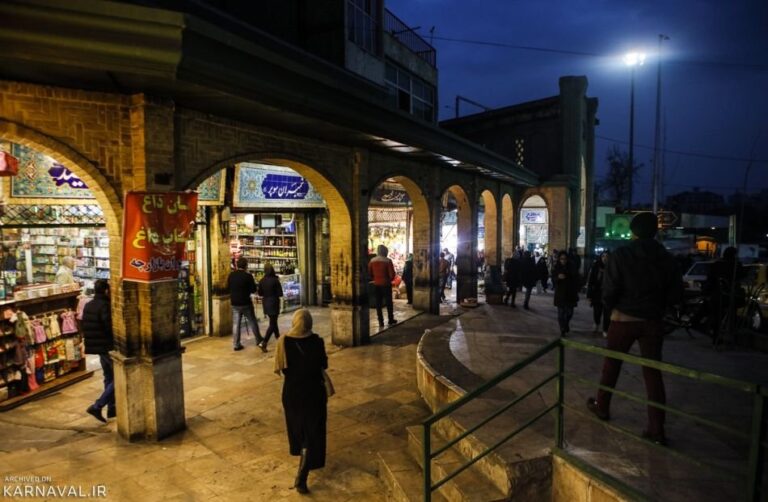
Tajrish Bazaar is the best traditional market in north Tehran and well worth a visit, whether you are a tourist or simply need fresh herbs for dinner. Smaller and calmer than the Grand Bazaar downtown, it packs fruit and vegetable stalls, spice and nut shops, saffron sellers, sweet bakers and handicraft stores into a few covered lanes beside one of the city’s most visited shrines. It sits right next to Tajrish Square, at the northern end of Metro Line 1, so it is also one of the easiest bazaars in Tehran to reach.

What it is like
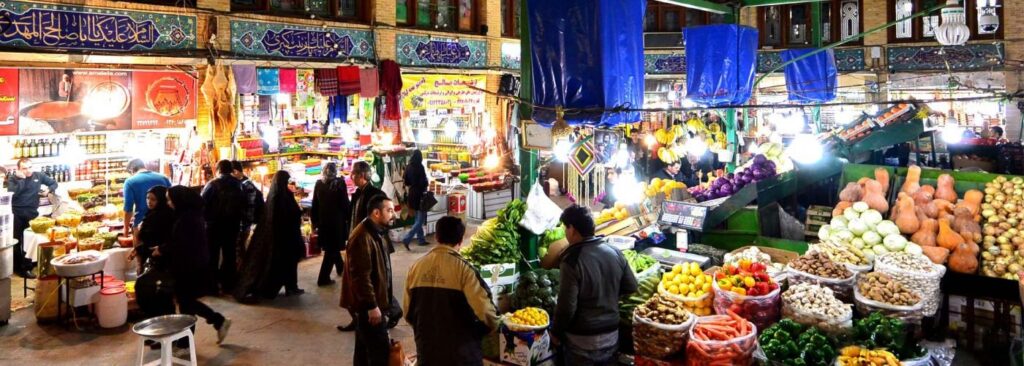
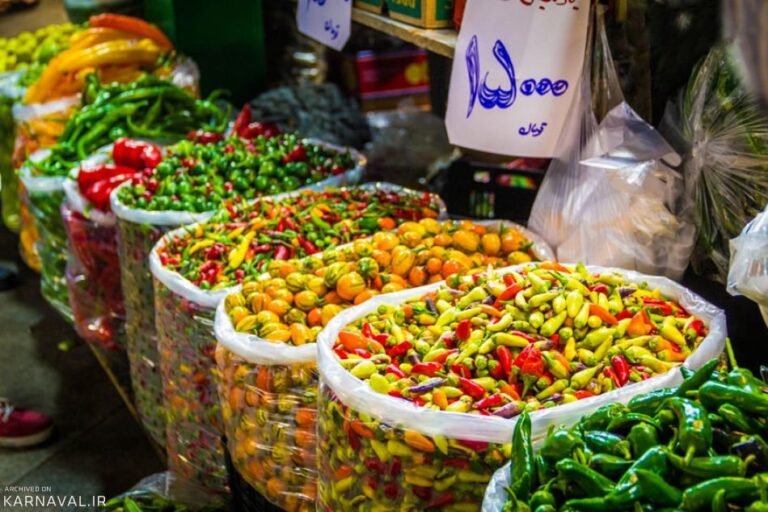
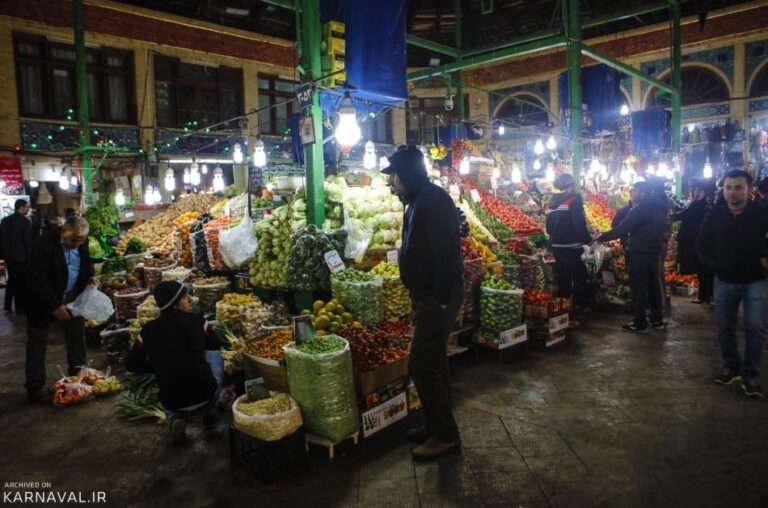
The heart of the bazaar is the Tekyeh, a big covered hall that has served as the neighbourhood’s produce market for generations. Piles of pomegranates, quinces, herbs, cucumbers and whatever is in season fill the stalls, and shopkeepers call out prices as you pass. The hall is also one of Tehran’s oldest tekyehs, the spaces used for religious mourning ceremonies, and during Muharram it hosts gatherings and passion plays, as Surfiran notes.
From the Tekyeh, narrow lanes lead off to shops selling clothing and scarves, copper pots and kitchenware, glass and porcelain, prayer beads and religious items near the shrine, and jewellery and handicrafts. Next door, the modern Qaem shopping centre has more handicraft and souvenir shops over several floors. The mix of old and new, and of shoppers from every walk of life, is what makes Tajrish so enjoyable.

What to buy
- Spices, nuts and dried fruit. The specialist shops here are excellent. Prices are a little higher than at the Grand Bazaar, reflecting north Tehran rents, but quality is high and you can taste before you buy. Ask whether goods are priced by weight or by packet.
- Saffron. Several shops specialise in it and will happily explain the different grades. Buy in sealed packs if you are taking it home.
- Pickles and preserves. Torshi (Persian pickles), olives, jams and sauces are sold loose from big jars.
- Sweets and bread. Look out for naan-e ghandi, a sweet bread, and seasonal pastries.
- Handicrafts. Copperware, pottery, textiles and jewellery. Ask where an item was made and from what, as not everything sold in a bazaar is handmade.
Bring cash, as foreign bank cards do not work in Iran, and be ready to bargain politely in the handicraft shops. Food stalls generally have fixed prices. Our guide to grabbing a bargain in the bazaar has more tips, and our Iran prices trackers will help you judge what is fair.

Getting there and what is nearby
Take Metro Line 1 to Tajrish, its northern terminus; the station exits onto Tajrish Square, a short walk from the bazaar entrance. Shops set their own hours, so if you are after something specific, check with the shop before making a special trip.
Right beside the bazaar is Imamzadeh Saleh, a shrine famous for its tiled exterior and glittering mirrorwork inside. Visitors are welcome outside prayer times; women need a chador, which can usually be borrowed at the entrance, and everyone removes their shoes.
Tajrish makes a good base for exploring the north of the city. Combine the bazaar with a walk up to the cafés and streams of Darband, or a visit to Sa’dabad Palace or the Niavaran complex. For more on the area, see our guide to Tajrish.
Visiting Tajrish Bazaar: at a glance
- Opening hours: Saturday to Friday: 10:00 to 22:00
- Time needed: 1 to 3 hours
- Address in Persian (show this to your driver): تهران، محله تجریش، میدان تجریش
- Open Tajrish Bazaar in Google Maps
Hours can change on public holidays and during Ramadan, so check before you set out.
Tajrish Bazaar in pictures
Learn the Persian: Persia Learning’s lesson on shopping and the bazaar teaches you how to ask prices, request a discount and handle the polite back-and-forth of bargaining. Try the first lesson free →