
Updated November 2026 The building is still in use by the University of Art, so treat it mainly as an exterior sight and check access on the day rather than relying on fixed opening hours.
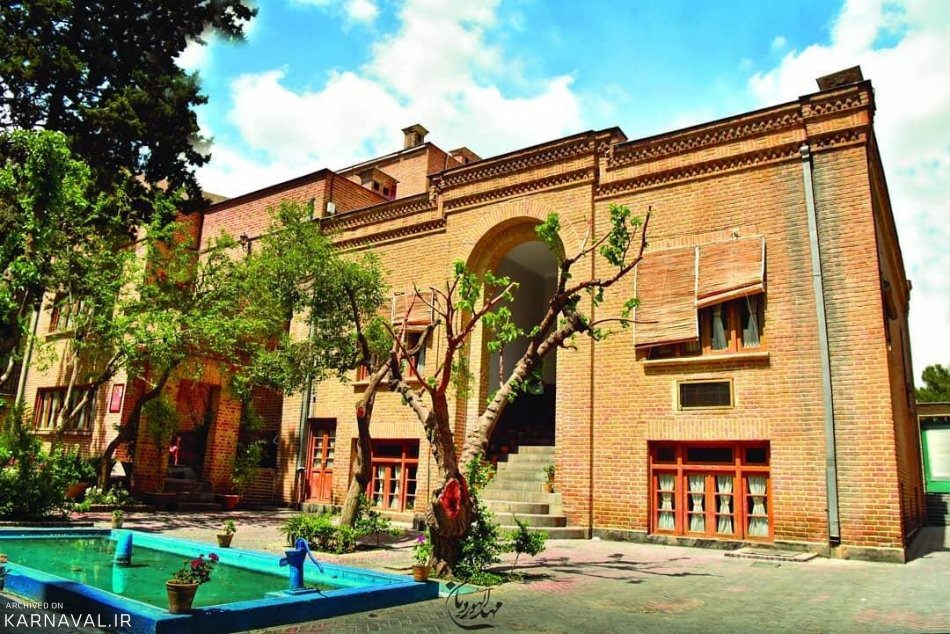
The Cossack House in Tehran, known in Persian as Qazaq Khaneh, is one of the most striking pieces of late Qajar architecture in the old government quarter around the National Garden (Bagh-e Melli). It began life as the headquarters and barracks of Iran’s Cossack Brigade, later served the War Ministry, and today belongs to the University of Art. You can admire it from the street in a few minutes, and it slots neatly into a walk around the museums of downtown Tehran.

A short history
The story starts with Naser al-Din Shah’s visits to Russia in the 1870s. Impressed by the drill and discipline of the Russian Cossack regiments, the Shah asked the Tsar for officers to train a similar cavalry unit in Iran. A Russian mission under Colonel Domantovich arrived in 1879, and the Persian Cossack Brigade was born. It grew into one of the most powerful military forces in the country, and it was a Cossack officer, Reza Khan, who later rose to become Reza Shah.
The brigade’s headquarters went up in the early 1890s, late in Naser al-Din Shah’s reign, beside the old parade and drill ground (Meydan-e Mashq) that later became the National Garden. Alterations continued under his successor, Mozaffar al-Din Shah. Under the Qajars the building worked as barracks and command centre; in the Reza Shah period it housed the Ministry of War. After the 1979 revolution it passed to the University of Art, which still uses it, and parts of it have been restored. It is listed as a national heritage monument.

The architecture
Qazaq Khaneh is a good example of the eclectic style that took hold in Tehran at the end of the 19th century, when Iranian builders blended Persian brickwork and decoration with European neoclassical forms. Look for the symmetrical facade, the columns and pediments, and the decorative brick and tile detail.
The building originally stood in the middle of the drill ground. Its upper floor has porches on the north and south sides, which allowed the Shah and his officers to watch parades and military ceremonies taking place on the square below.

Visiting the Cossack House
Because the building is a working university site, you should not count on being able to walk in. Most visitors view and photograph it from outside, which is where the best of the architecture is anyway. If you want to see inside, ask politely at the gate or contact the University of Art in advance; occasional exhibitions and cultural events are the likeliest way in.
- Where: the old government district beside the National Garden (Bagh-e Melli), off Imam Khomeini Street in downtown Tehran.
- By metro: Imam Khomeini station, on Lines 1 and 2, is a short walk away. This is the easiest option, as traffic and parking in this area are difficult.
- Best time: weekday mornings, when the area is busy but the museums nearby are open. Avoid Fridays if you want to combine it with museum visits.
- Photography: photographing the facade from the street is generally fine, but the area is full of government buildings, including the Foreign Ministry, so do not point your camera at guards, gates or official offices.
What to see nearby
The Cossack House is one of a cluster of historic buildings within a few minutes’ walk of each other, which makes this part of town one of the most rewarding for a half-day on foot.
- The National Garden gate (Sardar-e Bagh-e Melli), the ornate tiled gateway that leads into the compound.
- The Post and Communications Museum, housed in a handsome early 20th-century building.
- The Malek National Library and Museum, with manuscripts, paintings, coins and carpets.
- The Foreign Ministry buildings, which you can admire only from outside.
- The National Museum of Iran, a short walk to the west.
From here it is also easy to continue east to the Ferdowsi area, home to other early Pahlavi-era buildings such as the Shaghaghi House. For more ideas, browse our guide to places to see in Tehran.