Updated November 2026 All four eateries below were still serving customers in recent reviews; most are lunch-only and close on Fridays along with the rest of the bazaar.
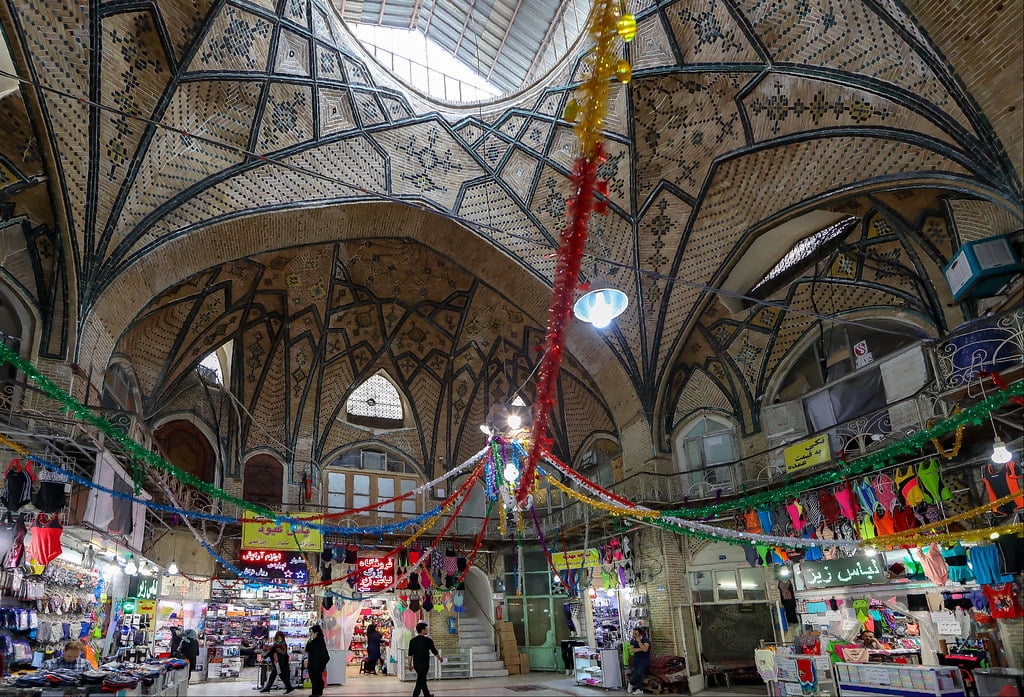
The best Tehran Grand Bazaar eateries are not on any main road. They are tucked down staircases, behind mosque courtyards and at the mouths of side alleys, and they cater mainly to the merchants and porters who keep this “city within a city” running. Find them and you will eat some of the best-value traditional food in the capital. Here are four of our favourites, from a famous tahchin canteen to a stand-up falafel counter.
A word on timing. The Grand Bazaar runs on daytime hours, so most of its kitchens serve lunch only, from late morning until mid-afternoon, and close on Fridays. Arrive before 12:30 to beat the rush, and expect long queues in the weeks before Nowruz, when the whole city seems to come here to shop.
Moslem Restaurant
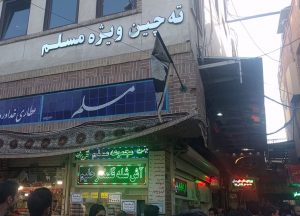
Moslem is the most famous place to eat in the bazaar and almost certainly the busiest. It sits on 15 Khordad Street on the bazaar’s northern edge, and at lunchtime a queue usually stretches down the stairs. It moves quickly: staff at the top wave you up, seat you at whatever space is free on a shared table, and food arrives within minutes. The restaurant squeezes three floors into a narrow building, and it is popular with Tehranis and foreign visitors alike.
Order the tahchin, a crisp, saffron-gold cake of baked rice layered with chicken, which is what Moslem is known for. Kebabs such as barg and koobideh are good too, and portions are big enough to share.
Sharaf-ol-Eslami
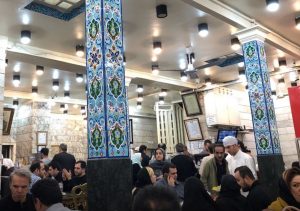
This bustling basement canteen is a bazaar institution and a firm favourite with local traders. It is small, loud and anything but fancy, which is part of the charm. The food is fast, fresh and generous: tahchin, barg and saffron chicken with rice, fried aubergine and a glass of doogh will keep you going until dinner. Queues form at lunchtime but move fast, and there is a separate counter for takeaway.
Finding it is half the fun. Head for the Imam (Shah) Mosque inside the bazaar, cross its main courtyard and squeeze past the metal barriers meant to keep out porters’ trolleys. The restaurant is down a flight of stairs on your right; follow the smell of saffron rice. It opens for lunch only, Saturday to Thursday.
Khayyam Traditional Restaurant
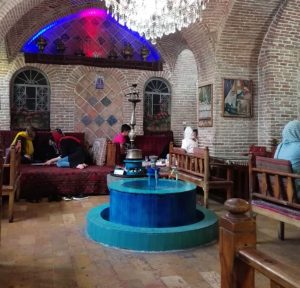
For a more relaxed meal, Khayyam Traditional Restaurant on Khayyam Street is a short walk south of Khayyam metro station, on the western side of the bazaar. It occupies a restored building around 300 years old that once formed part of a mosque complex, and the dining room is full of tiles, paintings and carpets, with traditional raised platforms as well as ordinary tables.
The menu centres on kebabs and rice dishes, including grilled lamb fillet, and it is a calm place to recover after a morning in the crowds. It is pricier than the canteens, and unlike them it stays open into the evening. Check the price on the Persian menu as well as the English one.
Marvi Alley Falafel
Just outside the bazaar, where Naser Khosrow Street meets Marvi Alley, is one of the cheapest and most satisfying lunches in the area. The counter turns out fat falafel sandwiches in seconds, stuffed with pickles and vegetables, and the fiery house chilli sauce is what keeps people coming back. Squeeze it on liberally, then put the bottle back where you found it: the owner does not appreciate them going missing.
There is barely any seating, so most people eat standing up in the alley. It draws a mix of students, families and shoppers, and it is the best option nearby for vegetarians and anyone avoiding meat and dairy, as the bazaar’s other kitchens are firmly meat-based.
Tips for eating in the bazaar
- Carry cash as a back-up; card machines are everywhere but foreign cards will not work.
- Sharing tables is normal, so do not be surprised if strangers join you.
- Dress for crowds and stairs, and keep bags close in the busiest lanes.
- Combine lunch with a browse of the carpet halls; see our guide to carpet shopping in the Tehran Grand Bazaar.
Want a grander setting nearby? Our review of Vakil Tojjar Traditional Restaurant covers another historic dining room in the bazaar district.