
Updated November 2026 Navab Bath House has been restored and now operates as a museum and cultural space in the Emamzadeh Yahya neighbourhood; we have updated the visiting details accordingly.
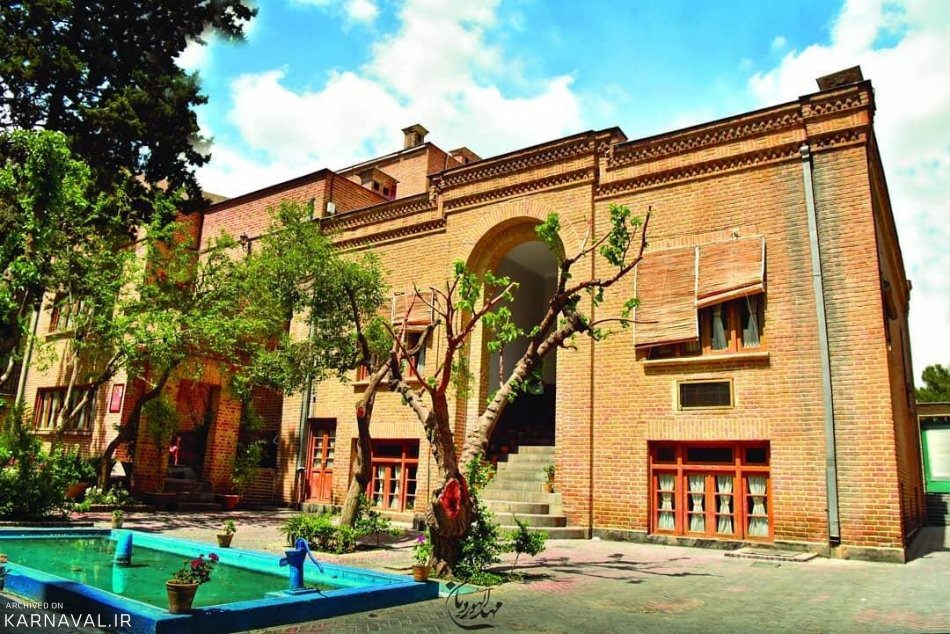
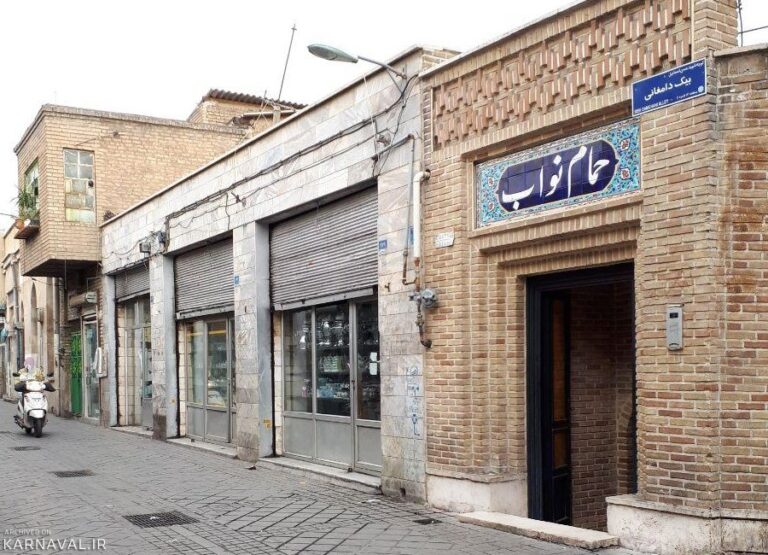
Navab Bath House (Hammam-e Navab) is a restored Qajar-era public bath in the old Emamzadeh Yahya neighbourhood of central Tehran. It is small, a little hard to find and largely ignored by tour groups, but for anyone curious about how Tehranis lived before running water reached every home, or for fans of classic Iranian cinema, it makes a rewarding stop on a walk through the historic south of the city.
The bath sits on a lane in one of the capital’s oldest districts, a tight grid of alleys bounded by Amir Kabir Street to the north, Ray Street to the east and 15 Khordad Street to the south, close to the Oudlajan quarter and the Grand Bazaar. The neighbourhood takes its name from the shrine of Emamzadeh Yahya, which remains its main landmark, and the bath lies only a short walk from it.
Its fame comes largely from the cinema. The bath was the setting for the revenge scene in Masoud Kimiai’s Qeysar (1969), one of the landmark films of pre-revolutionary Iranian cinema, in which the hero confronts his enemy amid the steam of the hot room. Kimiai’s family home was in this neighbourhood, and he shot many scenes of his early films in its streets. Do not expect a film museum, though: what you see today is the bath itself, not a shrine to the movie.
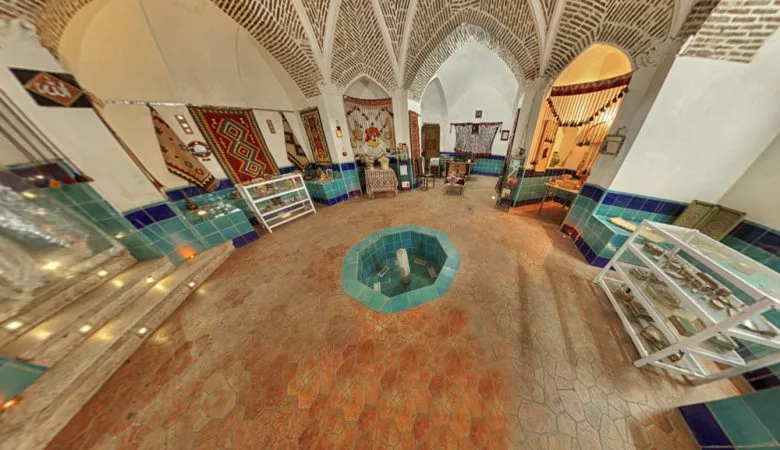
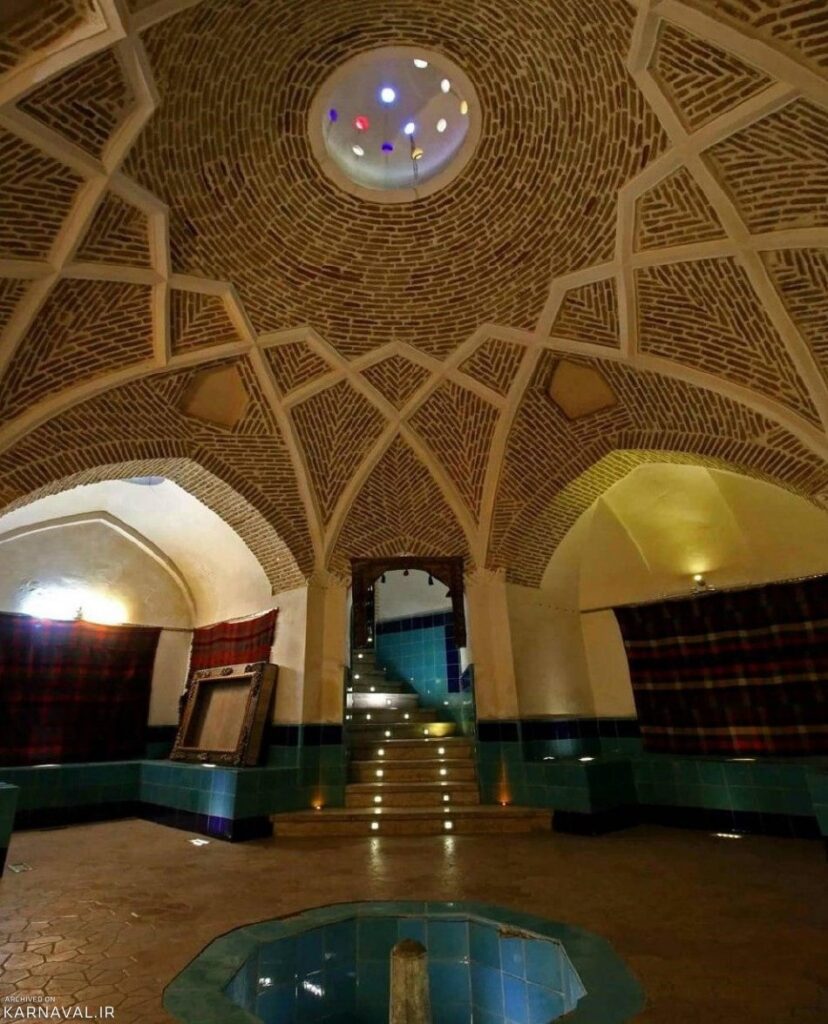
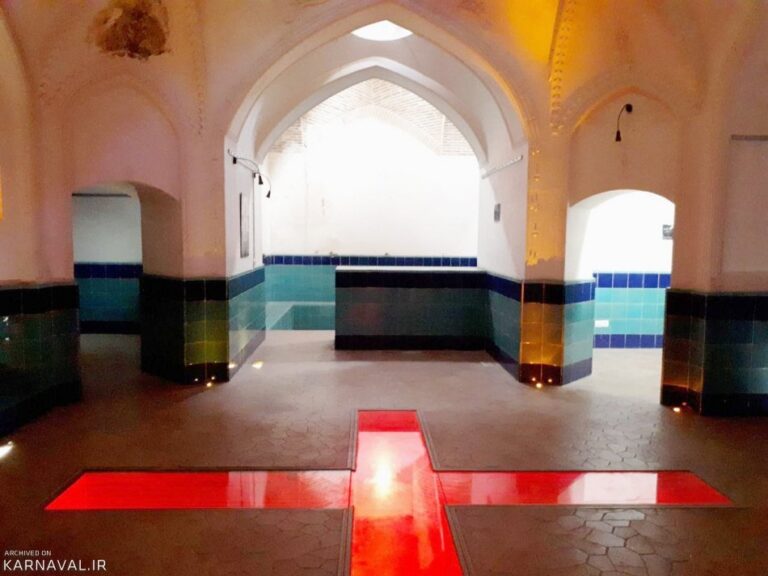
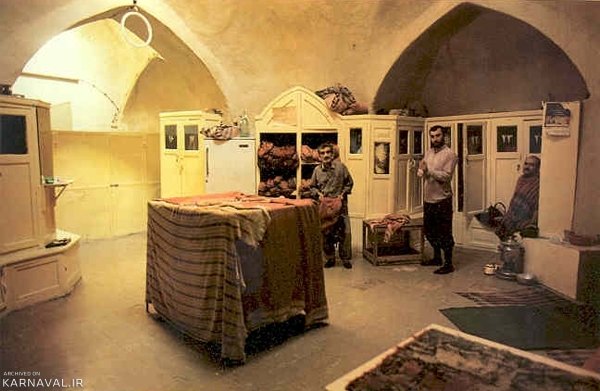
Like most traditional Persian bathhouses, Navab was built partly below street level, which helped to keep the heat in and made the best use of water drawn from the city’s underground qanat channels. Visitors pass through an entrance vestibule into the sarbineh, the domed changing hall where bathers undressed, rested and socialised, before moving into the garmkhaneh, the hot room used for washing. Its chal-howz, a sunken plunge pool of cold water, was said to be one of the largest of its kind in Tehran.
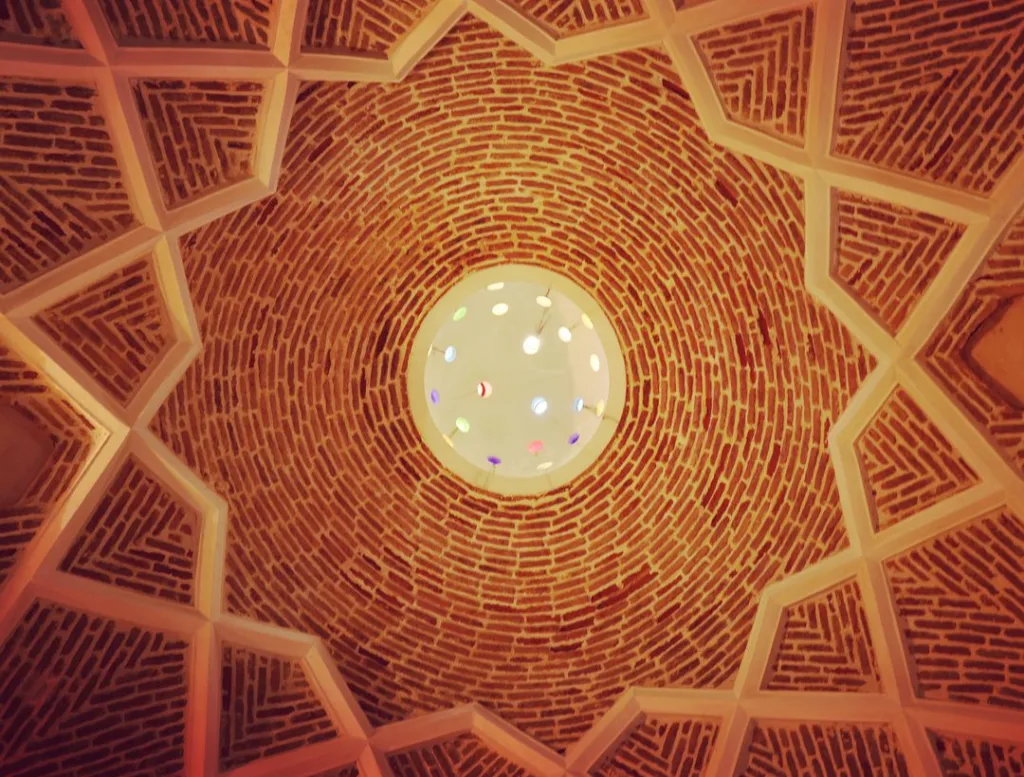
The building has been restored and turned into a museum and cultural venue for the historic district. Not all of the original decoration survived the restoration work, which damaged some of the bath’s main ornamentation. It is still a good place to understand the layout of a traditional hammam and the social role these bathhouses played in neighbourhood life.
The nearest metro stations are Panzdah-e Khordad on Line 1 and Baharestan on Line 2, each roughly ten minutes on foot from the Emamzadeh Yahya shrine. The alleys are confusing, so use a map app such as Neshan or Balad, or simply ask for the hammam once you reach the shrine. Opening hours are not published online, so it is best to go in the morning on a weekday and treat it as part of a wider walk. Nearby you can also visit the Memarbashi school and the house of the cleric and politician Hassan Modarres, both within easy walking distance.
Visiting the Navab Bath House: at a glance
- Opening hours: Saturday to Friday: 08:00 to 18:00
- Time needed: 30 to 45 minutes
- Phone: +98 21 33529028
- Address in Persian (show this to your driver): تهران، خیابان ری، عودلاجان شرقی، کوچه بیک دامغانی (بازارچه حمام نواب سابق)
- Open the Navab Bath House in Google Maps
Hours can change on public holidays and during Ramadan, so check before you set out.
The Navab Bath House in pictures
For more historic sights, browse our parks and museums guides, and check the Iran prices tracker for typical entry fees and taxi costs.