Updated November 2026 Ramadan 2027 is expected to run from around 8 February to around 9 March, subject to moon sighting, so it will finish before Nowruz rather than overlapping with it as in recent years.
Ramadan in Iran, known locally as Ramazan, is the month when most Muslims fast from dawn to sunset, restaurants keep shorter hours and the evenings fill with family meals, charity food and late-night prayers. If you live in Tehran or are visiting during the holy month, daily life carries on, but at a slower pace and with a few rules everyone, Muslim or not, is expected to respect.
When is Ramadan in Iran?
Ramadan is the ninth month of the Islamic lunar calendar. Because the lunar year is around 354 days long, about 11 days shorter than the solar year, Ramadan moves earlier every year. Its start and end are confirmed by sighting the new moon, so the exact dates are announced only a day or so in advance.
For 2027, astronomers and Gulf authorities expect Ramadan to begin on or around 8 February, with Eid al-Fitr falling around 9 or 10 March (The National). Iran’s own announcement can differ from neighbouring countries by a day. If you are planning a trip, check the calendar before booking, because Ramadan affects opening hours, food options and the mood of the city.
Ramadan and Nowruz
In recent years Ramadan has overlapped with Nowruz, the Persian New Year on the spring equinox, and with Sizdah Be-dar, the thirteenth day of the holiday when families head outdoors for picnics. That made for an unusual mix of fasting and festive visiting. In 2027 Ramadan is expected to end before Nowruz on 21 March, and the gap will widen in the years that follow.
Sahari and Iftar: the daily rhythm
People who fast eat twice a day. Sahari is the pre-dawn meal, eaten before the morning (Fajr) call to prayer. Iftar breaks the fast after the sunset (Maghrib) call to prayer and is usually shared with family. The hours in between are given over to prayer, Quran reading and charity, and the idea is to understand what hunger means for the poor.
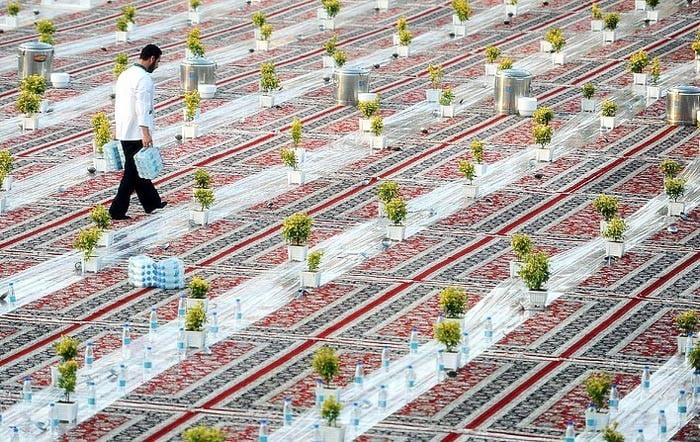
Many mosques, shrines and charities hold free public Iftar meals across the country, and non-Muslims are generally welcome. The Imam Reza shrine in Mashhad is known for feeding thousands of people at sunset every day of the month.
What people eat during Ramadan
- Ash – thick soups that appear on almost every Iftar table. Ash-e reshteh, with herbs, beans and noodles, is usually vegetarian; ash-e sholeh ghalamkar contains meat and has a little heat. Every region has its own version.
- Zoolbia and bamieh – syrup-soaked fried sweets that sell year-round but pile up in confectioners’ windows during Ramadan.
- Dates – soft Mazafati dates from Bam and the south-east are the traditional way to break the fast.
A related custom is nazri: food cooked as a charitable vow and handed out to neighbours, passers-by and anyone who knocks. A pot of ash passed door to door is a typical example. If you are offered nazri, accept it with thanks.
Eating, drinking and opening hours
Eating, drinking or smoking in public during daylight hours is not allowed and is considered offensive. This applies to everyone, including non-Muslims, people who are not fasting for health reasons and visitors. Doing so can draw comments and, in some cases, police attention. Eat and drink indoors and out of sight.
Most restaurants close during fasting hours and reopen around Iftar, often staying busy late into the night. Some cafes and fast-food outlets now serve takeaway or cold food during the day, and a few serve hot meals behind covered windows, but they are the exception. Supermarkets and corner shops stay open, so you can always buy food to eat at home or in your hotel.
Iran does not officially shorten the working day for Ramadan and most businesses keep normal hours, though many offices allow fasting staff to finish earlier. If you work in Tehran, ask your employer how they handle it.
Exceptions to the rules
Islam excuses travellers on long journeys, the sick, pregnant women and others for whom fasting would cause harm. In practice, though, the public eating rules still apply to them in towns and cities. The main exception is travel: highway service stations and many tourist sites serve food and drink to travellers during the day.
Dress during Ramadan
The dress code is the same as at any other time of year. The headscarf remains a legal requirement for women in public, and both men and women should avoid revealing or very tight clothing, particularly around mosques and shrines.
The holy nights: Ahya and Shab-e Qadr
Iran’s Shia majority marks the 19th, 21st and 23rd nights of Ramadan with all-night vigils known as Ahya, held in mosques and broadcast on television. The 19th recalls the night Imam Ali was fatally wounded in Kufa, and the 21st the night he died. These nights are linked to Shab-e Qadr, the Night of Power, when the first verses of the Quran are believed to have been revealed and when sins are forgiven for those who repent. Shias give special weight to the 23rd, while Sunnis usually observe the 27th. Expect mosques to be packed and some streets to be busy well after midnight.
Eid al-Fitr
Ramadan ends with Eyd-e Fetr, the first day of the month of Shawwal, once the new moon is sighted. It is a public holiday in Iran, and the day after is usually a holiday too. Many people attend the communal morning Eid prayers at their local mosque or at large open-air gatherings in Tehran, while others celebrate quietly at home with family. On the day you may be offered sweets, pastries or juice on the street; it is polite to accept.
Tips for non-Muslims
- Greet people with Ramazan mobarak. The Arabic Ramadan kareem common in the Gulf states is understood but less usual in Iran.
- Join a public Iftar if you are invited or pass one; it is one of the friendliest ways to experience the month.
- Some foreigners fast for a day or two alongside colleagues and break the fast with them, which is warmly received but never expected.
- Do not eat, drink or smoke in public during the day, and keep water bottles out of sight.
- Charity matters during Ramadan. Giving to a recognised charity or helping with a nazri is appreciated.
- Many companies hand out treats at sunset or host Iftar gatherings; if you are invited, go.
- Plan meals ahead: buy snacks from a supermarket or eat at your accommodation during the day.
For current food and grocery costs, see our Iran price trackers.