
Updated November 2026 The spring at Cheshmeh Ali has been dry for several years and excavations to find out why began in 2026, but the Qajar rock relief and the surrounding park can still be visited.
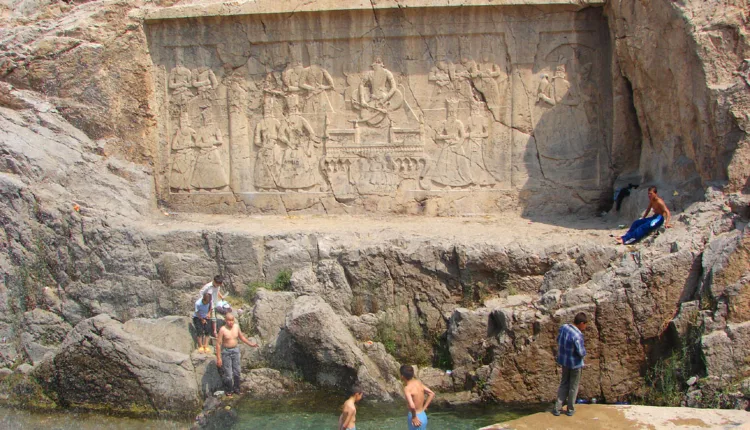
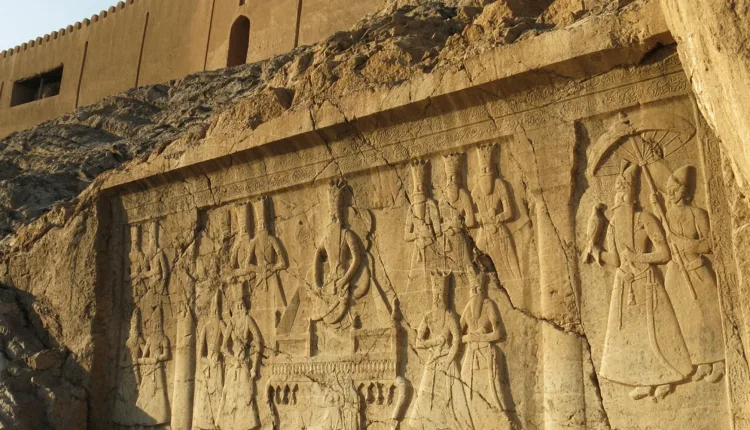
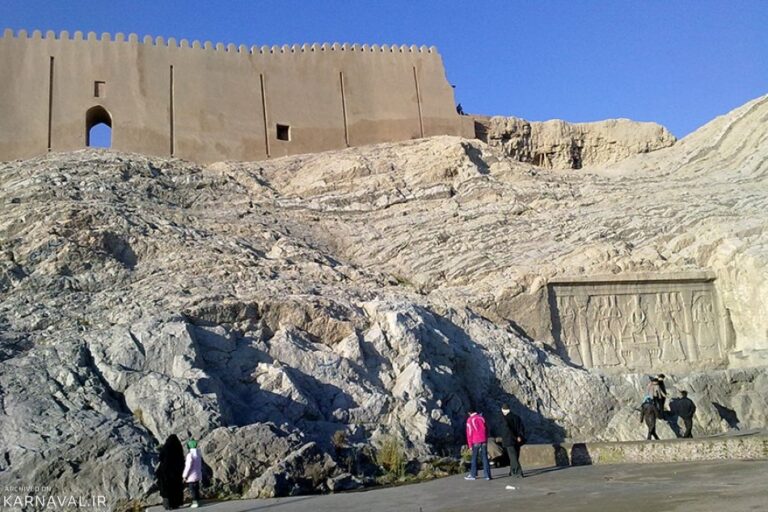
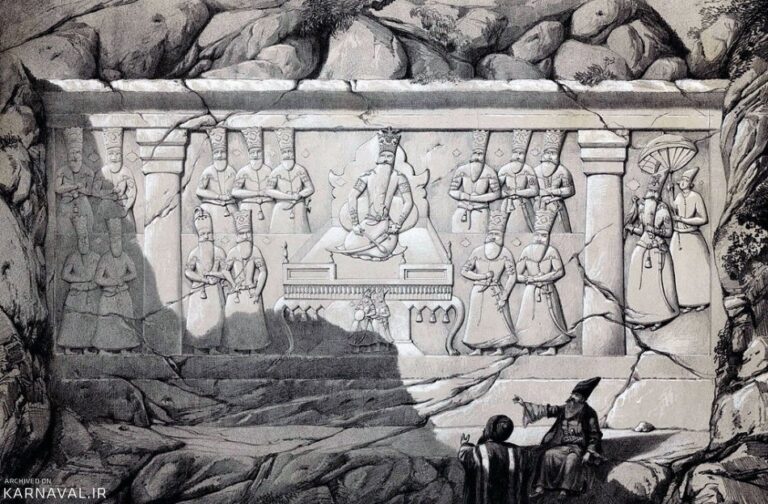
Cheshmeh Ali in Tehran is a historic spring and park at the foot of the hills in Shahr-e Rey, on the city’s southern edge, best known for the Qajar-era rock relief of Fath Ali Shah carved into the cliff above the pool. People have lived around this spot for more than seven thousand years, and it is an easy add-on to a day exploring Rey, the ancient city that long predates Tehran itself.
A short history
Archaeologists know Cheshmeh Ali as one of the key prehistoric sites of the Iranian plateau. The American archaeologist Erich Schmidt excavated the mound beside the spring in 1934–1936 and found a farming village dating back to roughly the sixth millennium BC, and its painted pottery, now known as Cheshmeh Ali ware, has given its name to a whole phase of Iranian prehistory. Pieces from the site are held in museums abroad.
Much later, Rey was one of the great cities of medieval Iran, while Tehran was a village in its shadow. When the Qajars made Tehran their capital at the end of the 18th century, Rey was still a place of prestige, and Fath Ali Shah, the second Qajar king, chose the cliff above Cheshmeh Ali for a monument to his rule. Inspired by the ancient royal carvings at sites such as Naqsh-e Rostam, he had himself shown enthroned among his sons and courtiers, with poetic inscriptions in praise of the king set into the rock. Above the spring, the ruined walls of Rey’s old fortress still crown the hill.
The spring today
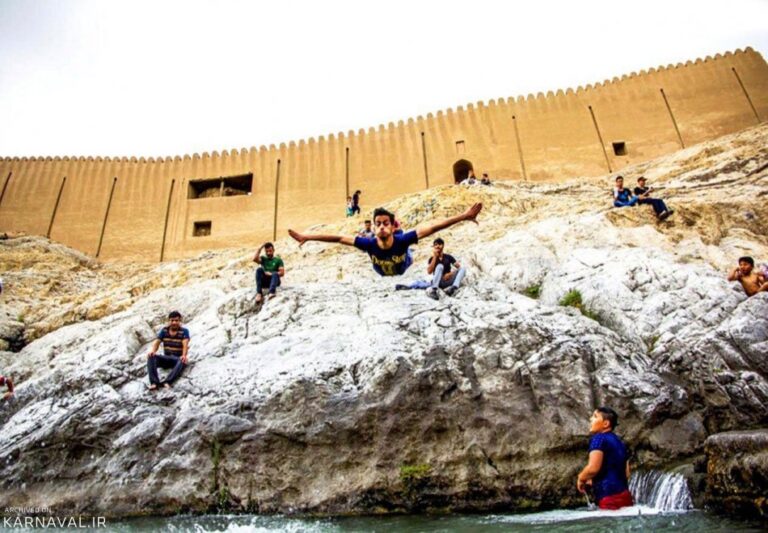
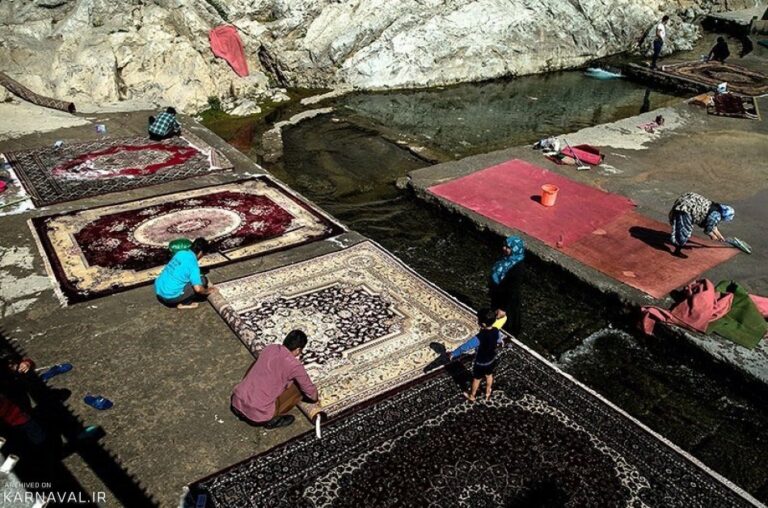
For generations, families came here to swim, picnic and, above all, wash their carpets in the cold, clear water before Nowruz. That tradition has faded because the spring itself has failed. Its flow began to fall in the 2010s and the bed has been completely dry for around three years. Falling groundwater, drought and nearby construction, including metro tunnelling, have all been blamed, and in 2026 the Tehran Metro Company began excavations near the spring on the order of the Shahr-e Rey prosecutor to trace the water source and look for ways to revive it.
It is still worth a visit for the relief, the hillside views and the sense of history, but do not expect the bubbling pool you may see in older photographs.
Getting there
- By metro: take Line 1 south to Shahr-e Rey station, then a short taxi or Snapp ride to Cheshmeh Ali Park.
- By car or taxi: the site is just off the Shahid Avini Expressway in Rey, about 30–45 minutes from central Tehran depending on traffic.
The park is open throughout the day. Half an hour to an hour is enough for the site itself.
Make a day of it in Rey
Visiting Cheshmeh Ali: at a glance
- Opening hours: Saturday to Friday: open 24 hours
- Time needed: 30 minutes to 1 hours
- Address in Persian (show this to your driver): تهران، شهر ری، خیابان 22 بهمن
- Open Cheshmeh Ali in Google Maps
Hours can change on public holidays and during Ramadan, so check before you set out.
Cheshmeh Ali in pictures
Cheshmeh Ali sits close to several of Rey’s other historic sites, including the 12th-century Toghrul Tower and the shrine of Shah Abdol-Azim, so it combines well with a half-day or full-day outing to the south of the city. Our guide to religious buildings around Tehran has more ideas for the area.