Updated November 2026 The Green Palace was among the Sa’dabad buildings damaged in March 2026 and is undergoing conservation; check whether it is open before you visit.
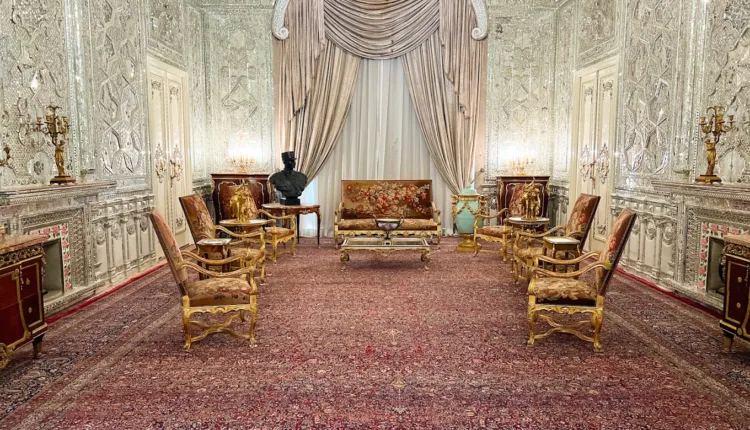
The Green Palace in Tehran is the jewel of the Sa’dabad Complex in the northern foothills of the city: a compact two-storey palace on a hilltop, clad in green-tinged stone and famous for its dazzling Mirror Hall. Built in the late Qajar period and remodelled for Reza Shah, the first Pahlavi king, it served as his residence and office and later as a guest house for foreign dignitaries. With views over the city on one side and the Alborz mountains on the other, it is one of the most photogenic buildings in Tehran.
Shockwaves from air strikes near Sa’dabad on 17 March 2026 caused some of the most serious damage in the complex to the Green Palace, bringing down parts of its mirror work and ceiling plaster; the building has since been under emergency conservation (Tehran Times). Some Sa’dabad museums may reopen before others, so confirm on the official Sa’dabad website or at the gate whether the Green Palace is open on the day.
History
The building dates from the final years of the Qajar dynasty, when the Sa’dabad estate was a summer retreat for the royal family and court. After Reza Shah came to power in the 1920s, he acquired it and had Iranian architects and craftsmen rebuild it as his own residence and office. In his time it was known as the Stone Palace; it is now named after the green hue of its façade.
Under Mohammad Reza Shah, the palace was renamed Shahvand and used to receive and accommodate official guests, and further halls and rooms were added. It is often described as the one palace at Sa’dabad designed and decorated entirely by Iranian architects and artists, which is part of its appeal: the detail you see is a showcase of Iranian craftsmanship of the period.
What to see inside
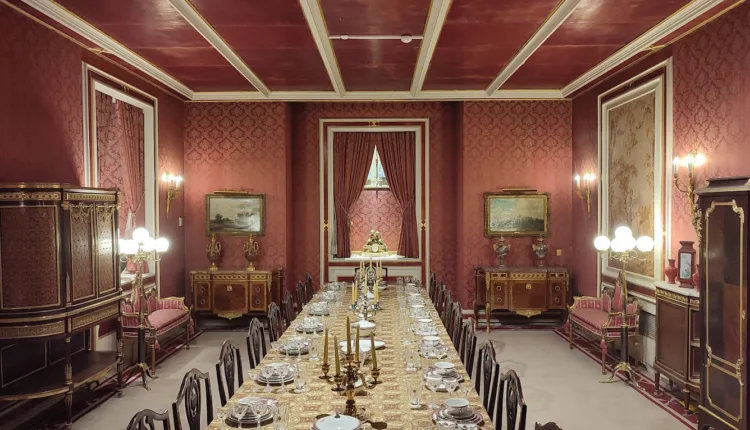
The ground floor held Reza Shah’s office and private rooms, and the basement was used for storage. The rooms are small by palace standards, but every surface is worked: carved wood, inlaid doors, fine stone and plaster.
- The Mirror Hall is the highlight, with walls and ceiling covered in faceted mirror work (ayeneh-kari) and gilded decoration that throw light around the room.
- The reception and dining rooms display European silver, porcelain and glassware used for state entertaining.
- Reza Shah’s study and bedroom give a sense of the austere taste of the first Pahlavi king compared with the grander rooms added later.
If you enjoy royal interiors, pair the Green Palace with the other museums at Sa’dabad, including the White Palace, and with our guide to the Royal Tableware Museum at Ashraf Palace.

Tickets and opening hours
Sa’dabad sells a ticket for the grounds and separate tickets for each museum, with a higher rate for foreign visitors. Hours are longer in spring and summer than in autumn and winter, and ticket sales stop an hour or so before closing. Prices are updated regularly, so check the official website or our Iran prices page for guidance, and bring cash in rials.
Getting there
Sa’dabad is in the Shemiran district of north Tehran. The main visitor entrance is at the top of Taheri Street, off Valiasr Street in the Zaferaniyeh area. The Green Palace is near the top of the complex, so allow time for an uphill walk through the gardens.
- Metro: take Line 1 to Tajrish, then a short taxi ride or a walk of about 20 minutes to the entrance.
- Taxi or car: head for the end of Taheri Street. Parking near the gate fills up quickly on Fridays and holidays, so a ride-hailing app is often easier.