Updated November 2026 The Friday market is no longer in the old Parvaneh car park on Jomhouri Street; it now runs in the Art Garden on the Abbasabad lands, and the details below reflect the new site.
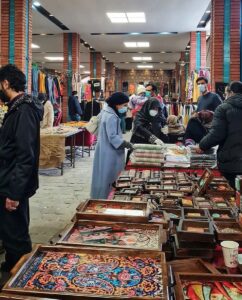
Jomeh Bazaar, Tehran’s Friday Market, is the city’s best-known weekly flea and craft market and one of the most enjoyable ways to spend a Friday morning in the capital. Locals come for bargains and browsing, foreigners for souvenirs, and everyone leaves with something they did not plan to buy: a hand-painted tile, an old brass samovar, a pair of handmade earrings or a vintage camera.
Where is Jomeh Bazaar?
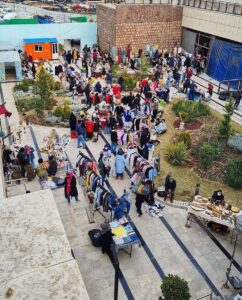
For decades the market filled the floors of the Parvaneh multi-storey car park on Jomhouri Street in central Tehran, where shoppers trudged up steep ramps from level to level. After the pandemic closure it reopened on a new site in the Art Garden (Bagh-e Honar) on the Abbasabad lands, the large green area in the middle of the city between the Haghani and Hemmat expressways (Tehran Picture). Many people still call it the Parvaneh market after its old home.
To get there by metro, go to Shahid Haghani or Shahid Hemmat station and walk to the Art Garden. By car or taxi, the site is reached from the Hemmat expressway heading west after the Haghani exit, or from the Haghani expressway heading east. Because markets of this kind sometimes move or pause, it is worth confirming locally before you make a special trip.
When does it open?
As the name says, the market only runs on Fridays, from morning until the afternoon. Arrive early for the best choice and the thinnest crowds; by midday it gets busy and noisy.
What you can buy
- Handicrafts: engraved copper and brassware, pottery and painted ceramics, enamel (minakari) and woodwork.
- Carpets and textiles: rugs, kilims, gabbehs and printed cloth in a wide range of qualities and prices.
- Jewellery: silver and gold pieces, turquoise and agate, and lots of costume jewellery.
- Clothing: scarves, mantos and traditional regional dress.
- Antiques and collectibles: old coins and banknotes, cameras, records, lamps, samovars and assorted curiosities.
- New makers: young designers and students selling handmade earrings, tie-dye clothing, prints and small art pieces.
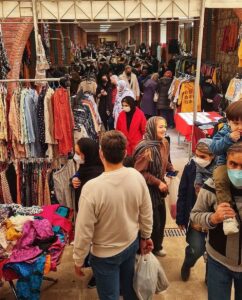
There are usually stalls selling snacks and drinks, so you can refuel with tea and something sweet as you browse. The mix of sellers changes from week to week.
How to bargain
Haggling is normal at Jomeh Bazaar, especially for antiques, carpets and second-hand goods. Fixed prices are more common among the young makers selling their own work.
- Have a rough idea of what you want and what it is worth before you start.
- Let the seller name a price first, then offer well below it and meet somewhere in the middle.
- Stay friendly and patient; a smile and a little Persian go a long way.
- If the price will not move, thank the seller and walk on. You will often be called back.
- Bring cash or an Iranian bank card; many stallholders also accept card-to-card transfers. Foreign cards do not work in Iran.
For more tips, see our guide on how to grab a bargain in Tehran, and check typical costs on our Iran price trackers.
Practical tips
- Entry is free and open to everyone.
- The new outdoor site is easier to get around than the old car park ramps, but aisles can still be crowded, so allow extra time with a pushchair or if you have limited mobility.
- Dress for the weather: there is little shade in summer and it can be cold on winter mornings.
- Keep an eye on your bag and phone in the crowds.
- If you are short of time, our list of Tehran’s hidden gems and the Grand Bazaar guide offer more shopping ideas.
Learn the Persian: Want to ask prices, ask for a discount and understand a seller who tells you something is not available? Try Persia Learning’s lesson on shopping and the bazaar. Try the first lesson free →