Updated November 2026 Tehran’s museums have been reopening gradually since the April 2026 ceasefire; we have corrected several historical dates and added lesser-known sights.
The hidden gems of Tehran are easy to miss if you only pass through on the way to Isfahan and Shiraz. Behind the traffic and the concrete is a city of mountain views, tree-lined avenues, more than 2,000 parks, world-class museums and quiet house museums that most visitors never find. This guide covers a little history, the sights worth your time, and how to plan a visit.
A short history of Tehran
For centuries Tehran was a village of gardens in the shadow of Rey, an ancient city to its south that served as a Seljuk capital. After the Mongols sacked Rey in the early 13th century, many survivors moved to Tehran, which slowly grew into a trading town. The Safavid shah Tahmasp I, who liked its gardens and hunting grounds, gave it a city wall and caravanserais in the 16th century.
Tehran’s big moment came in 1786, when Agha Mohammad Khan, founder of the Qajar dynasty, made it his capital. It expanded under Fath-Ali Shah, and under Naser al-Din Shah it gained new walls, avenues and squares, including Tupkhaneh, today Imam Khomeini Square. The Pahlavi era in the 20th century replaced much of the old city with the boulevards and modern buildings you see now.
Parks and gardens
Tehran sits between roughly 1,000 and 2,000 m above sea level, which keeps it cooler than most Middle Eastern capitals, and summer evenings in the north of the city are pleasant. Parks are the city’s living rooms. Mellat Park on Valiasr Street is busy with families, Jamshidieh Park climbs a rocky hillside in the northern foothills, and Laleh Park is the green heart of central Tehran. Our guide to Tehran’s parks has many more.
Museums
The National Museum of Iran is the place to start, with finds from prehistoric sites through the Achaemenid era to Islamic Iran. The Tehran Museum of Contemporary Art has one of the most important collections of modern Western art outside Europe and America, and the Reza Abbasi Museum shows Persian painting, calligraphy and metalwork. The Treasury of National Jewels, in the vaults of the Central Bank, opens on limited days and is worth planning around.
Museums closed during the war that began in February 2026 and have been reopening in stages since the ceasefire, so check opening days locally before you go.
For something quieter, the Glassware and Ceramic Museum (Abgineh) occupies an elegant Qajar-era mansion on 30 Tir Street and is as interesting for its building as for its collection. The Moghadam Museum, a family house full of tiles, art and antiques run by the University of Tehran, is one of the city’s best-kept secrets.
Landmarks
Azadi Tower, completed in 1971 for the 2,500-year celebration of the Persian monarchy, stands about 45 m tall at the western entrance to the city and remains Tehran’s best-known symbol. Milad Tower, the tallest structure in Iran, offers views over the whole city from its observation deck on clear days. For a more local experience, explore Tajrish Bazaar in the north, with its fruit, herbs and sweets.
Mountains and skiing
The Alborz mountains rise directly behind the city, and Mount Damavand, Iran’s highest peak, is visible on clear days. In winter, the ski resorts of Dizin and Shemshak, a couple of hours’ drive north, are popular at weekends and known for good powder snow. In summer, the same mountains are cool hiking country.
Food
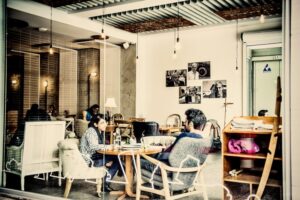
Tehran has the full range of Iranian cooking, from kebab to stews such as ghormeh sabzi and fesenjan, alongside a large café scene and international restaurants in the north of the city. Traditional teahouses and modern coffee shops are where much of the city’s social life happens.
Planning your visit
- When to go: spring (late March to May) and autumn (September to November) bring the mildest weather. Summers are hot and dry, and winters can be cold and smoggy.
- Getting around: traffic is heavy, so use the metro where you can, and ride-hailing apps for everything else; see our list of the best apps for foreigners in Iran.
- Language: English is not widely spoken outside hotels and the younger generation, so a few words of Persian go a long way. The Persia Learning course, whose first lesson is free, covers the basics.
- Money: foreign bank cards do not work in Iran, so bring cash; our Iran prices tracker helps with budgeting.
- Safety and visas: several governments, including the UK, still advise against all travel to Iran, so read your own government’s advice and check your insurance. For visas, see our Iran visa tips.