Updated November 2026 We have refreshed this walking guide, added the street’s best-known trades and noted that Golestan Palace next door was damaged in March 2026 and has been closed for repairs.
Naser Khosrow Street is one of the oldest and busiest streets in downtown Tehran, running south from Imam Khomeini Square to 15 Khordad Street and the edge of the Grand Bazaar. Walking it takes only 15 minutes, but it packs in Qajar-era landmarks, the city’s biggest cluster of pharmacies and medicine traders, cheap electronics and cosmetics shops, and some of the best street food in the old town.

A little history
The street grew up along the line of the old royal citadel that surrounded the Golestan Palace in the 19th century. As Tehran expanded beyond its walls and moats, the route became a thoroughfare in its own right and took the name Naseriyeh, after Naser al-Din Shah. It was later renamed after Naser Khosrow, the 11th-century Persian poet, philosopher and traveller. A few older Tehranis still use the old name, but give taxi drivers the modern one.
Being next to the court, the street attracted firsts: Tehran’s early pharmacies, print shops and its first modern school all opened here or close by, which is why it still feels like a living museum of the city’s early modernisation.

Shopping on Naser Khosrow
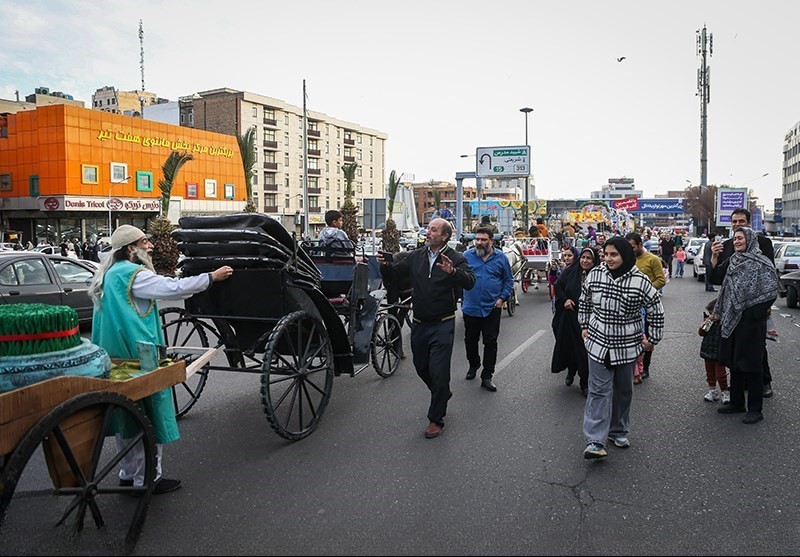
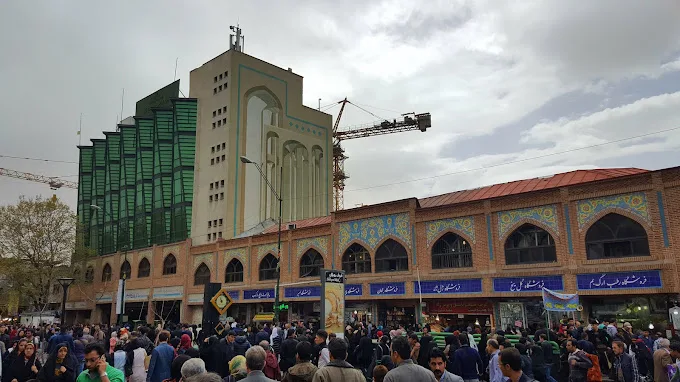
Today the street is above all a market. Parts have been pedestrianised, though you will still dodge motorbikes, and the pavements are lined with small shops and hawkers.
- Pharmacies and medicines – Naser Khosrow is famous across Iran as the place to find hard-to-get medicines, supplements and medical supplies. Stick to licensed pharmacies; the street has a long-standing reputation for informal sellers offering imported or counterfeit drugs, and the authorities periodically crack down on them.
- Cosmetics and toiletries – side alleys such as Khodabandehloo are packed with wholesalers of skincare, perfume and beauty products, often at lower prices than in north Tehran.
- Electronics and cameras – phones, accessories, small appliances and photographic gear, mostly imported.
- Crafts and textiles – as you near the bazaar end, shops shift towards fabrics, household goods and souvenirs.
Bring cash or an Iranian bank card, as foreign cards do not work in Iran, and be ready to bargain in the smaller shops. For a feel for what things should cost, see our Iran prices page.
Where to eat
Food stalls and simple restaurants serve kebabs, stews such as ghormeh sabzi, ash and sweet pastries throughout the day. The real treat is a short detour into Marvi Alley, an old lane long home to Arab Iranian and Iraqi families, where you will find some of the best falafel and sandwich counters in Tehran.
Landmarks along the way

- Shams ol-Emareh – the 19th-century “Edifice of the Sun”, with its twin towers, rises on the western side of the street as part of the Golestan Palace complex. The palace was damaged by shockwaves from air strikes in March 2026 and remained closed to the public for repairs as of May 2026, according to Al-Monitor, so check before you plan a visit.
- Dar ol-Fonun – founded in 1851 on the initiative of the reforming chief minister Amir Kabir, it was Iran’s first modern institution of higher learning. The handsome building can be admired from the street.
- Imam Jomeh House – a Qajar mansion in an alley off the street, with mirror work, stucco and coloured glass around a traditional courtyard. It has generally been open to visitors during the day.
- Shah (Imam Khomeini) Mosque – at the southern end, just inside the bazaar, this large Qajar mosque is one of the finest in the city.
Getting there
Take Metro Line 1 or Line 2 to Imam Khomeini station and walk south from the square; the top of Naser Khosrow is about 300 metres away. Alternatively, start at the bottom by taking Line 1 to 15 Khordad station and walking north from the bazaar. Plenty of buses and shared taxis also run to Imam Khomeini Square (historically known as Toopkhaneh Square). Our guide to getting around on the Tehran Metro has a map and tips on tickets.
Weekday mornings are the calmest time to walk the street; late afternoons are livelier but very crowded. Dress modestly, wear comfortable shoes and keep an eye on your phone and wallet in the crush. Naser Khosrow pairs naturally with a wander through the Grand Bazaar of Tehran, and for more ideas nearby see our list of hidden gems in Tehran.