This recipe contains affiliate links. If you buy through them, LiT may earn a commission at no extra cost to you. As an Amazon Associate, LiT earns from qualifying purchases. See our affiliate disclosure.
Updated November 2026 The method has been rewritten step by step, with tips on getting a crisp tahdig and swapping in tomato paste the way most Tehran cooks do.
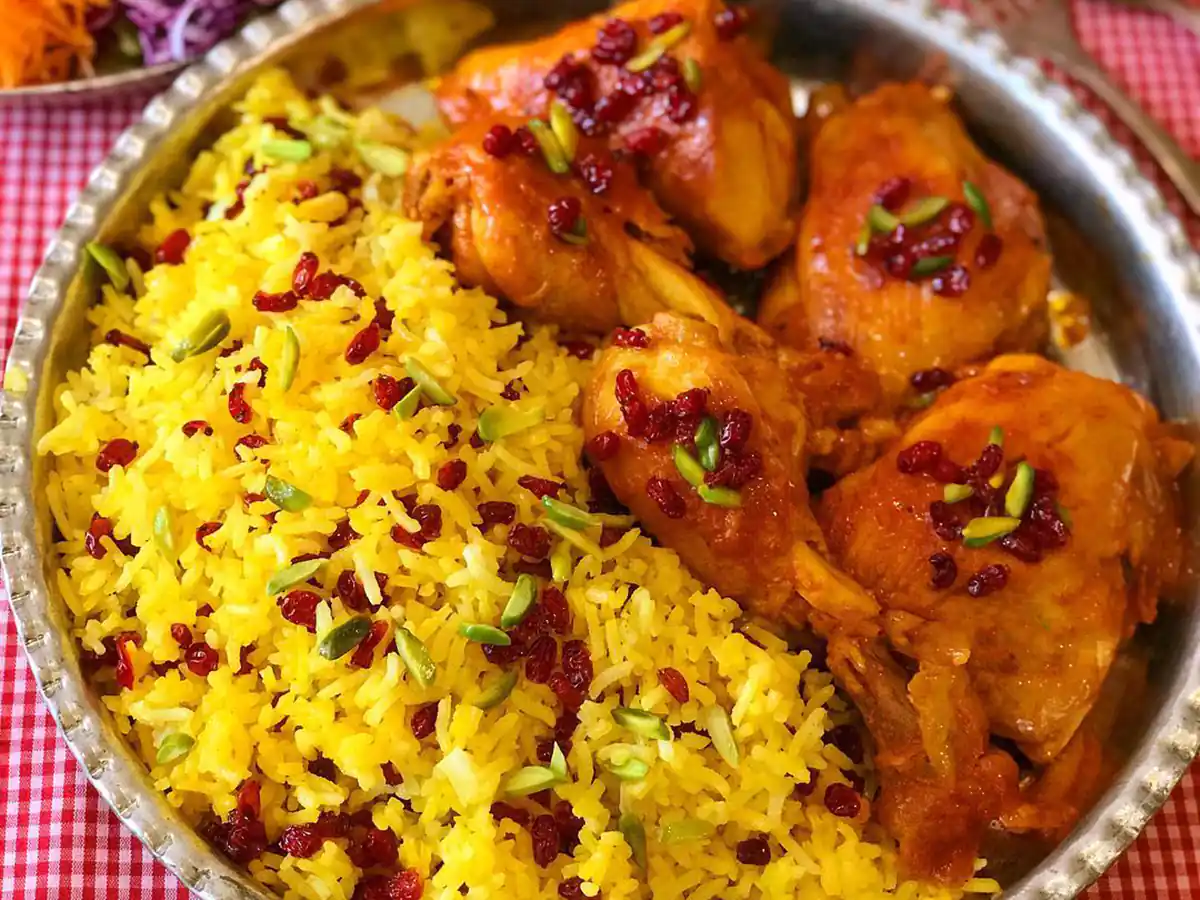
Lubia polo is Persian green bean rice: basmati layered with minced meat, green beans and a warmly spiced tomato sauce, then steamed slowly so the rice turns fluffy on top and crisp at the bottom. It is one of the most common family dinners in Tehran, cheap to make, easy to scale up and popular with children. This lubia polo recipe follows the way it is cooked in ordinary Tehran kitchens.
The name simply means “bean rice” (lubia is bean, polo is rice cooked in the Persian layered style). Recipes differ from home to home: some families use beef, others lamb, some add potatoes to the base of the pot, and many leave out the meat altogether.
Recipe at a glance
| Preparation | 30 minutes, plus at least 1 hour soaking the rice |
| Cooking | About 1 hour |
| Serves | 4 to 6 |
| Difficulty | Medium |
Ingredients
- 700g (about 1.5lb) minced beef or lamb
- 2 cups basmati rice
- 2 cups green beans, cut into 2–3cm pieces
- 1 large onion, finely chopped
- 2 garlic cloves, crushed
- 400g tinned tomato sauce or passata, or 3 tbsp tomato paste loosened with a little water
- ½ tsp turmeric
- 1 tsp ground cinnamon
- ½ tsp black pepper
- 1 tsp salt, plus more for the rice
- 3 tbsp vegetable oil
- 1 tbsp butter
- A pinch of saffron, steeped in 2 tbsp hot water (optional)
Method
- Prepare the rice. Wash the rice in several changes of cold water until it runs clear, then leave it to soak in salted water for at least an hour. Drain.
- Cook the onion. Heat 2 tbsp of the oil in a frying pan over a medium heat and soften the onion for about five minutes.
- Brown the meat. Add the mince, garlic, turmeric, pepper and half the salt, breaking the meat up as it browns.
- Add the beans. Stir in the green beans, tomato and cinnamon, cover and simmer for around 20 minutes, until the beans are tender and most of the liquid has cooked off. The mixture should be moist but not soupy.
- Par-boil the rice. Meanwhile, bring a large pan of well-salted water to the boil, add the rice and cook for 5–7 minutes, until the grains are soft outside but still firm in the middle. Drain.
- Layer and steam. Heat the remaining oil and the butter in a heavy, non-stick pot. Add a layer of rice, then alternate the meat mixture and rice, finishing with rice and mounding it into a gentle pyramid. Drizzle over the saffron water if using. Poke a few holes down to the base with the handle of a wooden spoon.
- Cook slowly. Wrap the lid in a clean tea towel, cover tightly and cook on a medium heat for five minutes until it steams, then turn to low for about 30–40 minutes, until the rice is cooked through and a golden crust has formed underneath.
Tips
- Tomato paste or sauce? Most Tehran cooks use rob-e gojeh (tomato paste) fried briefly with the meat, which gives a deeper colour and flavour. Tinned sauce gives a milder, softer result.
- Do not skip the soak. Soaking and par-boiling are what give separate, long grains instead of a sticky mass.
- Tahdig options. For a sturdier crust, line the pot with thin potato slices or a flat bread before adding the first layer of rice.
- Going meat-free. Replace the mince with chopped mushrooms or extra beans and potatoes for a vegetarian version.
Serving
Bring the pot to the table, or turn the rice out onto a platter so the crust sits on top. Dust with a little cinnamon or a few strands of saffron, and make sure everyone gets a piece of the tahdig. Lubia polo goes well with plain yoghurt, mast-o khiar (yoghurt with cucumber), a salad shirazi and some pickles (torshi).
For something slower and richer, try our fesenjoon, or browse more Persian recipes. If you make this one, tag @livingintehran and show us your tahdig.
Where to buy the ingredients. Outside Iran, you will find the specialist ingredients for this recipe at Persian and Middle Eastern grocers, or you can order them online: saffron, basmati rice, turmeric and a Persian rice cooker. For more, see our guide to the Persian pantry.