Updated November 2026 The Sa’dabad complex, home to the Mir Emad Museum, was damaged in the March 2026 airstrikes and has been reopening in stages, so check which museums are open before you set off.
The Mir Emad Calligraphy Museum in Tehran is the city’s dedicated museum of Persian calligraphy, housed in a small two-storey palace inside the Sa’dabad complex in the northern foothills. If you want to see how Iranian scribes turned the written word into an art form, from ancient inscriptions to the flowing Nasta’liq script, this is the place to spend an hour or two.
The building
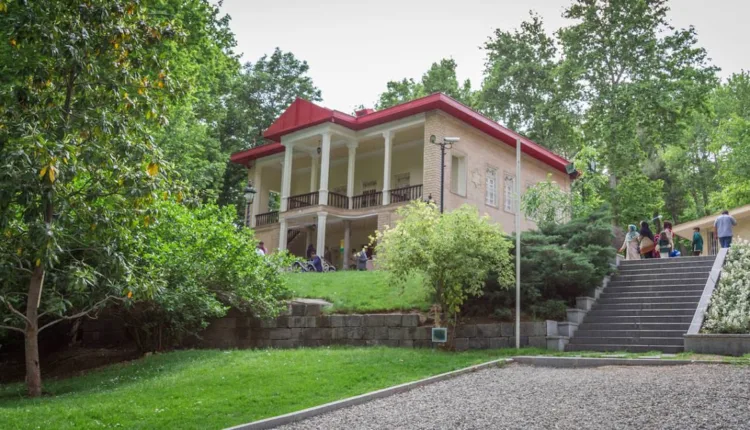
The museum occupies a modest villa that once served as the residence of two of the last Shah’s children, Farahnaz and Alireza Pahlavi. Its architecture mixes late Qajar and early Pahlavi styles, and it sits among the trees of the Sa’dabad estate alongside the larger palace museums. It has been used to display calligraphy since 1997.
Who was Mir Emad?
The museum takes its name from Mir Emad Hassani (1554–1615), born in Qazvin and widely regarded as the finest master of Nasta’liq, the elegant hanging script most associated with Persian poetry. He worked as a scribe at the court of Shah Abbas in Isfahan, where he was murdered in 1615. His pieces are prized by collectors and held by major museums around the world, and a handful of them are here. You can read more about him on Wikipedia.
What you will see
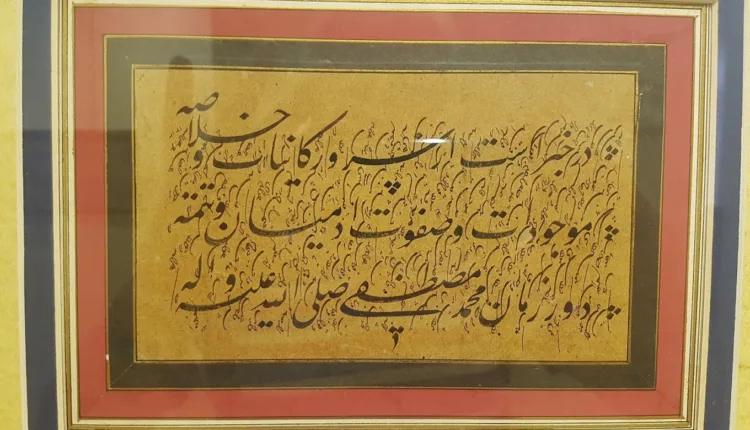
The collection traces the history of writing in Iran across the two floors.
- Ground floor: the early story, from Elamite cuneiform and Pahlavi and Avestan inscriptions of the pre-Islamic era through to the scripts that developed after the arrival of Islam.
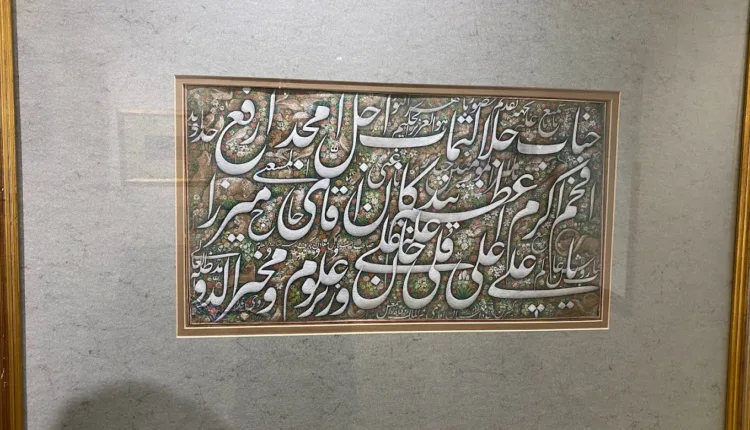
- Upper floor: the Persian scripts that made Iranian calligraphy famous, including Ta’liq, Nasta’liq and its fast, joined-up cousin Shekasteh Nasta’liq. Look out for chalipa pieces, where lines of verse are written diagonally, and siah-mashq practice sheets, where a calligrapher fills the page with dense, overlapping strokes.
Alongside Mir Emad’s own work there are pieces by other masters spanning several centuries, including Yaqut al-Musta’simi, Ahmad Neyrizi and the Qajar-era master Mohammad Reza Kalhor. Many of the exhibits are poems, so even if you cannot read the script, it is worth asking a Persian-speaking companion to read a line or two aloud.
Getting there
The museum is inside the Sa’dabad complex, whose main gate is at the top of Taheri Street, off Zaferaniyeh (Fallahi) Street, west of Valiasr Street in Shemiran. The nearest metro station is Tajrish, at the northern end of Line 1. From there you can walk up through Tajrish Square towards the complex, which takes about 20 minutes uphill, or take a short taxi ride. Snapp and Tapsi will drop you right at the gate. Once inside, follow the signs to the calligraphy museum; the grounds are large, so allow time to walk between buildings.
Tickets and opening times
Sa’dabad sells separate tickets for each museum in the complex, and foreign visitors pay a higher rate than Iranians. The complex usually opens from morning until late afternoon, but hours change with the season and on public holidays, and since the 2026 damage some buildings have stayed closed for restoration. Check the latest situation locally, or ask your hotel to phone ahead, before you make the trip.
For a sense of current entry costs and other everyday prices, see our Iran price trackers.
Tips for your visit
- Combine the museum with the main palaces of Sa’dabad and a walk in the gardens; a half-day is about right for the complex.
- Photography rules vary by building, so ask the attendant before taking pictures.
- If calligraphy catches your interest, our guide to epigraphy and calligraphy sites around Tehran suggests where to see more inscriptions in the city, and our round-up of Tehran art galleries covers contemporary work.
- Darband, with its riverside teahouses and walking trails, is just up the hill if you want lunch or a stroll afterwards.