Updated November 2026 We have corrected the museum’s opening date, updated visiting hours and simplified the directions to Tehranpars.
The Graphic Design Museum in Tehran, officially the Graphic Museum of Iran, is a small but rewarding museum devoted to a century of Iranian poster, book and typographic design. It is housed in the Arbab Hormoz mansion, a Qajar-style house set in a former pomegranate orchard in Tehranpars, in the east of the city, and it makes a pleasant change from the downtown museum circuit for anyone interested in art, design or Persian lettering.

What you will see
The museum opened in January 2015 with the support of the Tehran Beautification Organization, starting with a selection of 64 works by 64 designers and growing since. It presents the story of modern Iranian graphic design through posters, book covers, logos and calligraphic experiments. Key names include Morteza Momayez, often described as the father of modern Iranian graphic design, along with Farshid Mesghali, Ghobad Shiva, Ebrahim Haghighi and Mahmoud Javadipour. Works are framed on freestanding panels so that the historic walls are left untouched, which means the decorated rooms are part of the experience too.
Alongside the permanent display, the mansion hosts temporary exhibitions, talks and workshops by Iranian and international designers through the year. Most visitors spend one to two hours here, including a stroll in the grounds.

The Arbab Hormoz mansion
The house was the home of Hormoz Arash, a Zoroastrian landowner from Kheyrabad near Yazd, known locally as Arbab Hormoz (“Lord Hormoz”). He was a prominent figure in the Pahlavi era and funded schools, clinics and other public buildings in the surrounding districts of east Tehran, which were then largely farmland.

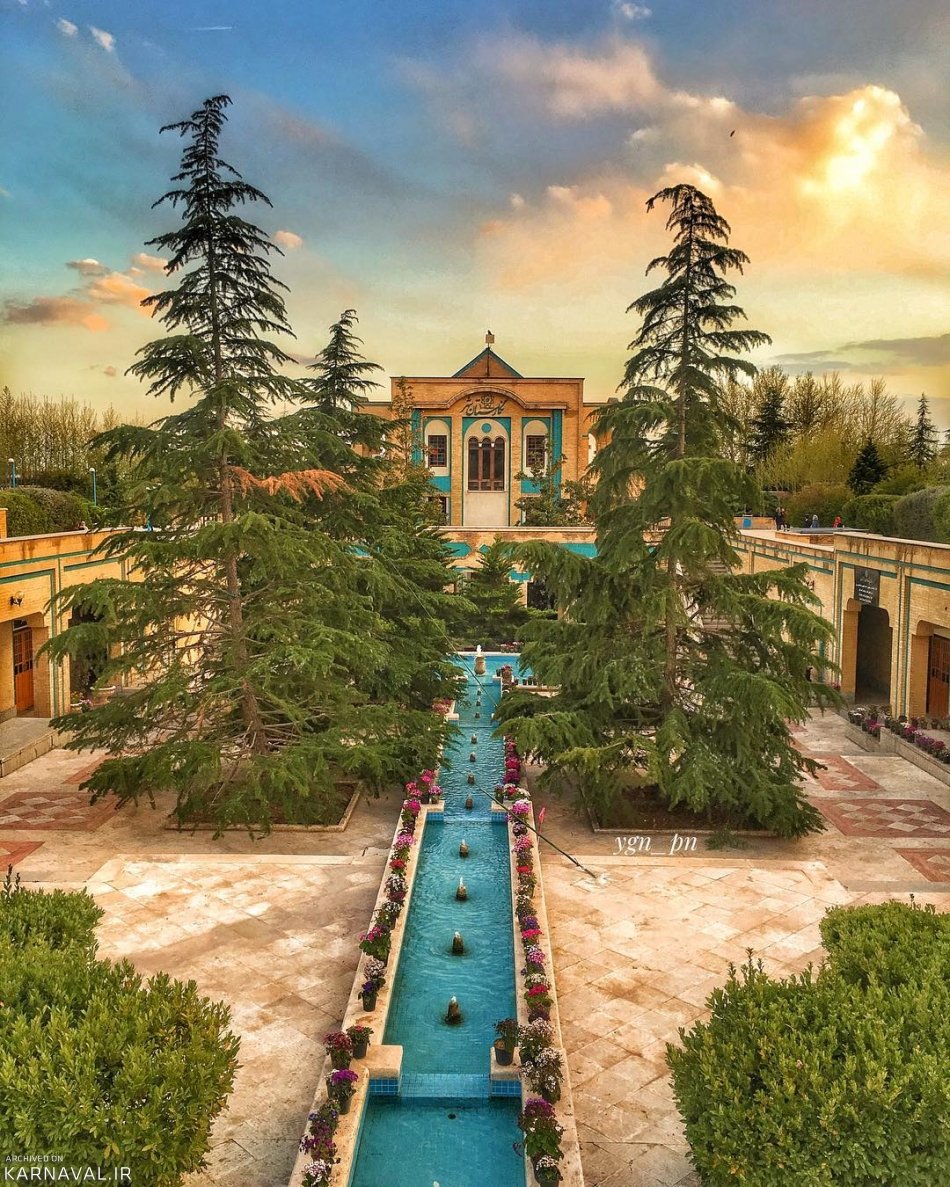
The mansion follows the Qajar style, with a raised columned porch and a main hall decorated with fine plasterwork. It once stood in a vast pomegranate orchard; only a few hectares of that survive, now open to the public as Anari Garden, also known as Police Park. On summer evenings it fills with local families picnicking under the trees, and it is a nice place to linger after your visit. The building is on Iran’s National Heritage List.

Opening hours and tickets
The museum is generally open from Sunday to Thursday, from mid-morning to late afternoon in spring and summer and closing an hour or so earlier in autumn and winter. It is usually closed on Fridays, Saturdays and public holidays, and it has closed temporarily during periods of conflict, so check before you go. Entry has traditionally been free or very cheap; see our Iran prices page for a sense of current costs.
How to get there
The museum is in the northern part of Police Park (Park-e Police) in Tehranpars, near Esteghlal Boulevard and the Babaei Expressway.
- Metro: take Line 2 to Tehranpars station. The park is still a few kilometres north-east, so take a taxi or ride-hailing car for the last stretch.
- Car or taxi: the easiest approach is via the Babaei Expressway, which links to the Bagheri Expressway. From central Tehran, a Snapp or Tapsi ride is the simplest option outside rush hour.

For more of the city’s historic houses and less-visited sights, browse our Tehran city guide.