Updated November 2026 We have corrected the museum’s history, removed out-of-date ticket prices and opening hours, and added advice on checking which galleries are open.
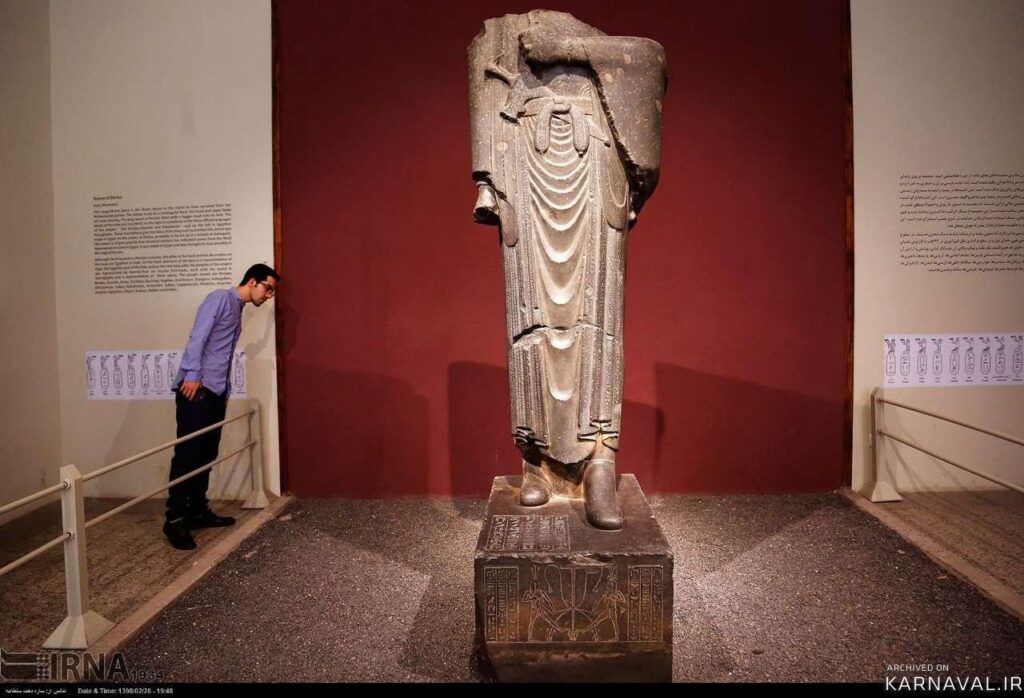
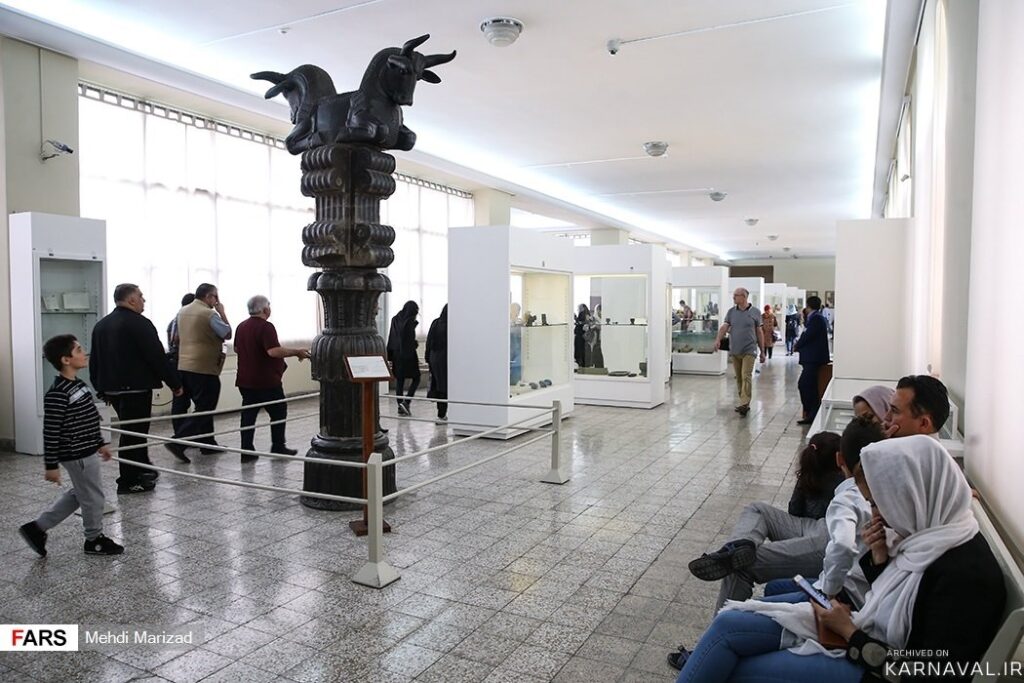
The National Museum of Iran is the country’s leading museum of archaeology and history, and the best single place in Tehran to get a sense of how deep Iran’s past runs. Its collection stretches from Stone Age tools to Islamic-era ceramics, textiles and manuscripts, with masterpieces from Persepolis, Susa and Shahr-e Sukhteh along the way. It sits in downtown Tehran, close to Imam Khomeini Square, and is easily combined with the Golestan Palace and the Grand Bazaar.

Two museums on one site
The National Museum is made up of two buildings side by side:
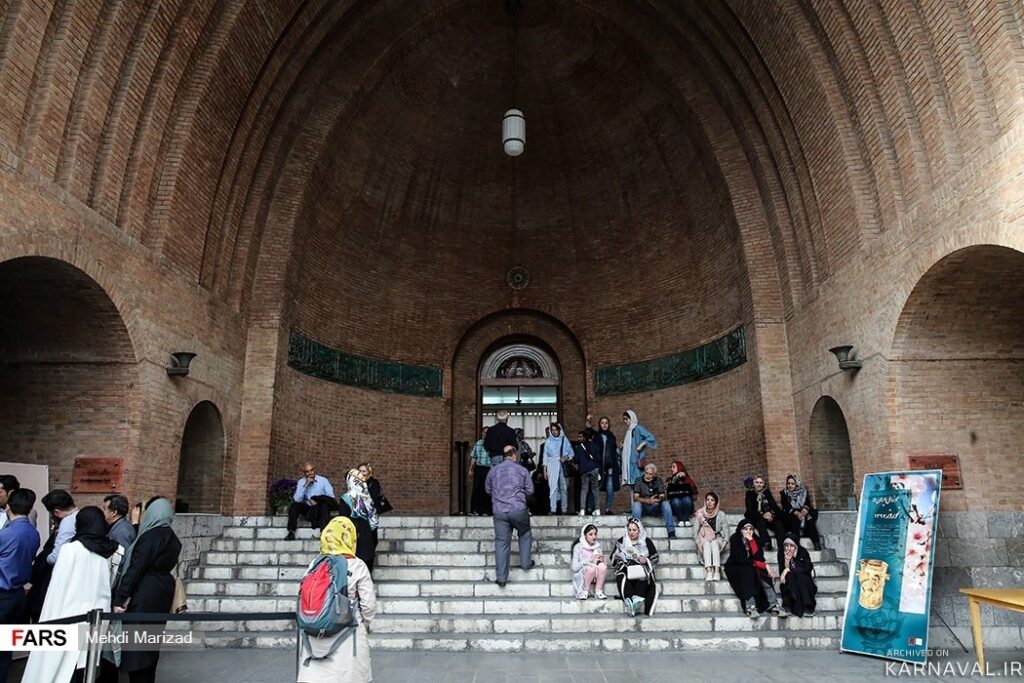
- The Museum of Ancient Iran, the original brick building, covering prehistory up to the end of the Sasanian era.
- The Museum of the Islamic Era, a later white travertine building in the same grounds, displaying more than 1,500 works from the centuries after the arrival of Islam.
Most visitors put the Museum of Ancient Iran first, and if time is short, that is the one to prioritise.
The building
Construction of the Museum of Ancient Iran began in 1935, and it was officially opened in 1937. The French architects André Godard and Maxime Siroux designed it, and Iranian master builders carried out the work. The great brick entrance arch is modelled on the Sasanian palace vault of Taq Kasra at Ctesiphon, in present-day Iraq, which makes the building itself part of the exhibition.

Highlights of the collection
The galleries are arranged roughly in chronological order. Look out for:
- Palaeolithic tools, including Neanderthal finds and Upper Palaeolithic implements from Yafteh Cave in Lorestan, some 30,000 to 35,000 years old.
- Painted pottery from Shahr-e Sukhteh, the Bronze Age “Burnt City” in Sistan.
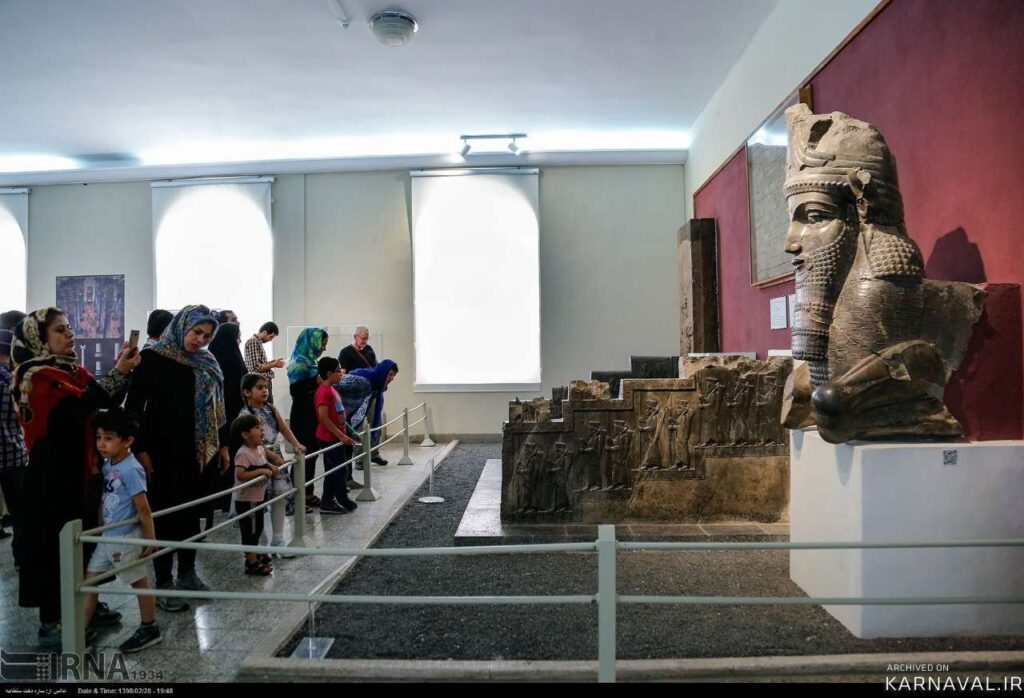
- The bull guardian from Chogha Zanbil, the Elamite ziggurat near Susa.
- Achaemenid pieces from Persepolis, including foundation tablets of Darius the Great.
- A marble statue of Penelope, one of only a handful of its kind to survive, found at Persepolis.
- Sasanian reliefs, among them a relief returned to Iran in 2023 after more than three decades abroad.
In the Islamic-era building, expect lustreware, tilework, metalwork, carpets, calligraphy and textiles from the Seljuk, Ilkhanid, Safavid and Qajar periods.

Which galleries are open
The museum closed for around three months during the June 2025 conflict, when its most valuable objects were moved to secure storage, and reopened in stages from autumn 2025, at first with temporary exhibitions while the permanent galleries were reinstalled. Like other Tehran museums, it can close or restrict access at short notice, so check the official website or ask locally which galleries are open before you go.

Visiting tips
- Address: 30 Tir Street, off Imam Khomeini Street, near Imam Khomeini Square, downtown Tehran.
- Metro: Imam Khomeini station, on Lines 1 and 2, is about a ten-minute walk away. Head west along Imam Khomeini Street and turn right into 30 Tir Street.
- Tickets: foreign visitors pay a higher rate than Iranians, as at all state-run museums. Prices are adjusted regularly; see our Iran prices page for current guidance, and bring cash in rials as foreign cards do not work in Iran.
- Hours: the museum usually opens daily from morning to late afternoon, with longer hours in summer. It closes on some religious holidays.
- Time needed: allow at least two hours for the Museum of Ancient Iran, and half a day if you want to see both buildings properly.
Visiting the National Museum of Iran: at a glance
- Opening hours: Saturday to Friday: 09:00 to 17:00
- Time needed: 1 to 3 hours
- Phone: +98 21 66702061-6
- Address in Persian (show this to your driver): تهران،خیابان امام خمینی، ابتدای خیابان سی تیر، موزه ایران باستان
- Open the National Museum of Iran in Google Maps
Hours can change on public holidays and during Ramadan, so check before you set out.
The National Museum of Iran in pictures
When you have finished, step outside onto 30 Tir Street, a pedestrian-friendly strip known for its food stalls and cafés, which come alive in the evening.