Tehran is not a city of postcard views, but look closer and its buildings tell the story of the last 250 years of Iranian history: Qajar kings who mixed Persian tilework with European fashions, Pahlavi modernisers who looked back to ancient Persepolis, bold 1970s architects and a new generation of designers. These are the buildings we think every visitor should see.
Before you go: several of Tehran’s major museums have had long closures since the conflicts of 2025 and 2026. At the time of writing, Golestan Palace is closed while war damage is repaired and the main galleries of the National Museum of Iran are shut until further notice. Opening times can change at short notice, so check before you set out.
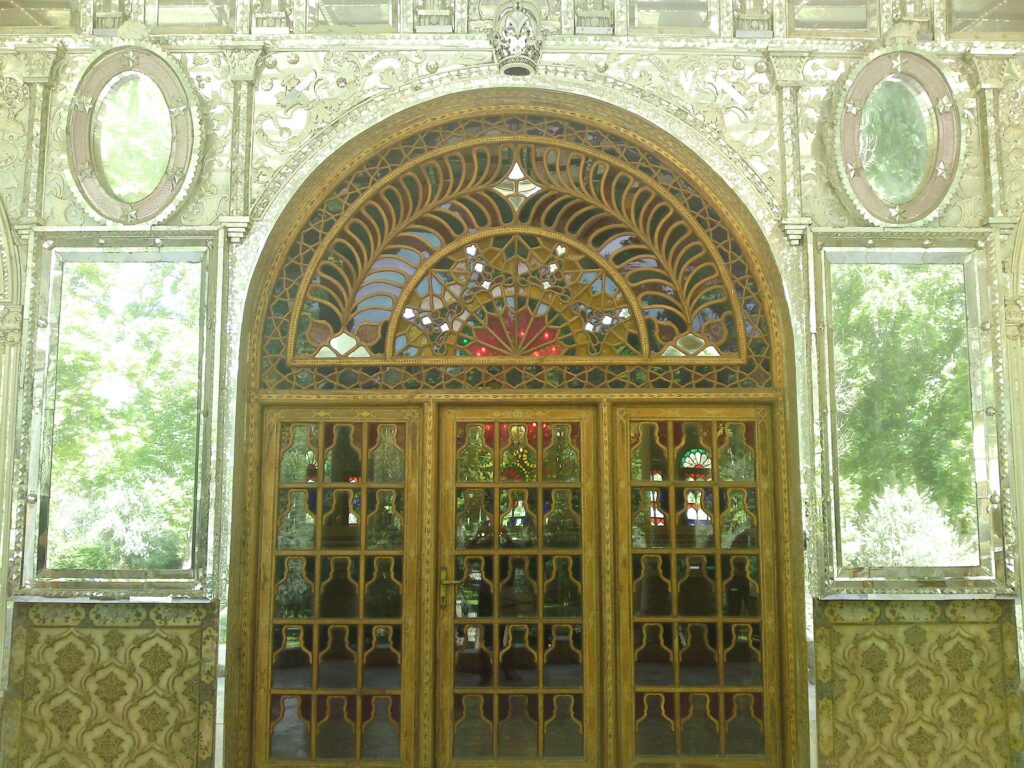
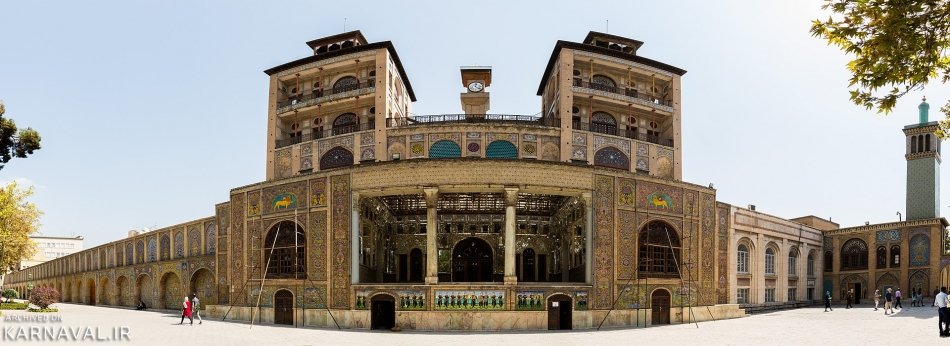
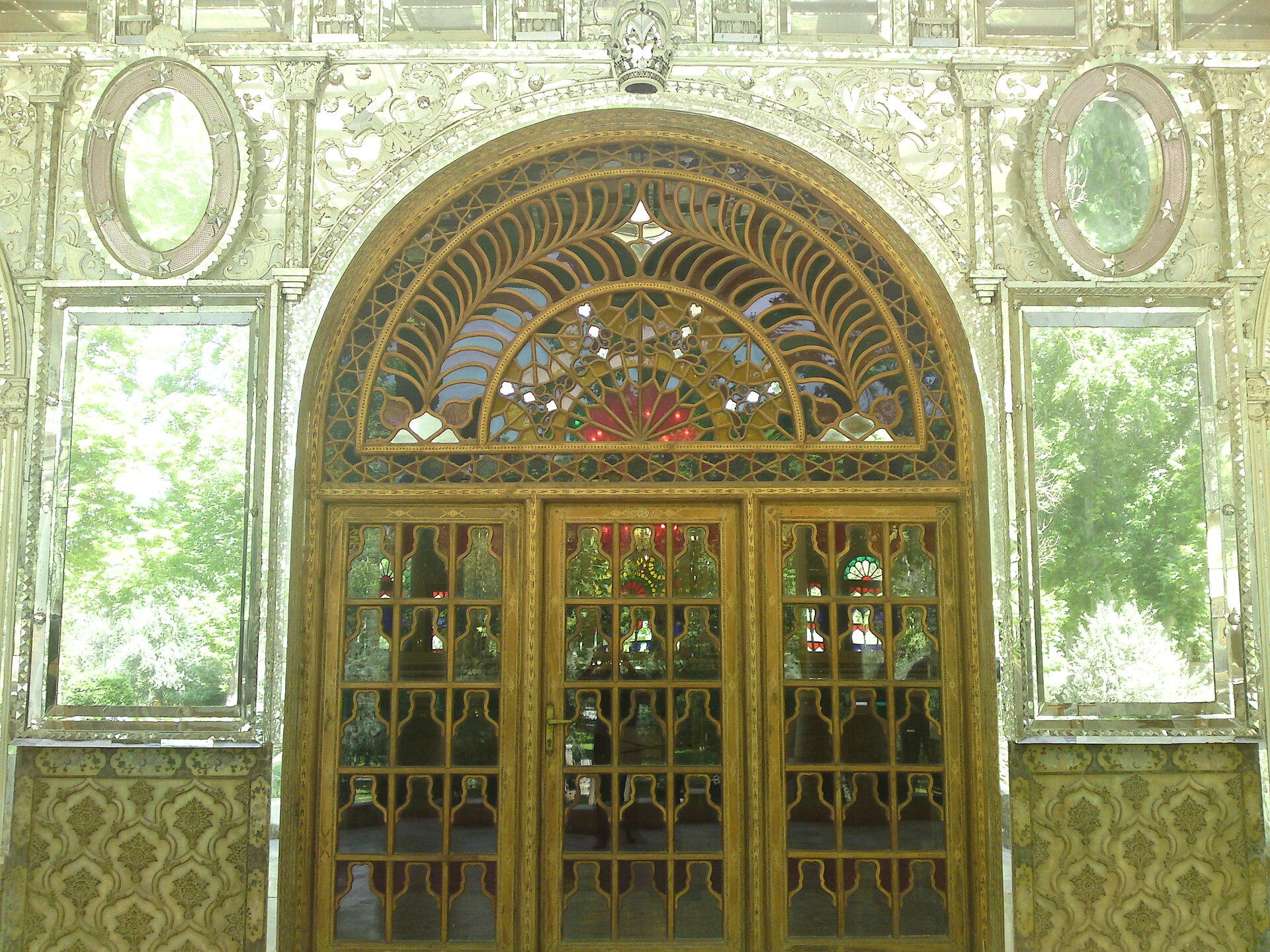
Golestan Palace. The Qajar royal complex is a catalogue of 19th-century Persian design, from the tile-covered façades and the Shams-ol-Emareh tower, inspired by European clock towers, to dazzling mirror halls. See our Golestan guide.
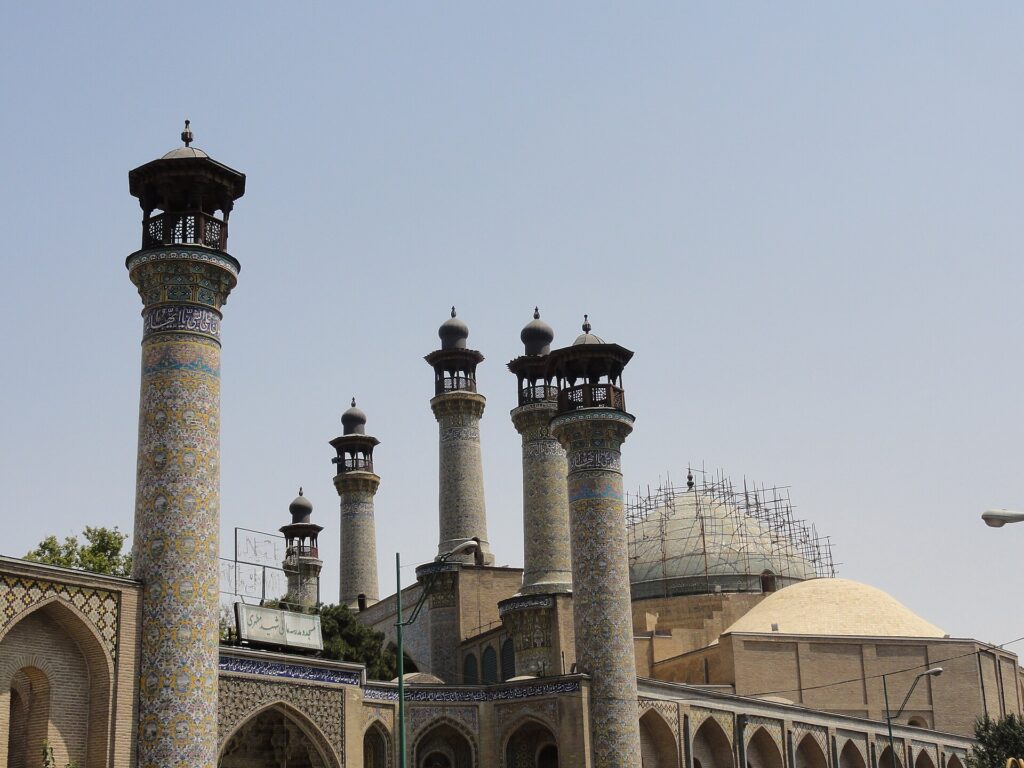
The Sepahsalar Mosque and school. Also known as the Shahid Motahari Mosque, this late-Qajar mosque and seminary at Baharestan has eight minarets, a vast courtyard and some of the finest tilework in the city. It is not always open to visitors, but the exterior alone is worth seeing.
Masoudieh Palace. A Qajar prince’s mansion near Baharestan, with courtyards, pools and painted reception halls. See our Masoudieh guide.
The Imam Jomeh House. A Qajar prime minister’s mansion off Naser Khosrow Street, with mirror work, painted plaster and stained-glass windows, recently restored. See our Imam Jomeh House guide.
The Bank Melli building. Pahlavi-era Tehran looked back to ancient Persia, and nowhere more obviously than in the Bank Melli headquarters on Ferdowsi Avenue, with its Achaemenid-style columns, reliefs and bull-headed capitals. A few doors along the avenue, the Central Bank’s vault houses the National Jewels Museum.
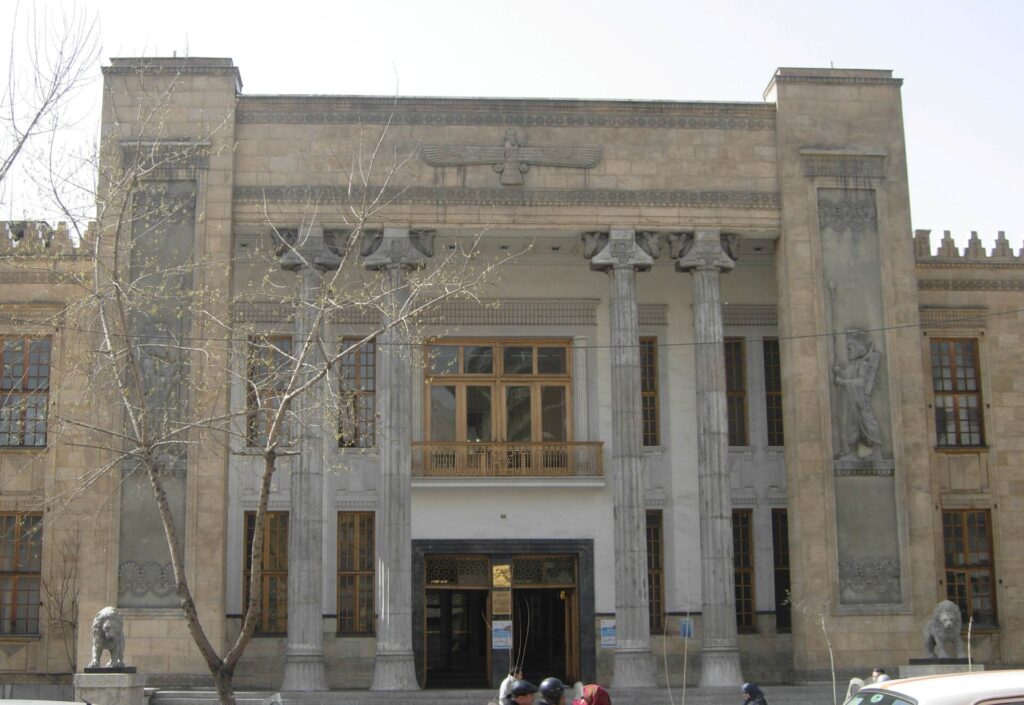
The National Museum of Iran. Designed by the French architect André Godard in the 1930s, the brick Museum of Ancient Iran takes its great arched entrance from the Sasanian palace at Ctesiphon. See our National Museum guide.
Vartan House. A rare example of Tehran’s early 20th-century Armenian-influenced architecture, with decorated brickwork and a courtyard. See our Vartan House guide.
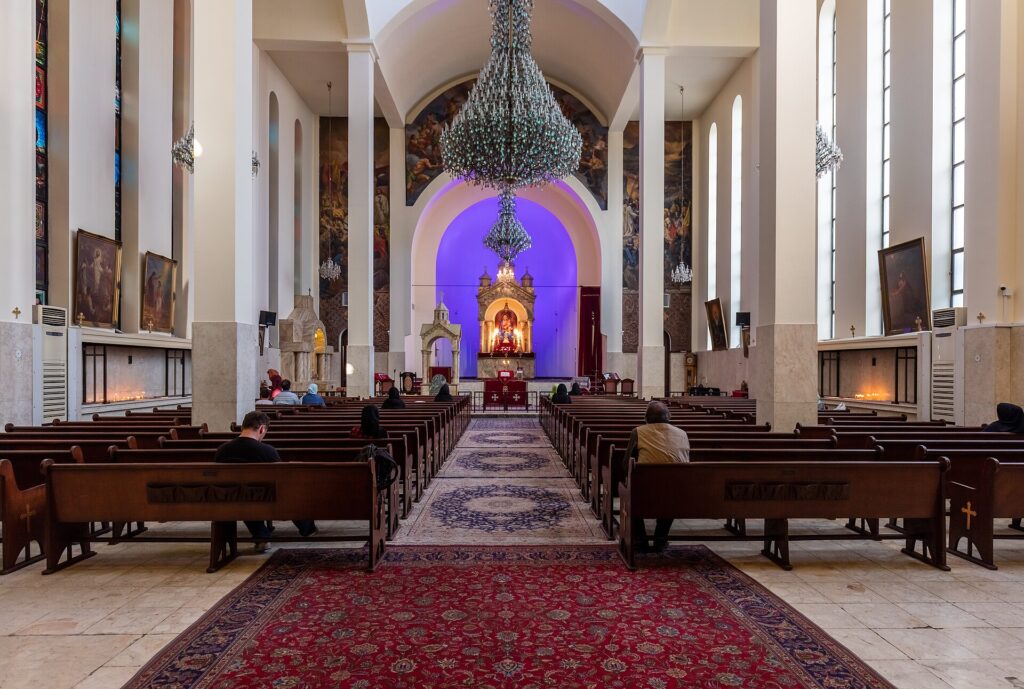
St Sarkis Cathedral. The cathedral of Tehran’s Armenian community on Karim Khan Zand Street, built in the 1970s, with twin towers outside and a beautifully decorated interior. It is open to visitors outside service times.
Azadi Tower. Hossein Amanat’s marble gateway, built in 1971, blends Sasanian arches with Islamic geometry and modern engineering. See our Azadi Tower guide.
The City Theatre. The round, colonnaded theatre at Vali Asr crossroads, opened in 1972, is one of the landmarks of Iranian modernism and is still the heart of the city’s theatre scene.
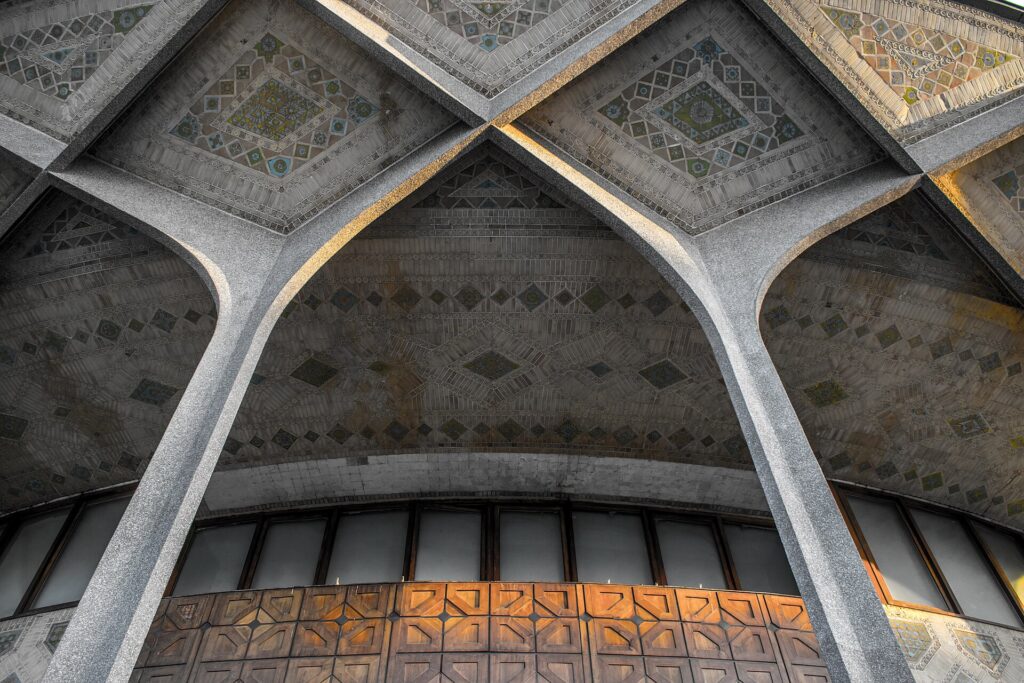
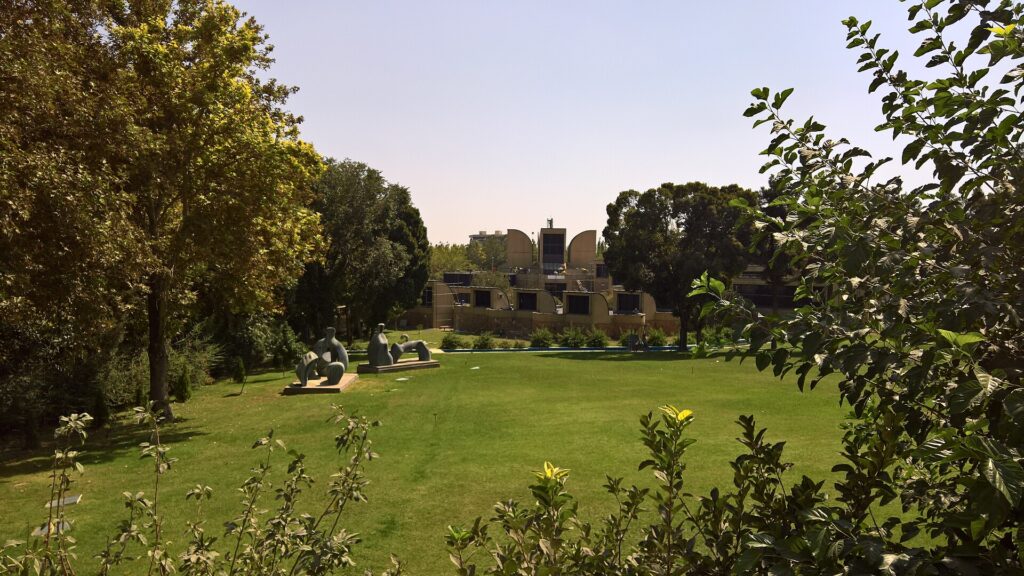
The Museum of Contemporary Art. Kamran Diba’s 1977 museum in Laleh Park reinterprets the badgir, or wind-catcher, in raw concrete, with a spiralling gallery inside. See our museum guide.
The Milad Tower. The 435-metre telecommunications tower completed in 2007 is now Tehran’s most recognisable modern landmark. See our Milad Tower guide.
Tabiat Bridge. Leila Araghian’s three-level pedestrian bridge, opened in 2014, won an Aga Khan Award for Architecture and is now one of the city’s best-loved public spaces. See our Tabiat Bridge guide.
Seeing them. The old-city buildings are walkable from Imam Khomeini and Baharestan metro stations, while the modern landmarks are spread around the north and west. Our museums and palaces guide has opening details.