Updated November 2026 We have updated the history, location and visiting advice; opening times can change at short notice, so confirm before you go.
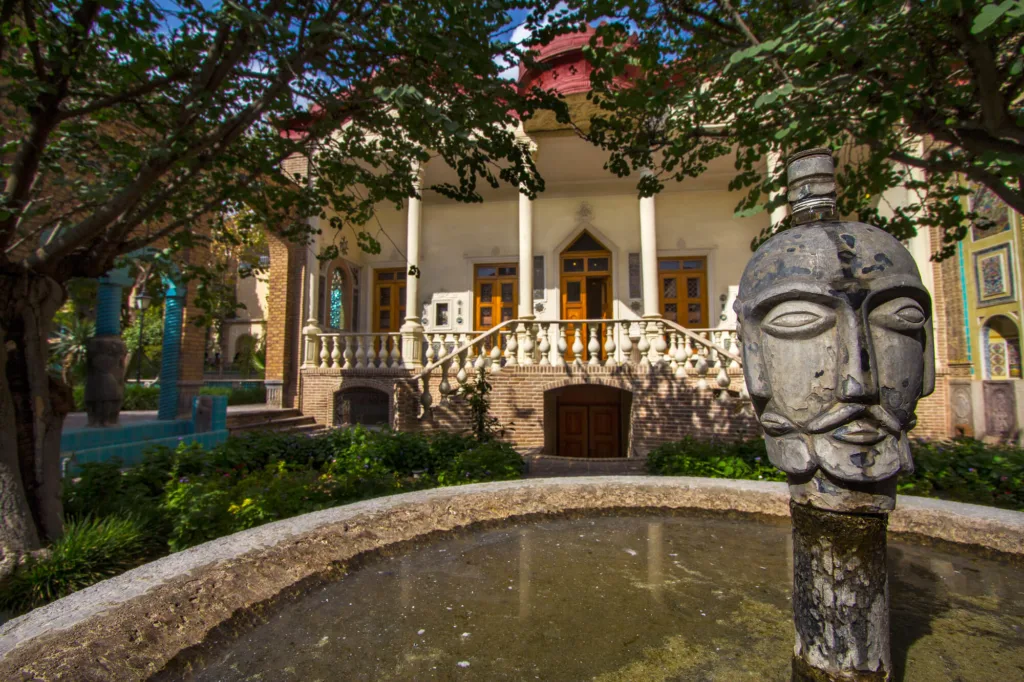
The Moghadam House Museum is a beautifully preserved Qajar-era mansion on Imam Khomeini Street in central Tehran, filled with the tiles, ceramics, textiles and curiosities collected by archaeologist and artist Mohsen Moghadam and his wife Selma. Owned and run by the University of Tehran, it is one of the city’s most atmospheric small museums and an easy stop if you are exploring downtown, the bazaar or 30 Tir Street.
The house was built in the late Qajar period for Mohammad Taghi Khan Ehtesab ol-Molk, a court official who ran Tehran’s municipal accounts and later served as Iran’s envoy in Switzerland. It passed to his son, Mohsen Moghadam, who returned from Europe and made it his home with Selma, a Europe-born scholar who went on to direct the library of the National Museum of Iran.

Mohsen Moghadam had painted since childhood and studied at the Kamal-ol-Molk school of fine arts before training further in Europe, later turning to history and archaeology. He became a professor at the University of Tehran, helped found its Faculty of Fine Arts and designed the university’s emblem. He also took part in archaeological work around Iran, and many of the tiles and fragments set into the walls of the house came from those years. In 1972 the couple gave the house and its entire collection to the university, and it opened to the public as a museum in 2009.
What makes the visit special is that the collection is displayed as the Moghadams lived with it, rather than behind glass in tidy rows. Historic tiles cover walls, doorways and fountains; carved stone pieces sit in the gardens; and the rooms hold pottery, glassware, paintings, textiles, coins, documents, pipes and water pipes gathered from across Iran and abroad. Do not miss the basement howzkhaneh, a cool pool room lined with tiles and terracotta fragments spanning many centuries.

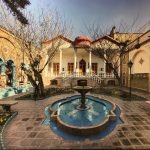
The grounds cover roughly 2,000 square metres, arranged around outer and inner courtyards with trees, flowerbeds and a pool. They give a glimpse of what Tehran’s grand houses were like when the city was quieter and greener, and they are a pleasant place to sit after the rooms.
The museum is on Imam Khomeini Street, past the junction with Sheikh Hadi Street, next to a branch of Bank Mellat. The nearest metro station is Hassan Abad on Line 2, about a six-minute walk away, and Moniriyeh on Line 3 is a little further. In recent years the museum has opened daily except Saturdays, from mid-morning until mid-afternoon, with a higher ticket price for foreign visitors and discounts for students. Tehran’s museums were closed for several months after the June 2025 conflict before reopening from September 2025, according to Paint and Painting, so check the current timetable with the University of Tehran’s museums office or your hotel before setting out. For the cost of everyday items, see our Iran price trackers.
Allow an hour, more if you like to linger over the tiles. The house combines well with a walk around the old government quarter and lunch on 30 Tir Street, a few minutes away.