Updated November 2026 We have removed the old permit prices and step-by-step registration, which no longer apply, and refocused this guide on how Tehran’s two restricted zones work today.
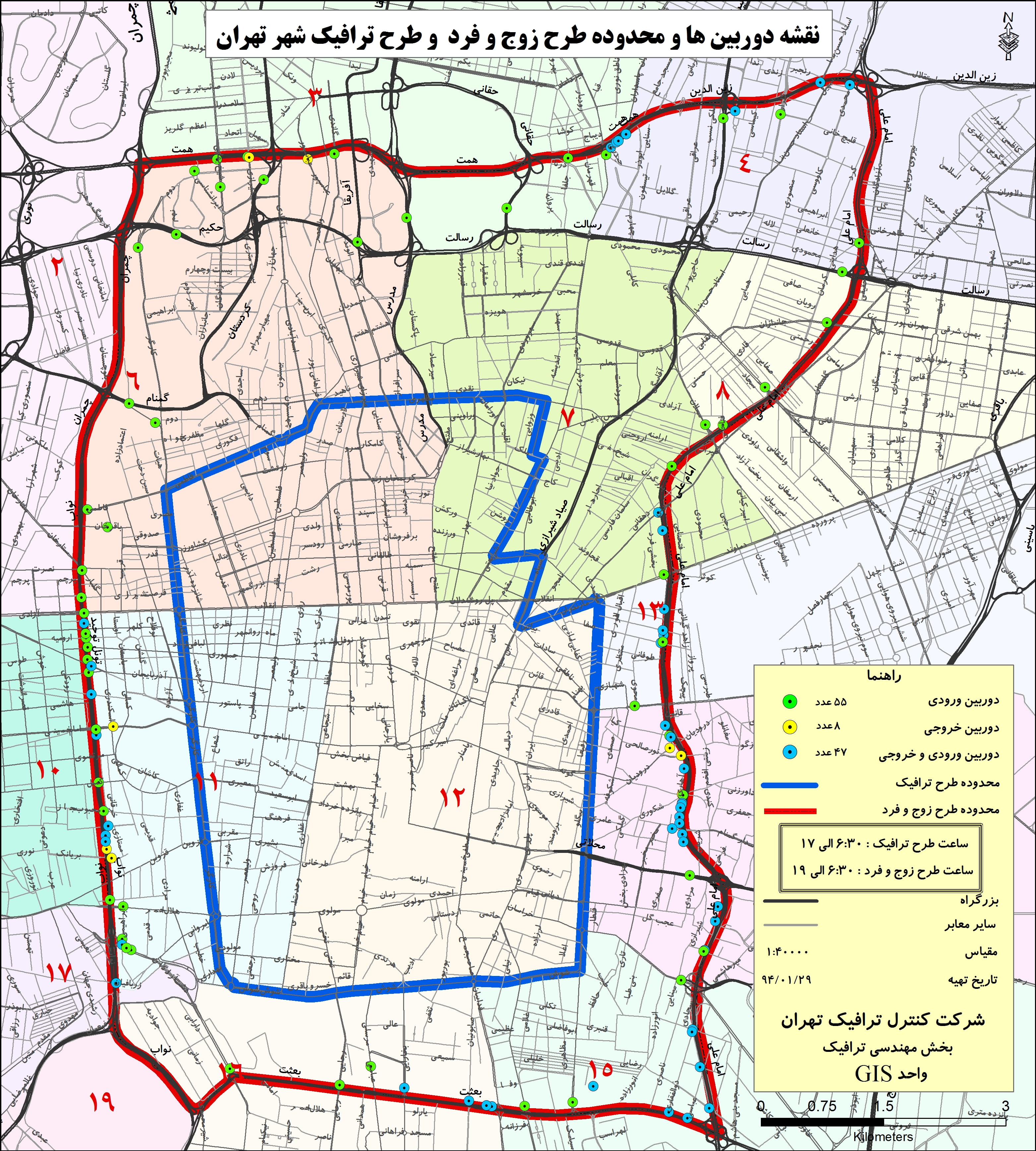
Driving in Tehran’s traffic zones comes down to two rules: the central traffic plan zone charges you for entering on weekdays, and a wider ring around it restricts cars by the last digit of their number plate on alternate days. Entries are recorded by cameras and the fees are charged to the car’s owner, so the main job for anyone driving in the city is to know where the boundaries are, register the car, and pay what is owed on time.
Why the zones exist
Congestion and air pollution have been the municipality’s biggest headaches for decades, and restricting cars in the centre is one of its oldest tools. The scheme has been revised many times, moving from paper permits sold in advance to camera-based charging that bills drivers automatically. Expect further tweaks: hours, fees and exemptions are reviewed regularly, often at the start of the Iranian new year in March.
The traffic plan zone
The inner zone, known in Persian as tarh-e terafik, covers the historic centre and the main business and government districts, including the area around the Grand Bazaar. Inside it, every entry during restricted hours on working days is chargeable unless the car has an exemption. Cameras at the entry points read your number plate and record when you enter and leave, and the fee depends on the time of day and how long you stay.
Residents of the zone can register for a reduced or free allowance once they have proved their address, so if you rent a flat in the centre it is worth applying straight away.
The odd-even zone
Around the central zone is a larger ring where the odd-even rule (tarh-e zowj va fard) applies. Cars whose plates end in an even number may enter on certain days and odd-numbered plates on the others, during restricted hours. Driving in on the wrong day without a valid permit leads to a fine sent to the registered owner. Outside both zones, sometimes called the white zone, there are no entry restrictions.
Registering and paying
Charges are linked to the car’s plate and its registered owner, and are paid through Tehran Municipality’s online services. The usual route is to create an account on the municipality’s citizen portal, my.tehran.ir, or its companion app, add your vehicle, and top up a balance or pay outstanding charges by Iranian bank card. Several payment and banking apps also offer a traffic plan section where you can check and pay fees by entering your plate number.
- The portal is in Persian only, so ask an Iranian friend or colleague to help with the first setup.
- Foreign residents can register, but you will need your passport and residence details, and the car’s ownership documents.
- If you rent or borrow a car, check who is responsible for traffic charges. Unpaid fees are tied to the plate and can come back to the owner, and to you, with surcharges.
- Pay promptly. Late payment adds penalties, and outstanding charges and fines generally have to be cleared before a car can be sold or transferred.
Practical tips
- Check the current hours before you set off. Restrictions normally apply on weekday daytimes and are lifted on Fridays and public holidays, but the exact times change from year to year and may be adjusted during Ramadan or on high-pollution days.
- Many local drivers simply avoid the centre. Parking is scarce, and the metro and BRT buses reach most central destinations faster than a car at rush hour.
- If you only go into the centre occasionally, a ride-hailing app such as Snapp or Tapsi saves you the charge and the search for a parking space.
- Navigation apps used in Iran, such as Neshan and Balad, mark the zone boundaries and can route you around them.
- Keep your car’s annual technical inspection certificate up to date, as it affects whether the car meets the city’s emissions rules.
Running a car in Tehran involves other costs too, from fuel to insurance. Our Iran prices pages track what everyday essentials cost now.