Updated November 2026 Paper utility bills have largely given way to text-message bills and official apps, so we have rewritten this guide around the way bills are paid in Iran today.
Paying utility bills in Iran is quick once you know the system: every bill comes with a bill ID and a payment ID, and you can settle it in a minute through a payment app, your bank’s app or an ATM, using an Iranian bank card. Foreign residents pay the same tariffs as Iranians, with no surcharge for non-citizens. The main hurdle for newcomers is working out where the bill is and which numbers to use, so here is how it works.
How bills arrive now
A few years ago the colour-coded paper bill tucked under your door was the norm: orange for gas, off-white for electricity, and blue for both water and landline phone, which caused plenty of mix-ups. Iran’s utilities have since moved to electronic billing. Tavanir, the national power company, scrapped paper electricity bills in favour of text messages, as Financial Tribune reported, and landline, gas and water bills have moved the same way.
In practice, this means the bill is sent by SMS to the mobile number registered to the account. If you rent, that number usually belongs to your landlord, so ask them to forward the bills or to register your number instead. You may still find an old paper bill in a drawer; it is useful because it shows the account’s bill ID, which stays the same.
The two numbers you need
- Bill ID (shenaseh-ye ghabz): fixed for the property and the utility. Note it down once and keep it.
- Payment ID (shenaseh-ye pardakht): changes with each bill and encodes the amount due.
Enter both into any payment channel and the amount appears automatically. Many apps also let you save each bill ID so that new bills show up for you to pay.
Paying with an app
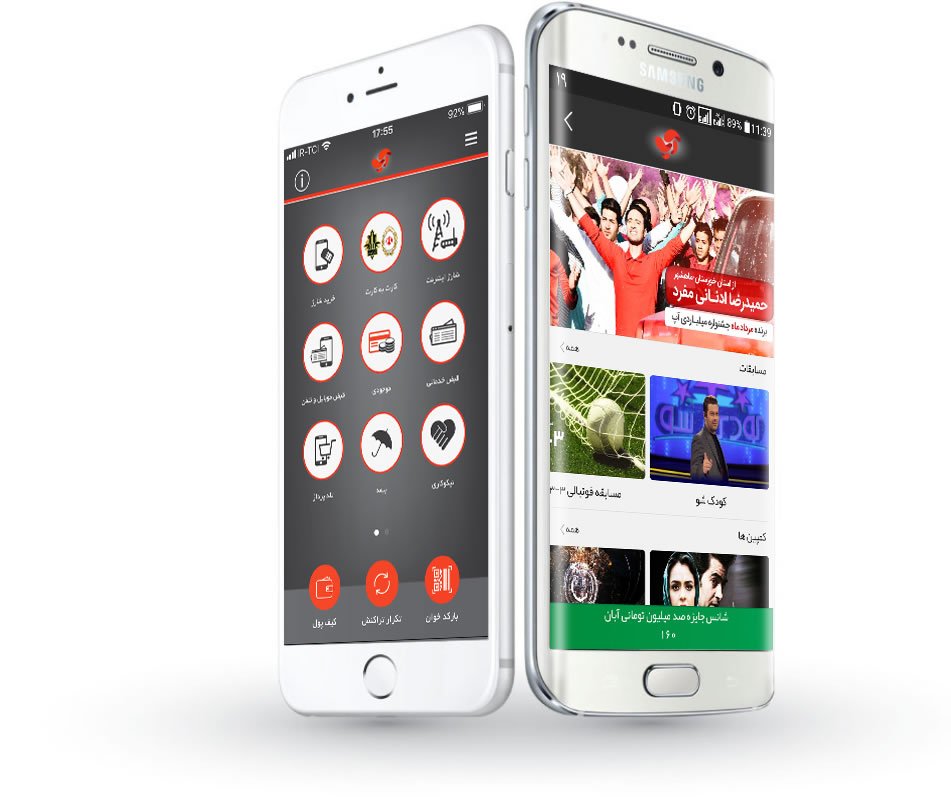
Most people in Tehran pay bills on their phone. Popular options include:
- Ap (Asan Pardakht), one of Iran’s best-known payment apps. It handles utility and mobile bills, card-to-card transfers and mobile top-ups, and you can scan a bill’s barcode instead of typing the numbers. Ap was removed from Google Play because of sanctions, as Zoomit reported, so Android users install it from Iranian app stores such as Cafe Bazaar or Myket.
- Your bank’s own app, which almost always has a bill payment section and is often the simplest choice if you already use it.
- Official utility apps such as Bargh-e Man (My Electricity), the power industry’s app, which lets you view and pay electricity bills, check your consumption and request services without visiting an office.
iPhone users have fewer choices, because Apple does not allow Iranian payment apps in its store. Many services offer web-app versions that run in the browser instead; ask your bank which it recommends.
Paying at an ATM
If you prefer not to use apps, most ATMs in Tehran have a bill payment option. Insert your Iranian debit card, choose bill payment, enter the bill ID and payment ID (or scan the barcode on a paper bill, where the machine supports it), confirm the amount and keep the printed receipt. It is slower than an app but useful if you want paper proof of payment.
Practical tips
- You need an Iranian bank card for every method; foreign cards do not work in Iran.
- Pay before the due date shown on the bill. Persistent arrears can lead to the supply being cut off, and reconnecting takes time.
- Bills for gas and electricity are usually issued every two months, and amounts can vary a lot between summer and winter. Our Iran prices pages give a sense of everyday living costs.
- When you move in, agree with the landlord how bills will be shared and check that previous bills have been settled, so you do not inherit someone else’s debt.
Learn the Persian: Persia Learning’s phone, bank and everyday admin phrasebook covers the words you need for SIM cards, top-ups, bills and bank cards. Try the first lesson free →