Updated November 2026 We have rechecked the history and transport details for Tajrish, which remains one of north Tehran’s liveliest neighbourhoods and the gateway to Darband and the mountains.
Tajrish is the neighbourhood that best sums up north Tehran: a busy square, a traditional covered bazaar, an important shrine and, just beyond, the foothills of the Alborz. Once a cool summer retreat for the capital’s residents, it is now a crowded and thoroughly urban district, but it keeps more of its old character than most of uptown Tehran. Whether you are looking for somewhere to live, shop for fresh produce or start a walk into the mountains, Tajrish deserves a place on your list.

Where Tajrish is and why it is cooler
Tajrish lies at the top of the city, where Vali-e Asr Street, Tehran’s longest, finally ends at Tajrish Square. Administratively it is the seat of Shemiranat County and broadly covers Tehran’s District 1. Tajrish Square sits at about 1,600 metres above sea level, several hundred metres higher than central and southern Tehran, and its position at the foot of the Alborz means noticeably cooler summers and more frequent winter snow. That climate is a big reason so many people prefer to live uptown.
A short history of Tajrish
When the Qajars made Tehran their capital in the late 18th century, the mountain water flowing down from the north was one of its attractions. The old centre of settlement in the region had been Rey, today part of the far south of the capital. Tajrish, meanwhile, was a cluster of villages in the hills, and it became the place where Tehranis escaped the summer heat. Wealthy families laid out summer gardens, and foreign legations acquired land in the cooler north for their own summer residences.

Water reached the area through qanats, the traditional underground channels, and a few still carry water today. In the 20th century, new roads linked Tajrish to downtown, cheap village land drew newcomers from across Iran, and the district was gradually swallowed by the city. The summer-resort era ended and apartment blocks rose in place of gardens. A handful of old houses survive, some converted into small shops and boutiques, but most of the neighbourhood is now modern and multi-storey.
What to see and do

- Tajrish Bazaar: the old covered market is the heart of the neighbourhood and one of the best places in Tehran to buy fruit, vegetables, herbs, spices, nuts and sweets. Its roofed passage leads towards the shrine.
- Imamzadeh Saleh: the shrine and mosque behind the bazaar is one of north Tehran’s most important religious sites and is busy with pilgrims, especially on Thursday evenings and religious holidays. Dress modestly; women will need a chador to enter the shrine itself.
- Tekyeh Tajrish: a traditional venue where locals gather for mourning ceremonies during the month of Muharram.
- Malls, cafés and restaurants: the streets around the square have several modern shopping centres and plenty of cafés and restaurants, as well as some good bookshops; see our list of the top bookstores in Tehran.
- Darband: shared taxis run from Tajrish Square up to Darband, where a path climbs through an old village past streamside restaurants and tea houses into the mountains.
- Tochal: the mountain is close by and worth visiting all year, with hiking in summer and skiing and snowboarding in winter.
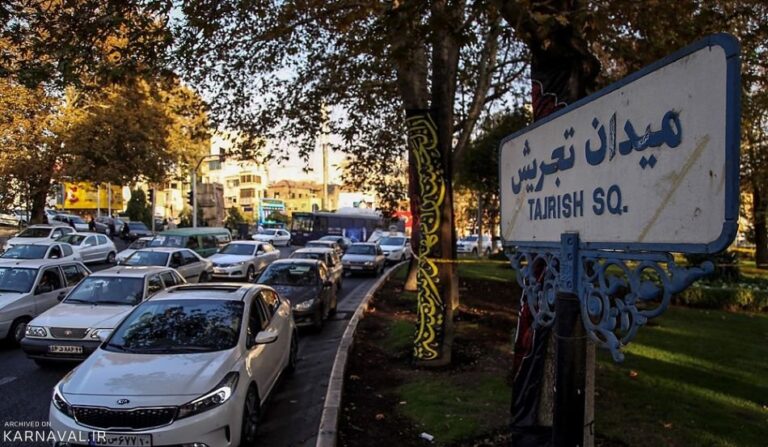
Tajrish Square is one of the busiest junctions in the city, with bus and taxi terminals feeding into it. Crossing it on foot can be slow and driving around it at rush hour is best avoided.
Getting to Tajrish by metro
Tajrish is the northern terminus of Metro Line 1, which runs south through the city centre, and the metro is usually far quicker than sitting in traffic on Vali-e Asr. The station, opened in 2012, is at Qods Square, a short walk from the bazaar. At around 51 metres below ground it is one of the deepest stations on the network, and you will ride several long escalators to reach the platforms, so allow a few extra minutes. If you have limited mobility, check the lifts are working before relying on them.

Emamzadeh Saleh
Just off Tajrish Square, beside the bazaar, stands the shrine of Emamzadeh Saleh, the tomb of a son of Imam Musa Kazem and brother of Imam Reza. It has been revered by Tehranis for centuries and offers a few quiet minutes away from the bustle of the square. The courtyard was long famous for a plane tree said to be 800 years old, one of the oldest in Iran, until it dried out and had to be felled. The shrine has been on Iran’s national heritage list since 1972. Dress modestly; women need a chador to enter, and one can usually be borrowed at the door.
Visiting Tajrish Square: at a glance
- Opening hours: Saturday to Friday: open 24 hours
- Time needed: 1 to 2 hours
- Address in Persian (show this to your driver): تهران، خیابان ولیعصر، میدان تجریش
- Open Tajrish Square in Google Maps
Hours can change on public holidays and during Ramadan, so check before you set out.
Tajrish Square in pictures
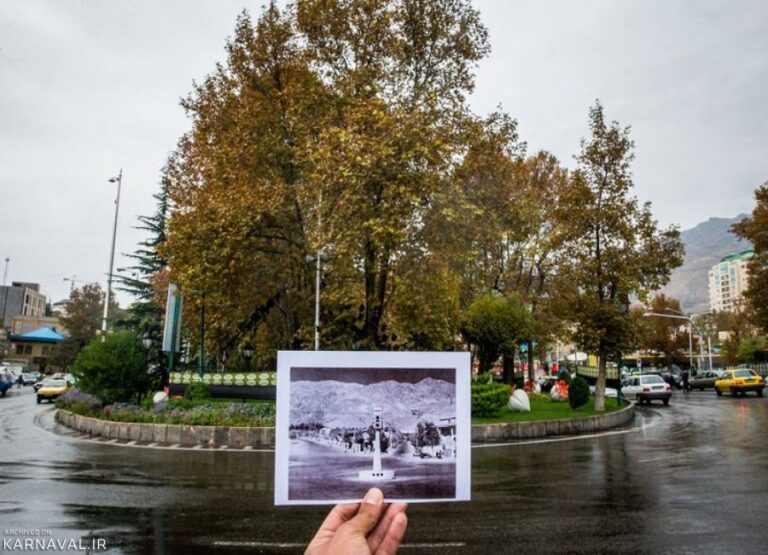
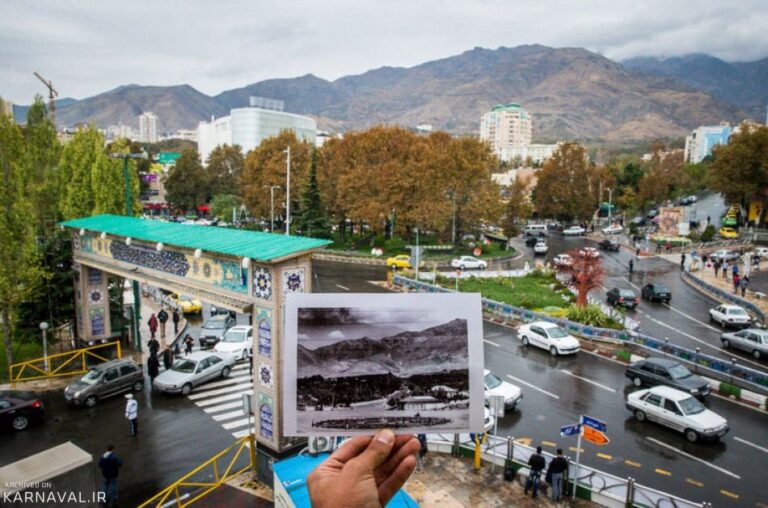
If you are weighing up a move to the area, rents in Tajrish and the rest of District 1 are among the highest in the city; our Iran prices tracker has the latest guidance on living costs.