Updated November 2026. No: Iran does not have daylight saving time. The clocks last went back at midnight on 21 September 2022, and since then the whole country has stayed on Iran Standard Time (IRST), UTC+3:30, all year round. That does not mean the time difference between Tehran and the rest of the world stays the same, because the UK, Europe, North America and Australia still change their clocks. This guide explains Iran’s time zone, how the gap with other countries shifts through the year, and how Iran’s clock rules have changed over the decades. We update it whenever the rules change.
Iran’s time zone today
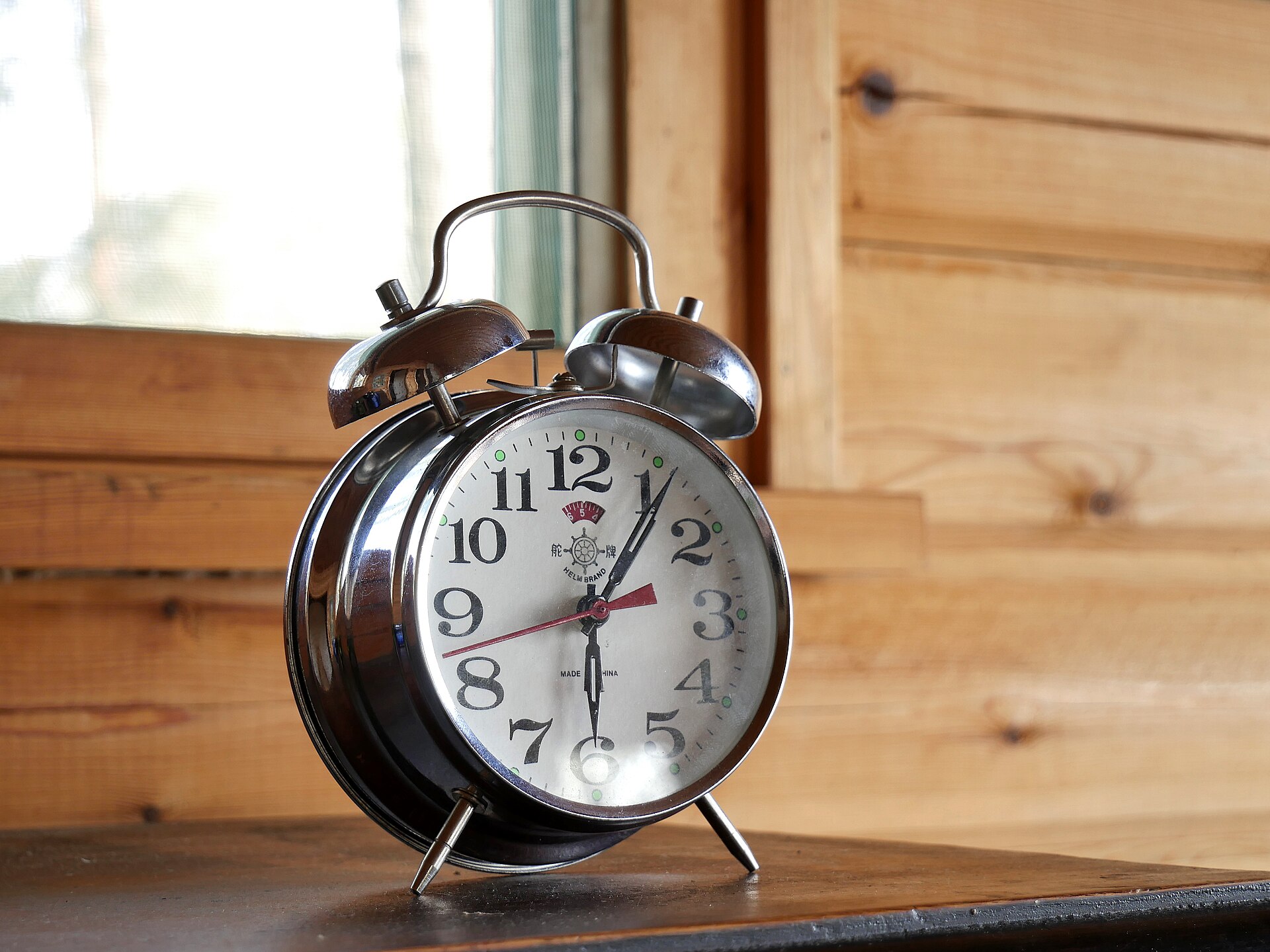
Iran uses a single time zone for the whole country, three and a half hours ahead of Coordinated Universal Time (UTC+3:30). It is one of the few half-hour time zones in the world, which is why Tehran so often looks “30 minutes out” next to its neighbours, a quirk we first wrote about in Time in Tehran: remember, we’re 30 minutes out.
The clocks do not change in spring or autumn. timeanddate.com confirms that Iran observes IRST all year and that DST is no longer in use, with the previous change on 21 September 2022. In the international time-zone database used by phones and computers, the Asia/Tehran entry has no daylight saving rules after 2022, so an up-to-date device will show the correct time automatically.
Time difference between Iran and other countries
Because Iran no longer changes its clocks but many other countries do, the gap between Tehran and those countries widens or narrows by an hour at different points in the year.
| Place | When their clocks are on winter time | When their clocks are on summer time |
|---|---|---|
| London (UK) | Tehran is 3 h 30 min ahead | Tehran is 2 h 30 min ahead |
| Berlin, Paris, Rome (CET) | Tehran is 2 h 30 min ahead | Tehran is 1 h 30 min ahead |
| New York, Toronto (Eastern) | Tehran is 8 h 30 min ahead | Tehran is 7 h 30 min ahead |
| Los Angeles, Vancouver (Pacific) | Tehran is 11 h 30 min ahead | Tehran is 10 h 30 min ahead |
| Sydney, Melbourne | Tehran is 6 h 30 min behind | Tehran is 7 h 30 min behind |
Some important neighbours do not change their clocks either, so their difference with Iran is fixed all year:
- Dubai, Abu Dhabi, Muscat (UTC+4): Tehran is 30 minutes behind.
- Riyadh, Doha, Kuwait, Baghdad, Istanbul (UTC+3): Tehran is 30 minutes ahead.
- Kabul (UTC+4:30): Tehran is 1 hour behind.
When the gap changes: 2026–27 dates
- UK and EU: clocks went back on 25 October 2026, go forward on 28 March 2027 and back again on 31 October 2027. Between those dates in summer, London is 2 h 30 min behind Tehran; the rest of the year, 3 h 30 min.
- US and Canada: daylight time runs from the second Sunday in March to the first Sunday in November. Clocks went back on 1 November 2026 and go forward on 14 March 2027.
- Australia (New South Wales, Victoria): clocks go forward in early October and back in early April, the opposite way round to the northern hemisphere.
Watch out for the odd weeks in March and late October/early November when the US and Europe are out of step. In mid-March, for example, New York is already on summer time but London is not, so Tehran is 7 h 30 min ahead of New York and 3 h 30 min ahead of London at the same moment. This matters for events such as Nowruz, which falls in that window.
A short history of time in Iran
- Before 1935: Tehran kept local mean time, about UTC+3:26. A cabinet circular of June 1935, recorded in the international time-zone database, ordered offices across the provinces to follow Tehran time, three and a half hours ahead of Greenwich.
- 1977–1980: Iran tried daylight saving for the first time in 1977, and briefly moved its standard time to UTC+4 before returning to UTC+3:30 in November 1978. Summer time was used again in 1979 and 1980, then dropped in the years after the revolution.
- 1991–2005: Daylight saving returned, with clocks moving forward an hour at the start of Farvardin (around 21 March) and back at the end of Shahrivar (around 21 September).
- 2006–2007: President Ahmadinejad’s cabinet abolished daylight saving in 2006. Parliament restored it by law in September 2007, with effect from March 2008.
- 2008–2022: Clocks went forward on 1 Farvardin and back on 30 Shahrivar every year.
- 2022: On 15 March 2022 parliament voted to repeal the law on changing the official time. After the Guardian Council’s concerns were resolved, the change was communicated to government bodies in May 2022. The clocks went back for the last time at midnight on 30 Shahrivar 1401 (21 September 2022), and no change has been made since.
Could daylight saving come back?
It has been discussed. With Iran short of electricity in summer, the power company Tavanir argued in April 2025 that the government should be able to set the clocks itself, estimating that daylight saving could cut electricity use by around 1%, as reported on the IANA time-zone mailing list. The cabinet approved a bill to hand authority over the official time back to the government, but it still needed parliament’s approval, and the MP who led the 2022 repeal disputed the energy argument, saying the government could change office hours without touching the clocks. MPs then refused to fast-track the bill and sent it through the normal legislative process.
As of November 2026, no new law has been passed and Iran’s clocks have not changed. If that changes, we will update this page.
Office hours instead of clock changes
Rather than moving the clocks, the authorities have repeatedly changed working hours to save energy. In heatwaves, offices in Tehran and other provinces have been closed outright or told to work only early-morning hours, as during the August 2024 heatwave. In September 2026 the government set office attendance at 8am to 1pm from 23 September until the end of the Iranian year in March 2027, with remaining hours worked remotely. If you need to deal with a government office, ministry or bank, check its current hours rather than assuming the usual schedule, and see our guide to Tehran’s summer power outage schedule.
Practical tips
- Update your devices. Older phones, laptops, smart TVs and some apps may still carry pre-2022 rules and jump an hour in March or September. Keep the operating system updated and set the time zone to “Tehran” with automatic time on.
- Double-check international meetings. Calendar invitations from abroad are usually right on modern systems, but confirm the time in IRST when booking calls across the March and October/November clock changes.
- Check flight times. Airline schedules are in local time. When the UK or Europe changes its clocks, the arrival time in Tehran of the same flight number may shift by an hour.
Frequently asked questions
Does Iran have daylight saving time?
No. Iran stopped using daylight saving time after the clocks went back on 21 September 2022, and it stays on Iran Standard Time (UTC+3:30) all year.
What time zone is Tehran in?
Iran Standard Time (IRST), UTC+3:30. The whole country uses the same time zone. In the time-zone database it is listed as Asia/Tehran.
What is the time difference between Iran and the UK?
Tehran is 3 hours 30 minutes ahead of the UK in winter (late October to late March) and 2 hours 30 minutes ahead in summer, when the UK is on British Summer Time.
What is the time difference between Iran and New York?
Tehran is 8 hours 30 minutes ahead of New York in winter and 7 hours 30 minutes ahead while the US is on daylight time (mid-March to early November).
What is the time difference between Iran and Dubai?
Tehran is 30 minutes behind Dubai all year, since neither country changes its clocks.
Why is Iran’s time zone a half hour?
Iran’s official time is based on a meridian close to the middle of the country rather than a whole-hour offset from Greenwich, and Tehran time has been set at three and a half hours ahead of Greenwich since at least 1935.
When did Iran last change its clocks?
At midnight on 30 Shahrivar 1401, which was 21 September 2022, when the clocks went back an hour for the final time.
Will Iran bring back daylight saving time?
A government bill to restore its power to change the clocks was put to parliament in 2025, but MPs refused to fast-track it and, as of November 2026, it has not become law. Iran’s clocks have not changed since 2022.