Updated November 2026 Rewritten with a clearer guide to the halls and grounds; outdated ticket prices and staff details have been removed, and museum hours across Tehran were disrupted in 2026, so check before you go.
The Holy Defense Museum in Tehran, officially the National Museum of the Islamic Revolution and Holy Defense, is a large, high-tech museum and park dedicated to the Iran–Iraq War of 1980 to 1988, which Iranians call the “Holy Defense”. Whatever your view of its perspective, it is one of the most striking modern museums in the city and gives visitors a vivid sense of how deeply that eight-year war shaped Iran and the generation that lived through it.
The museum and its grounds
The museum sits in a landscaped park of around 21 hectares off the Haqqani Expressway in north-central Tehran, near Vanak, and is owned by Tehran Municipality, according to Wikipedia. Much of the experience is outdoors. Paths lead past tanks, Iranian-made artillery and other military hardware, gardens, a lake with fountains, a mosque named after the port city of Khorramshahr and a memorial to unknown soldiers. There is also a children’s play area, which is why you will see local families picnicking here at weekends.


Inside the exhibition halls
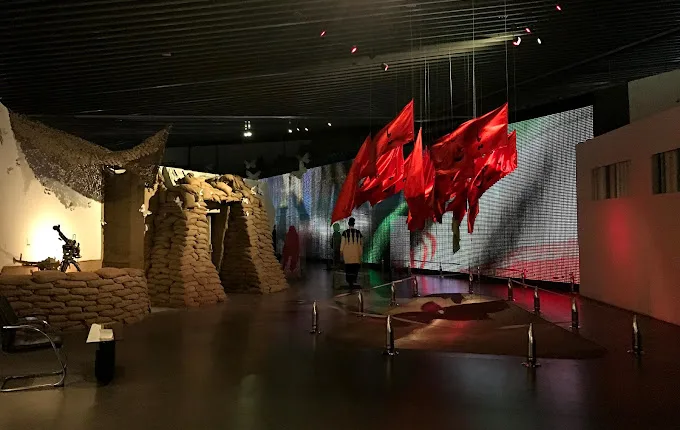
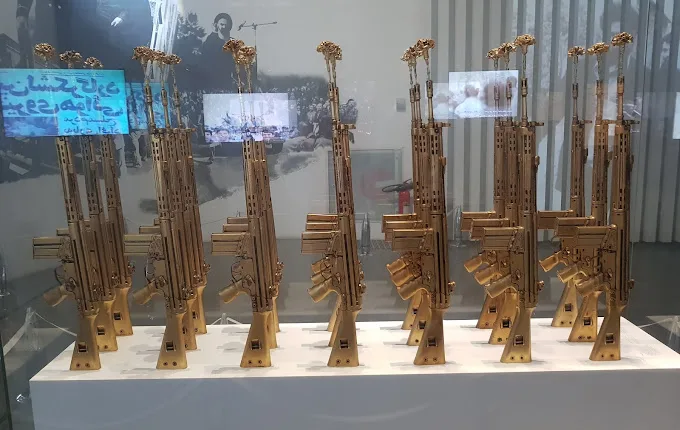
The main building has eight halls, each built around a different theme and packed with video walls, projections, holograms and sound effects. The route moves roughly chronologically:
- The opening halls cover the years leading up to the 1979 revolution and the revolution itself.
- The war halls recreate the outbreak of fighting and the battles for Khorramshahr and Abadan in the south-west, with sound and motion effects that simulate bombardment, alongside a large model of Khorramshahr.
- Further halls recreate conditions on the front, including the searing heat of the southern front and the cold of the mountainous western border, and include a corridor lined with landmines.
- Later halls deal with the end of the war, when Iran accepted UN Security Council Resolution 598 in 1988, with newspaper front pages from the time.

Near the entrance, a memorial hall displays personal belongings of soldiers who were killed, which many visitors find the most moving part of the museum. Elsewhere on the site, a panorama building recreates a street in wartime Khorramshahr and uses a 360-degree screen to show one of the key operations of the war.
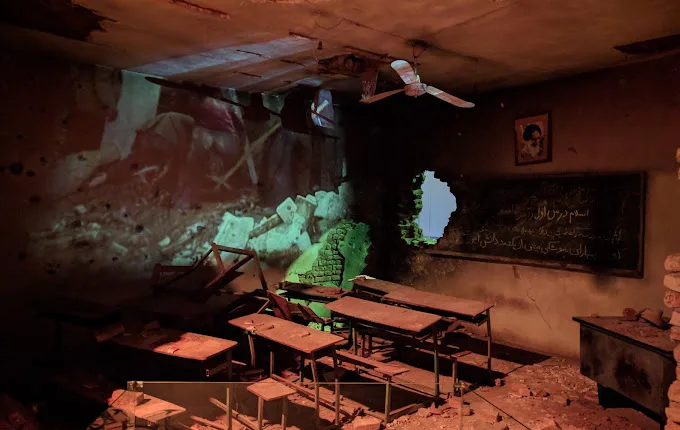
Labelling is mostly in Persian, with limited English, so going with an Iranian friend or a guide makes a big difference. Expect the exhibits to present the war from the official Iranian perspective.

Planning your visit
- Timing: the halls get busy with school and university groups, especially in the afternoons, so a weekday morning is the quietest time. Allow two to three hours to see the halls and grounds properly.
- Opening: museums across Tehran closed during the conflict that began in late February 2026 and have been reopening in stages, so confirm hours before you set off, through the museum’s official channels, your hotel or a local tour operator.
- Tickets: foreign visitors pay more than Iranians. Prices change frequently with inflation; see our Iran prices pages for a sense of current costs and bring cash.
- Who it suits: anyone interested in modern Iranian history or military history. Some displays are graphic and intense, so think about whether they suit younger children.
Getting there
The easiest way is by metro: take Line 1 of the Tehran Metro to Shahid Haqqani station, from where the museum is a short walk. A taxi or ride-hailing app is also straightforward, as the museum is right beside the expressway.
If the visit leaves you curious about the wider story of Iran and Iraq, the two countries’ shared culture is easy to explore in Tehran too, starting with the city’s Iraqi restaurants.