Updated November 2026 Both churches remain active Armenian Apostolic churches; we have corrected their founding dates and added practical advice on when you can get inside.
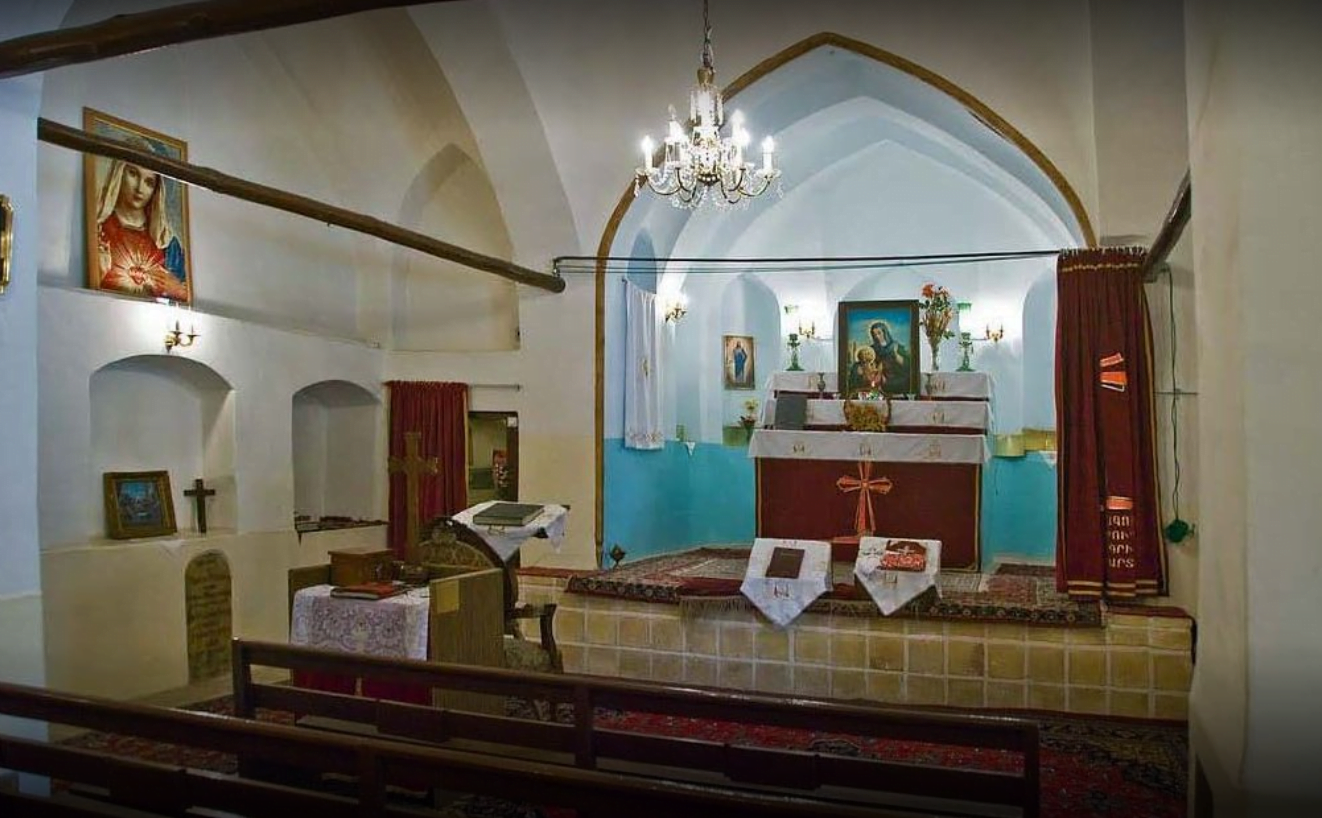
The two oldest churches in downtown Tehran are Saints Thaddeus and Bartholomew, tucked into an alley south of the Grand Bazaar, and Saint George (Surb Gevorg) in the old Sangelaj quarter. Both were founded by Armenians in the late 18th century, both still serve their congregations, and both make a rewarding detour for anyone interested in Tehran’s history beyond the palaces and the bazaar.
Armenians in Tehran
Armenians have lived in what is now Iran for millennia, and the community has played an outsized role in the country’s trade, crafts and arts. In the early 17th century the Safavid ruler Shah Abbas I moved large numbers of Armenians from the Caucasus to his capital at Isfahan, where they built the New Julfa quarter and enjoyed considerable religious freedom. When Tehran rose to prominence under the Zand and then the Qajar rulers, Armenian families followed, bringing their churches with them. You can read more about the community’s story in our piece on the Artak Manookian Armenian Museum.
Iran’s very oldest churches are elsewhere, in the north-west of the country and in Isfahan, but these two are the oldest still in use in the capital.
Saints Thaddeus and Bartholomew Church
Usually described as Tehran’s oldest church, Saints Thaddeus and Bartholomew stands on a narrow lane known as Armenians’ Alley, off Molavi Street just south of the Grand Bazaar. Armenians who had moved from New Julfa when Karim Khan Zand was building up Tehran completed the first church in 1768; it was consecrated in 1788 and rebuilt in 1808 in the form you see today. Modelled on the small churches of New Julfa, it is a modest single-storey building with a small dome and skylights.
For many years the churchyard was the only Christian cemetery in Tehran, and it holds the graves of several foreigners who died in the city in the early Qajar period, including Prince Alexander of Georgia and Charles Scott, son of the novelist Sir Walter Scott. There is also a memorial to the Russian diplomat and playwright Alexander Griboyedov, whose body rested here before being taken to Tbilisi. During renovation work in 1970, old wall paintings were discovered beneath the plaster inside the chapel.
The church is closed on most days. It generally opens to the public on the first Friday of each month for services, and on its annual feast day, so plan around those dates if you want to see the interior.
Saint George (Surb Gevorg) Church
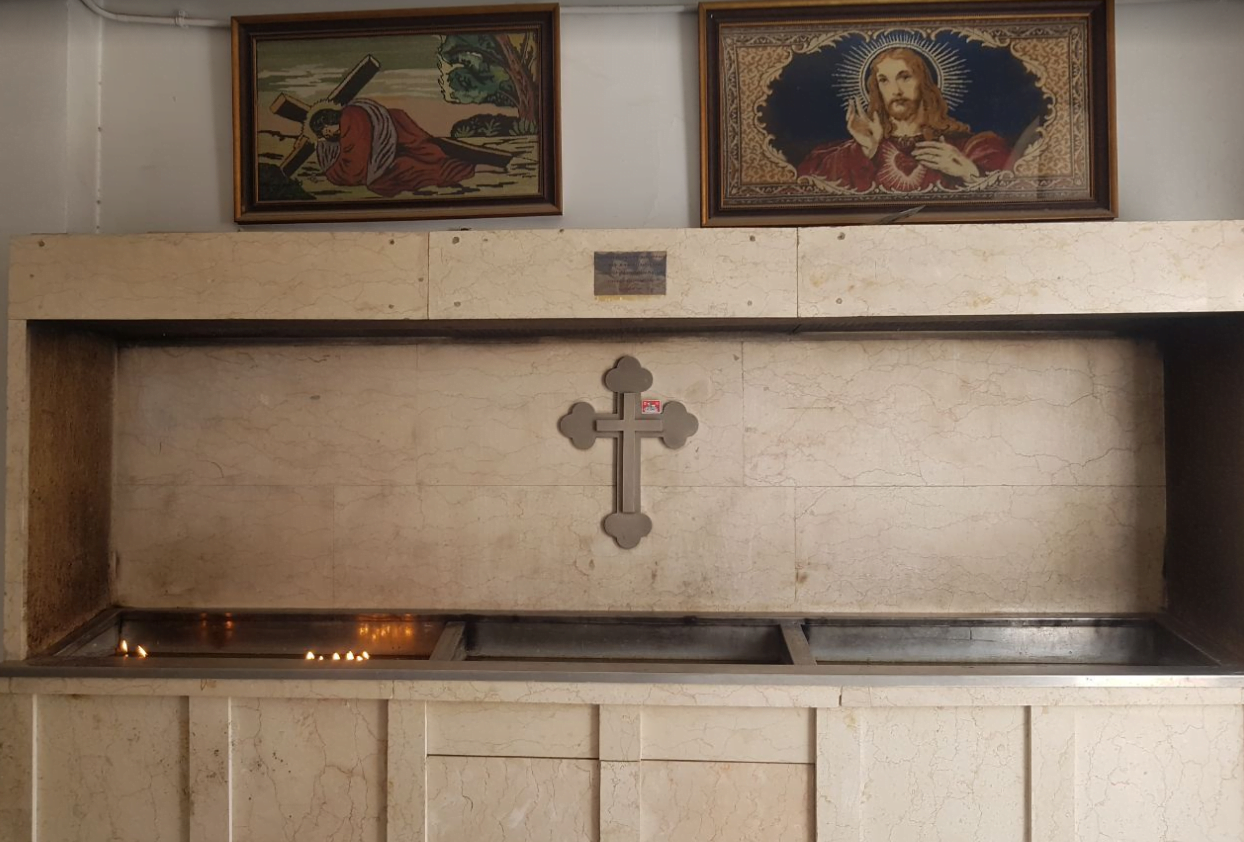
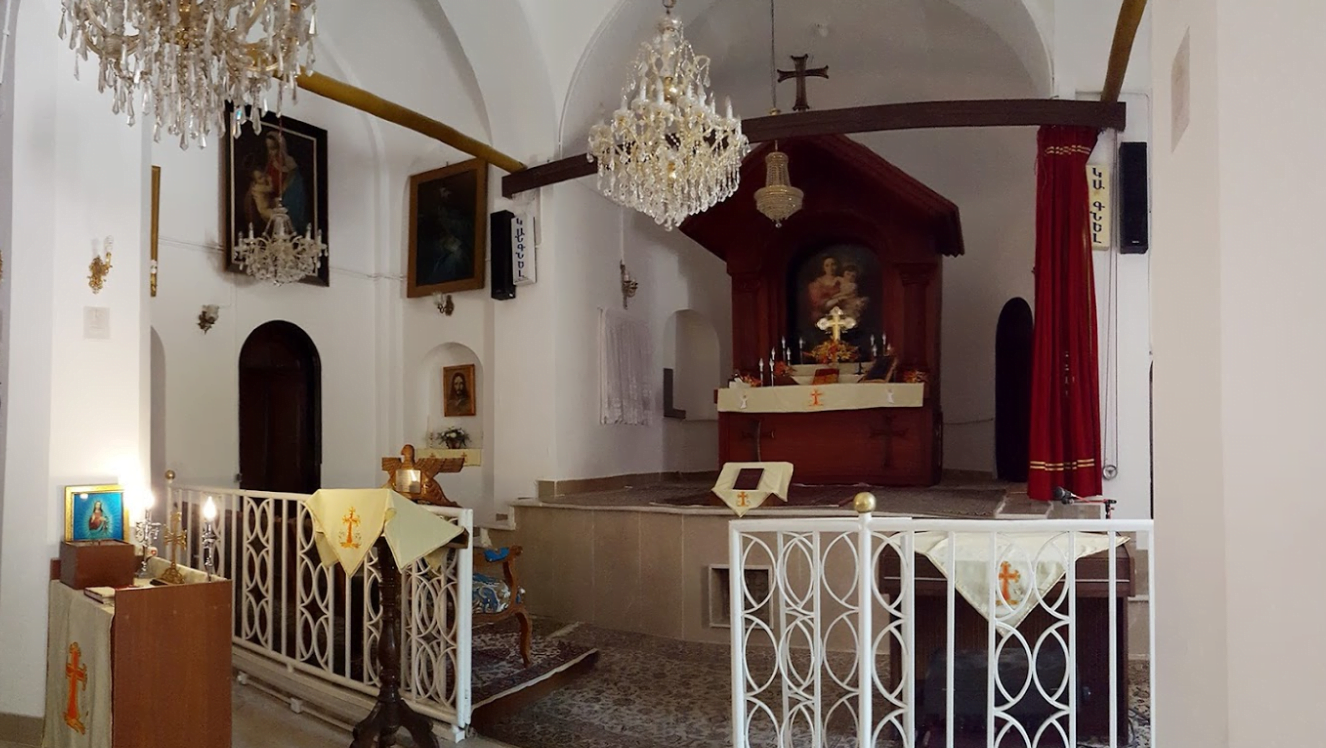
Saint George’s began as a small chapel in 1795, founded by Armenians who had been resettled in Tehran from Tbilisi and Karabakh after the Georgian campaigns of Agha Mohammad Khan Qajar. As the community grew, the chapel was replaced by the present church in 1882, and an Armenian school was added next door. It stands in Darkhungah Alley, off Vahdat-e Eslami (formerly Shahpour) Street in Sangelaj, one of the oldest neighbourhoods of the city.
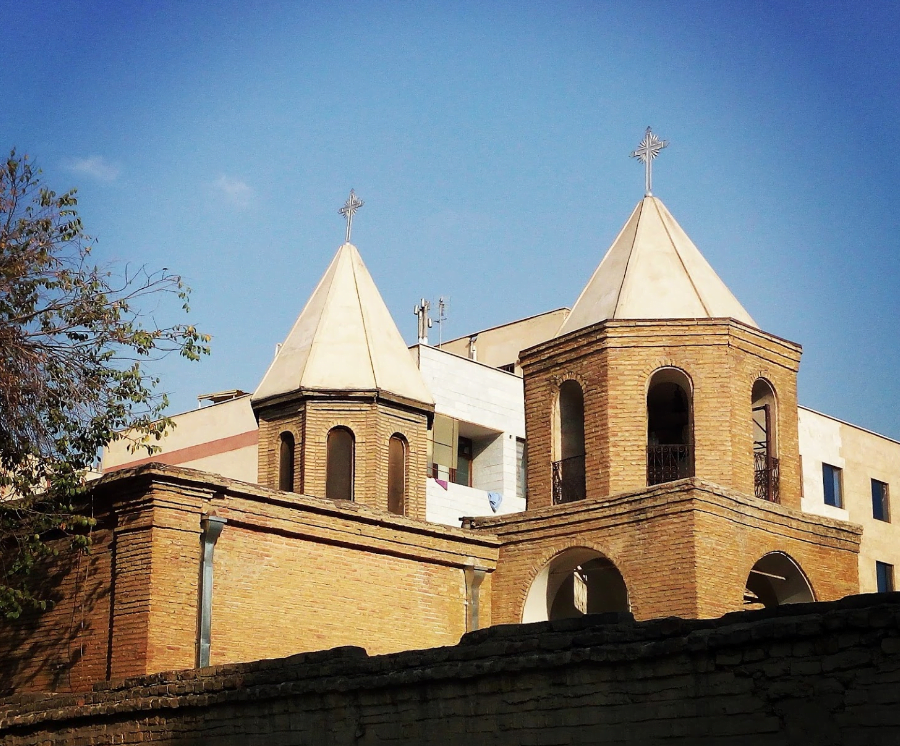
The churchyard contains the graves of many prominent Armenian-Iranians of the Qajar era. The church is also a place of pilgrimage, drawing Armenian visitors from across Iran for the feast of Saint George.
Visiting tips
- Both churches are working places of worship, so dress modestly and keep your voice down during services.
- Opening is irregular. If the gate is shut, ask politely at the door or try again on a Sunday or a feast day.
- Saints Thaddeus and Bartholomew fits easily into a morning at the Grand Bazaar; Panzdah-e Khordad metro station is the closest.
- Saint George’s is a short taxi ride west, and the old lanes of Sangelaj around it are worth a wander.
- Ask before photographing people or the interiors.