Updated November 2026 We have added verified addresses from the UK government’s medical facilities list, emergency numbers and practical advice on paying for treatment as a foreigner.
Tehran hospitals are the best equipped in Iran, and the healthcare system here gives residents and visitors a choice between large state teaching hospitals and well-equipped private hospitals. For most expats and travellers, a private hospital is the first port of call: waiting times are shorter, rooms are more comfortable and you are more likely to find English-speaking doctors. This guide explains how the system works and lists the hospitals foreigners use most.
How healthcare works in Tehran
Public hospitals are run mainly by the city’s medical universities, above all Tehran University of Medical Sciences (TUMS), and have the most specialists and the most complex equipment, but they are busy and less geared to foreign patients. Private hospitals are concentrated in the centre and north of the city. Standards of medical training are high, and many senior doctors have trained or worked abroad.
Foreign insurance is rarely accepted directly, and international bank cards do not work in Iran, so expect to pay a deposit on admission and settle the bill in cash or by local bank card, then claim from your insurer. Keep every receipt and medical report. Treatment is cheap by Western standards, though private hospital bills can still add up; our Iran prices tracker and cost of living guide help with budgeting.
Emergency numbers
- 115 ambulance (emergency medical services)
- 110 police
- 125 fire service
Operators usually speak Persian only, so ask a local to call if you can, and give the address clearly. In a serious emergency, a taxi or ride-hailing car straight to the nearest hospital emergency department (ourzhans) is often quicker than waiting for an ambulance in Tehran traffic.
Public teaching hospitals
Imam Khomeini Hospital Complex is one of the largest medical centres in the country and the flagship of TUMS. It covers almost every specialism, including cardiology, neurology and a major cancer institute, and handles many complex referral cases.
Shariati Hospital, also part of TUMS, is a large general and teaching hospital in central Tehran, well regarded for internal medicine, surgery and transplantation.
Private hospitals
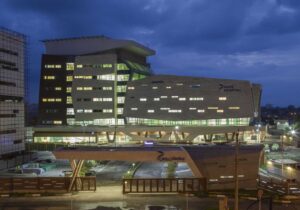
Pars Hospital, at 67 Keshavarz Boulevard in central Tehran, is a long-established private general hospital with a strong reputation among locals and expats.
Kasra Hospital, on Alvand Street near Argentina Square, is a private general hospital particularly known for orthopaedics and neurosurgery.
Day General Hospital (Dey), on Abbaspour Street off Valiasr below Vanak Square, offers a full range of departments including obstetrics and gynaecology, cardiology and urology.
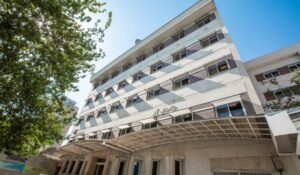
Arad General Hospital, at 51 Somayeh Avenue between Bahar and Shariati streets, is a modern private hospital covering most specialisms.
Bahman Hospital, on Zamin Avenue in Shahrak-e Gharb, is a convenient option for residents of west Tehran.
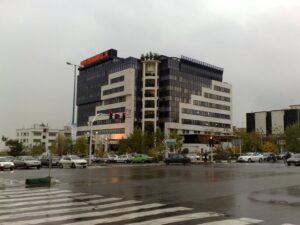
Atieh Hospital is a large modern private hospital in west Tehran with a wide range of departments, including cardiology and general surgery.
Other private hospitals often used by expats include Erfan Hospital and Iranmehr Hospital. For outpatient care, Tehran Clinic is one of the city’s oldest private polyclinics, with specialists across many fields under one roof.
Practical tips
- Pharmacies are everywhere and many medicines are sold over the counter. Every district has at least one 24-hour pharmacy (darukhaneh-ye shabaneh-ruzi).
- Booking a specialist is easy through online platforms such as Doctoreto, though they are in Persian.
- Bring a Persian speaker to appointments if you can; doctors often speak English, but reception and nursing staff may not.
- Carry your passport and any insurance documents when you go to hospital.
- Check the list: the UK government publishes a list of medical facilities in Iran, including dentists and 24-hour pharmacies in Tehran.
Learn the Persian: Be ready for a visit to the doctor with Persia Learning’s emergencies and health phrasebook and body and health vocabulary. Try the first lesson free →