This page contains affiliate links. If you buy through them, LiT may earn a small commission at no extra cost to you. Read our disclosure.
Updated November 2026 The Carpet Museum of Iran remains one of the best places in Tehran to see fine Persian rugs; we have refreshed the visitor details and directions.
If you want to see Persian rugs at their very best, the Carpet Museum of Iran on the edge of Laleh Park is the place to start. Its galleries hold antique carpets and kilims from the great weaving centres of the country, and an hour here will teach you more about what makes a fine Persian carpet than any amount of browsing in the bazaar.
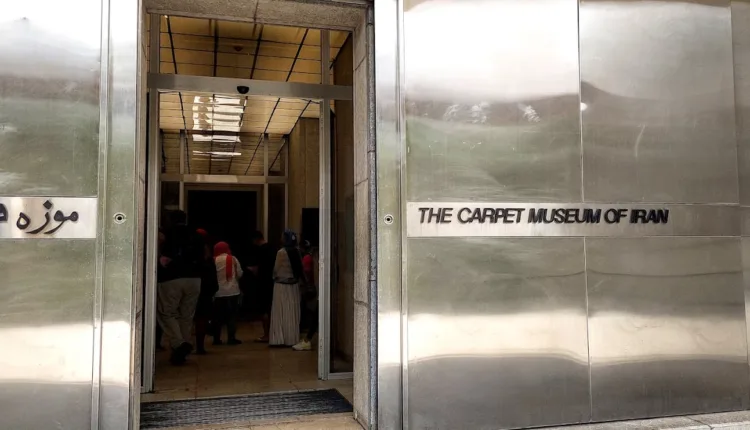
The museum opened on 11 February 1978, at the instigation of Empress Farah Pahlavi, with the aim of gathering and showing the finest carpets from across Iran. It was designed by the architect Abdol-Aziz Farmanfarmaian, and the building is a sight in itself: the tall concrete ribs that wrap around the outside are meant to suggest a carpet loom, an idea that makes more sense once you have spent time with the rugs inside.
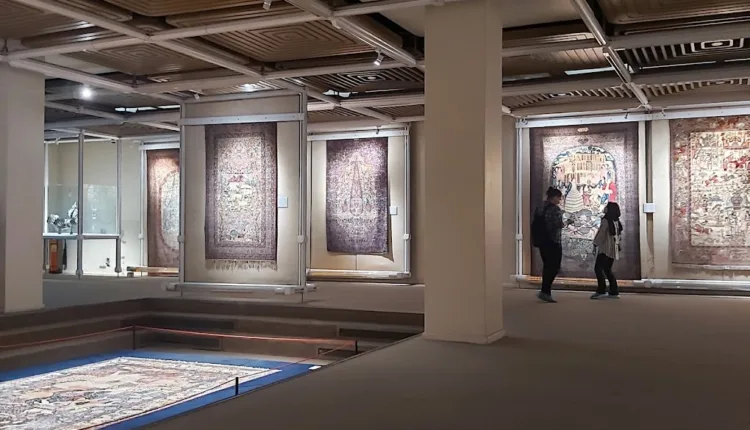
The museum is arranged over two main halls. The lower hall holds the permanent collection, a selection of carpets and flatwoven kilims from weaving centres including Tabriz, Kashan, Kerman, Isfahan and Khorasan, with the oldest pieces dating back several centuries. Pictorial rugs are a highlight, among them scenes inspired by the Shahnameh, Ferdowsi’s epic of Persian kings and heroes, woven in the workshops of Tabriz. The upper hall is used for temporary exhibitions, so it is worth checking what is on.
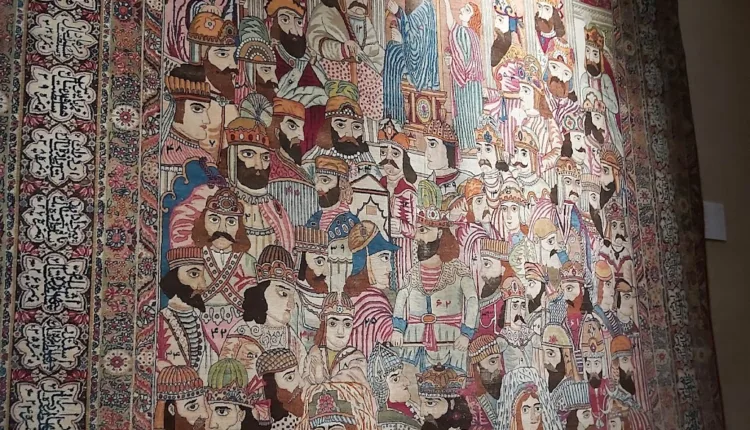
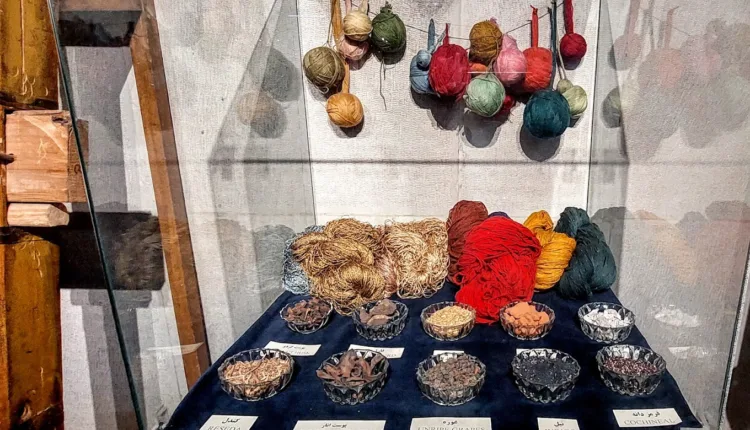
Take your time and look closely. The labels give the region and period, and once you start comparing the dense, curving medallions of Kerman and Kashan with the bolder geometric designs of tribal and village rugs, the differences between styles soon become clear. A display of raw wool and natural dyes helps explain how colours were produced before synthetic dyes arrived. If you want some background before you go, the Wikipedia entry on Persian carpets is a good primer.
The museum also has a specialist library on carpets and weaving, with books in Persian and several other languages, which is a useful resource for collectors and researchers.
You will find the museum on Dr Fatemi Street, at its junction with North Kargar Street, beside the north-west corner of Laleh Park. The nearest metro stations are Meydan-e Jahad on Line 3, about ten minutes’ walk east along Fatemi Street, and Meydan-e Enghelab on Line 4, a little further to the south. A Snapp or Tapsi will drop you at the door. Opening hours vary with the season and the museum closes on some public holidays, so check before you travel; the museum’s own website, carpetmuseum.ir, and its phone line are the best sources.
The Tehran Museum of Contemporary Art is in the same park, a few minutes’ walk away; it reopened in May 2026, so the two make an easy pairing for a half-day of museums. Laleh Park itself is a pleasant place to sit afterwards.
The museum does not sell carpets. If the visit leaves you wanting one of your own, head to the carpet halls of the Grand Bazaar, where the choice is enormous and prices are more negotiable; our guide to Persian carpet shopping in the Grand Bazaar explains where to look, and our tips on bargaining in the bazaar will help you get a fair price. For a sense of what things cost in Tehran today, see our Iran price trackers.
Reading further. If the museum leaves you wanting to know more, a book on Persian carpets is the best way to learn to read the patterns, and our guide to carpet shopping in the Grand Bazaar covers buying one.
A note on our affiliate links: LiT’s affiliate earnings are not earned from inside Iran. Our partners are international companies based outside the country, and no commission is paid to us by any business in Iran.